Frequently Asked Questions
Q: What does 'one kid of the goats for a sin offering' mean in Numbers 7:34?
A: This verse refers to a specific sacrifice brought in the Mishkan (Tabernacle) as part of the offerings made by the tribal leaders. A 'kid of the goats' (שְׂעִיר־עִזִּים) was an animal offering used to atone for certain sins. Rashi explains that this was part of the dedication offerings brought by the leaders of each tribe during the inauguration of the Mishkan.
Q: Why was a goat specifically chosen for a sin offering?
A: The goat was chosen for sin offerings because it represents atonement, as explained in the Torah (Leviticus 16). The Midrash (Vayikra Rabbah) teaches that goats were associated with repentance because they are sturdy animals, symbolizing the strength needed to overcome sin. Additionally, the goat was commonly used in various korbanot (sacrifices) for unintentional sins.
Q: How does the concept of a sin offering apply today without the Temple?
A: Since the destruction of the Temple, we no longer bring animal sacrifices. Instead, the Rambam (Maimonides) teaches in Hilchot Teshuva that sincere repentance (תשובה), prayer (תפילה), and acts of charity (צדקה) serve as substitutes for sacrifices. The Talmud (Berachot 32b) also states that prayer is the modern equivalent of the korbanot (offerings).
Q: What lesson can we learn from the sin offering in Numbers 7:34?
A: This verse teaches the importance of taking responsibility for mistakes and seeking atonement. The Talmud (Yoma 86a) explains that true repentance involves regret, confession, and a commitment not to repeat the sin. The offering symbolizes humility before Hashem and the desire to correct wrongdoing.
Q: Why did each tribal leader bring the same offering in Numbers 7?
A: Rashi explains that although each leader brought identical offerings, each one had unique intentions and spiritual meanings behind their gifts. The Midrash (Bamidbar Rabbah) teaches that this shows unity in serving Hashem while allowing for individual expression in devotion. Despite the same outward act, each leader's offering was special in its own way.

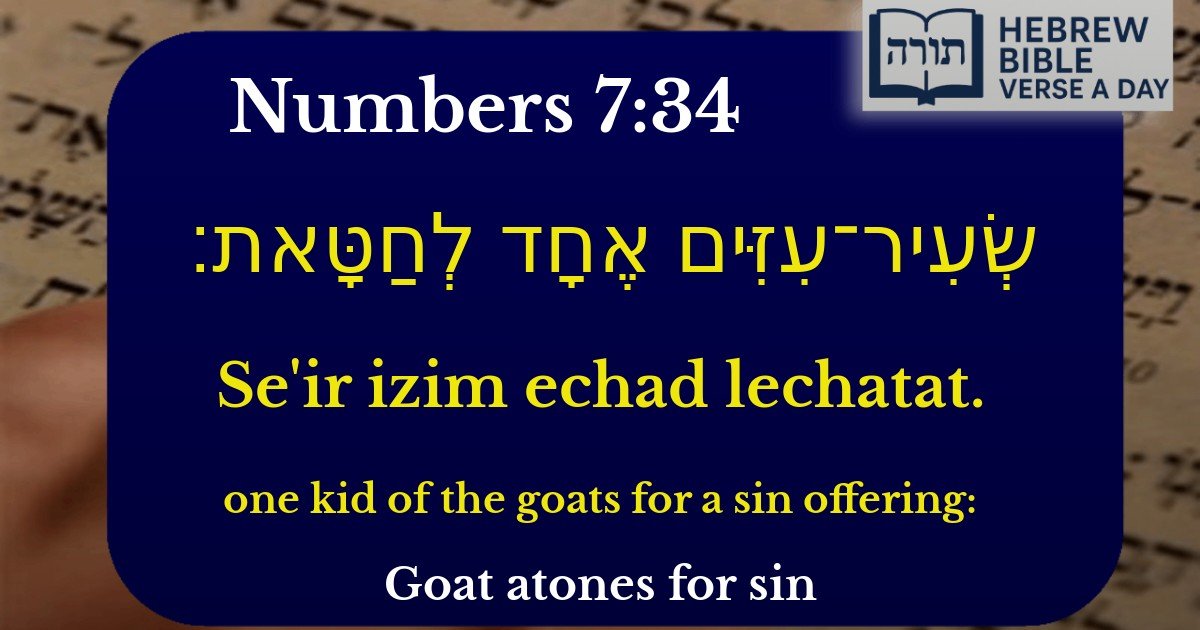

The Sin Offering (Chatat) of a Goat
The verse "שְׂעִיר־עִזִּים אֶחָד לְחַטָּאת" ("one kid of the goats for a sin offering") refers to the chatat (sin offering) brought for specific transgressions. Rashi (Vayikra 4:23) explains that this offering is required when a person unintentionally violates a negative commandment that carries the penalty of karet (spiritual excision) if done intentionally. The goat serves as atonement for sins between man and G-d.
Significance of the Goat
The choice of a goat for the chatat is significant. The Talmud (Yoma 67b) notes that goats are often associated with atonement, as seen in the Yom Kippur service where the se'ir la'Azazel (scapegoat) is sent away. Rambam (Hilchot Maaseh HaKorbanot 1:14) elaborates that the goat's blood and fats are offered on the altar, symbolizing the sinner's repentance and return to G-d.
Types of Sin Offerings
Spiritual Lessons
The Midrash (Vayikra Rabbah 5:6) teaches that the goat's humility—being a common animal—parallels the humility required for repentance. Just as the goat is brought low, so must a person humble themselves before G-d to achieve atonement. The offering serves as a tangible reminder that sin creates a separation between man and G-d, which can only be bridged through sincere repentance and the prescribed sacrificial service.