
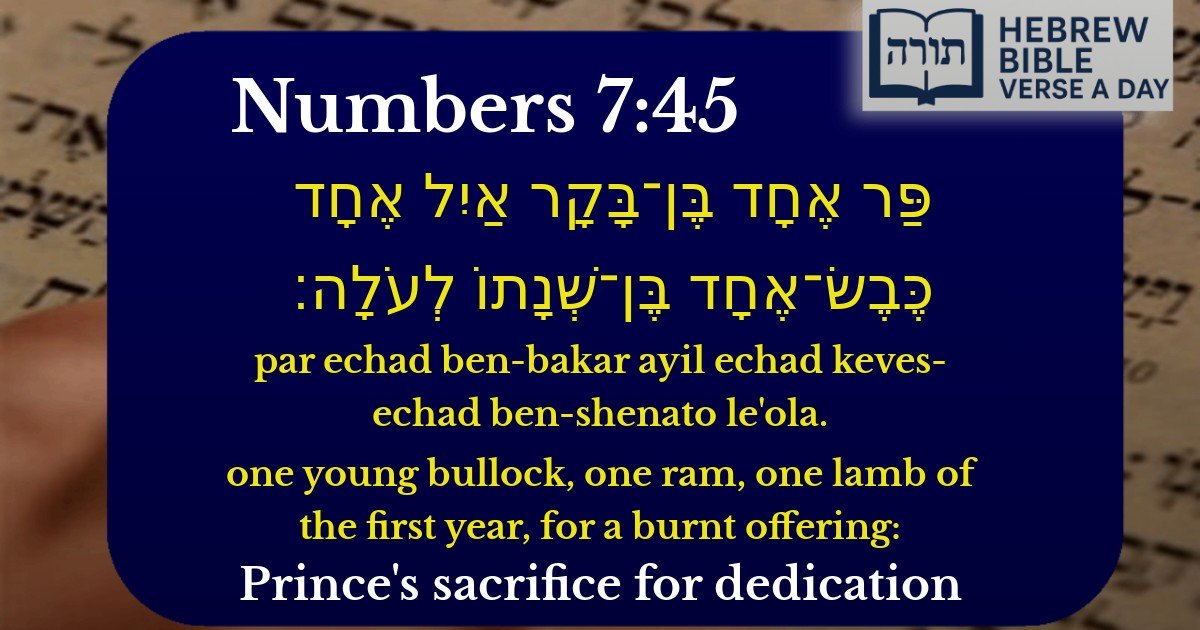

Numbers 7:45 - Prince's sacrifice for dedication

Numbers 7:45 - במדבר 7:45

Hebrew Text

פַּר אֶחָד בֶּן־בָּקָר אַיִל אֶחָד כֶּבֶשׂ־אֶחָד בֶּן־שְׁנָתוֹ לְעֹלָה׃

English Translation

one young bullock, one ram, one lamb of the first year, for a burnt offering:

Transliteration

Par echad ben-bakar ayil echad keves-echad ben-shenato le'ola.

Hebrew Leining Text

פַּ֣ר אֶחָ֞ד בֶּן־בָּקָ֗ר אַ֧יִל אֶחָ֛ד כֶּֽבֶשׂ־אֶחָ֥ד בֶּן־שְׁנָת֖וֹ לְעֹלָֽה׃

🎵 Listen to leining

Parasha Commentary

Explanation of the Verse

The verse describes the sacrificial offerings brought as an olah (burnt offering), consisting of three distinct animals: a young bullock (par echad ben-bakar), a ram (ayil echad), and a one-year-old lamb (keves echad ben-shanato). Each of these animals holds symbolic and halachic significance in the context of korbanot (sacrifices).

Rashi's Commentary

Rashi (Vayikra 1:3) explains that the term par (bullock) refers to a mature animal, while ben-bakar specifies that it must be young, not yet fully grown. This distinction ensures the animal is in its prime, suitable for an offering. The ram (ayil) represents strength and leadership, while the lamb (keves) symbolizes innocence and submission.

Symbolism of the Offerings

  • Young Bullock: Represents the power and vitality of the Jewish people, often associated with the tribe of Ephraim (see Bamidbar 7:48).
  • Ram: Alludes to the binding of Yitzchak (Akeidat Yitzchak), where a ram was offered in place of Yitzchak (Bereishit 22:13).
  • Lamb: Reflects gentleness and atonement, as lambs were commonly used for daily offerings (Korban Tamid).

Halachic Requirements

The Rambam (Hilchot Ma'aseh HaKorbanot 1:14) emphasizes that the animals must be free of blemishes (mumim) and meet age specifications. The lamb being ben-shanato (one year old) ensures it is at the optimal stage for sacrifice, as younger or older animals are invalid.

Midrashic Insight

The Midrash (Vayikra Rabbah 2:11) teaches that these three animals correspond to the three patriarchs: Avraham (symbolized by the bullock, representing hospitality and strength), Yitzchak (the ram, tied to the Akeidah), and Yaakov (the lamb, embodying humility and devotion).

📚 Talmud Citations

This verse is not quoted in the Talmud.

Frequently Asked Questions

Q: What is the significance of the burnt offering described in Numbers 7:45?
A: The burnt offering (עֹלָה) mentioned in this verse symbolizes complete devotion to Hashem, as the entire animal is consumed on the altar. According to Rashi, this offering atones for improper thoughts and serves as a way to draw closer to Hashem through total dedication.
Q: Why does the verse specify a 'lamb of the first year' for the offering?
A: The Torah specifies a young lamb (כֶּבֶשׂ בֶּן־שְׁנָתוֹ) because it represents purity and freshness, qualities ideal for an offering to Hashem. The Rambam explains that young animals were chosen for sacrifices to emphasize the importance of giving our best and most unblemished possessions in service to Hashem.
Q: What can we learn today from the offerings in Numbers 7:45?
A: Although we no longer bring physical sacrifices, the Talmud (Berachot 17a) teaches that prayer and acts of kindness can take their place. This verse reminds us to dedicate our best efforts—whether in prayer, charity, or mitzvot—with the same wholehearted commitment as the burnt offering.
Q: Why are three different animals (bullock, ram, lamb) mentioned in this verse?
A: The Midrash (Bamidbar Rabbah) explains that each animal represents different levels of atonement and devotion. The bullock (פַּר) atones for severe sins, the ram (אַיִל) for lesser wrongdoings, and the lamb (כֶּבֶשׂ) for minor faults. Together, they teach that sincere repentance and dedication must encompass all aspects of our actions.