

Join Our Newsletter To Be Informed When New Videos Are Posted
Hebrew Text
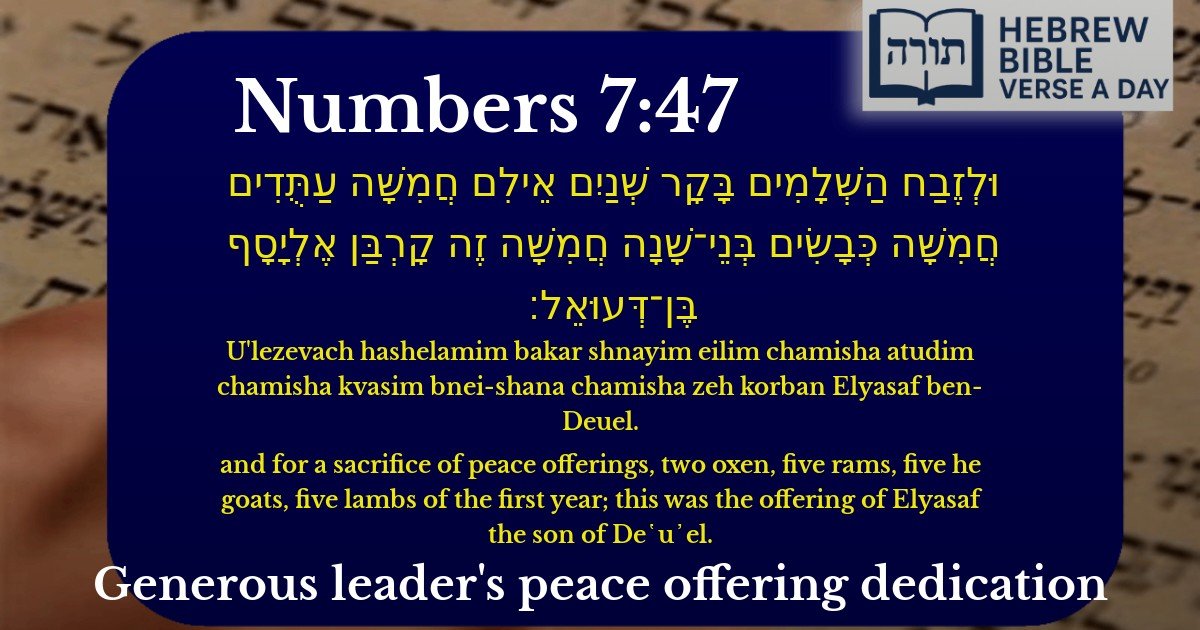
וּלְזֶבַח הַשְּׁלָמִים בָּקָר שְׁנַיִם אֵילִם חֲמִשָּׁה עַתֻּדִים חֲמִשָּׁה כְּבָשִׂים בְּנֵי־שָׁנָה חֲמִשָּׁה זֶה קָרְבַּן אֶלְיָסָף בֶּן־דְּעוּאֵל׃
English Translation
and for a sacrifice of peace offerings, two oxen, five rams, five he goats, five lambs of the first year; this was the offering of Elyasaf the son of De῾u᾽el.
Transliteration
U'lezevach hashelamim bakar shnayim eilim chamisha atudim chamisha kvasim bnei-shana chamisha zeh korban Elyasaf ben-Deuel.
Hebrew Leining Text
וּלְזֶ֣בַח הַשְּׁלָמִים֮ בָּקָ֣ר שְׁנַ֒יִם֒ אֵילִ֤ם חֲמִשָּׁה֙ עַתֻּדִ֣ים חֲמִשָּׁ֔ה כְּבָשִׂ֥ים בְּנֵי־שָׁנָ֖ה חֲמִשָּׁ֑ה זֶ֛ה קׇרְבַּ֥ן אֶלְיָסָ֖ף בֶּן־דְּעוּאֵֽל׃ {פ}
🎵 Listen to leining
Parasha Commentary
📚 Talmud Citations
This verse is not quoted in the Talmud.
Context of the Verse
The verse (Bamidbar 7:47) describes the korban shelamim (peace offering) brought by Elyasaf ben De'uel, the prince of the tribe of Gad, during the dedication of the Mishkan. The shelamim is unique among sacrifices, as it symbolizes harmony between man and Hashem, as well as communal unity, since parts are offered on the altar, parts are given to the Kohanim, and parts are eaten by the owner and guests (Vayikra 7:11-21).
Significance of the Numbers
Rashi notes that the quantities—two oxen, five rams, five goats, and five lambs—mirror the offerings of the other tribal leaders (Bamidbar 7:17-83). The consistency reflects the principle of equality among the tribes in their devotion to Hashem. The Midrash Tanchuma (Naso 14) explains that though each leader brought identical offerings, their intentions and personal meanings differed, showing that sincerity in avodah (service) is paramount.
Symbolism of the Animals
Elyasaf ben De'uel's Role
The Ramban emphasizes that Elyasaf’s name—meaning "Hashem has added"—reflects the tribe of Gad’s gratitude for their portion in Eretz Yisrael. His father’s name, De'uel ("knowledge of G-d"), underscores the tribe’s commitment to divine wisdom. The Sforno adds that the shelamim offering, which fosters unity, was particularly fitting for Gad, a tribe that would later dwell on the border and defend Klal Yisrael.
Halachic Insights
The Talmud (Menachot 104b) derives from this verse that peace offerings must be of the highest quality, as befits a gift to the Divine. The five lambs "of the first year" teach that sacrifices must be unblemished and youthful, symbolizing freshness in avodah (Malbim).