

Join Our Newsletter To Be Informed When New Videos Are Posted
Hebrew Text
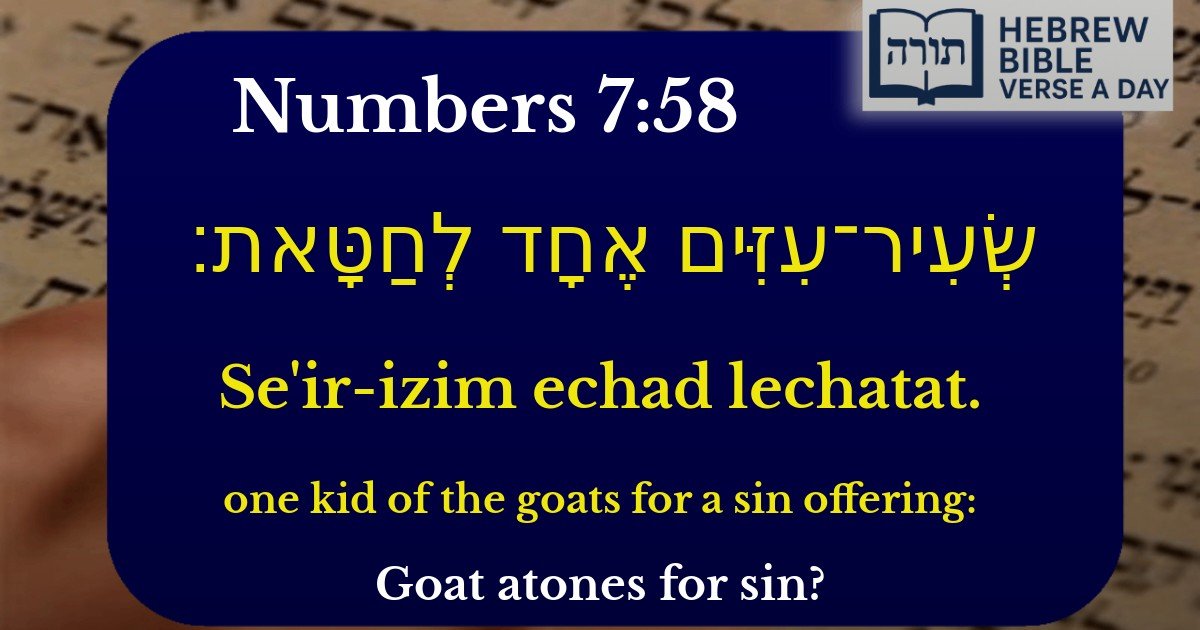
שְׂעִיר־עִזִּים אֶחָד לְחַטָּאת׃
English Translation
one kid of the goats for a sin offering:
Transliteration
Se'ir-izim echad lechatat.
Hebrew Leining Text
שְׂעִיר־עִזִּ֥ים אֶחָ֖ד לְחַטָּֽאת׃
🎵 Listen to leining
Parasha Commentary
📚 Talmud Citations
This verse is quoted in the Talmud.
📖 Yoma 66b
The verse is referenced in the discussion about the sin offerings brought on Yom Kippur, specifically regarding the goat that was sent away.
📖 Menachot 45a
Mentioned in the context of discussing the various types of sin offerings and their requirements.
The Sin Offering (Chatat) of a Goat
The verse "שְׂעִיר־עִזִּים אֶחָד לְחַטָּאת" (one kid of the goats for a sin offering) refers to a specific type of korban (sacrifice) brought for unintentional sins. The se'ir izim (goat) was a common offering for atonement, particularly for communal or individual transgressions.
Rashi's Explanation
Rashi (Vayikra 4:23) explains that the se'ir izim was designated as a chatat (sin offering) for specific sins, such as those committed by a nasi (tribal leader) or the entire community. The goat serves as a means of atonement, emphasizing the seriousness of unintentional wrongdoing and the need for repentance.
Rambam's Perspective
In Hilchot Shegagot (Laws of Unintentional Sins), Rambam (Maimonides) elaborates that the chatat offering, including the goat, was required when a person or group violated a Torah prohibition b'shogeg (unintentionally). The offering served as a spiritual rectification, reinforcing the principle that even inadvertent sins require correction.
Midrashic Insights
The Midrash (Vayikra Rabbah 5:5) connects the goat offering to the episode of Yosef and his brothers, where they slaughtered a goat to deceive Yaakov (Genesis 37:31). This teaches that the goat atones for hidden sins, just as the brothers' actions were concealed but later required reconciliation.
Halachic Significance