Frequently Asked Questions
Q: What is the significance of the silver dish and bowl in Numbers 7:61?
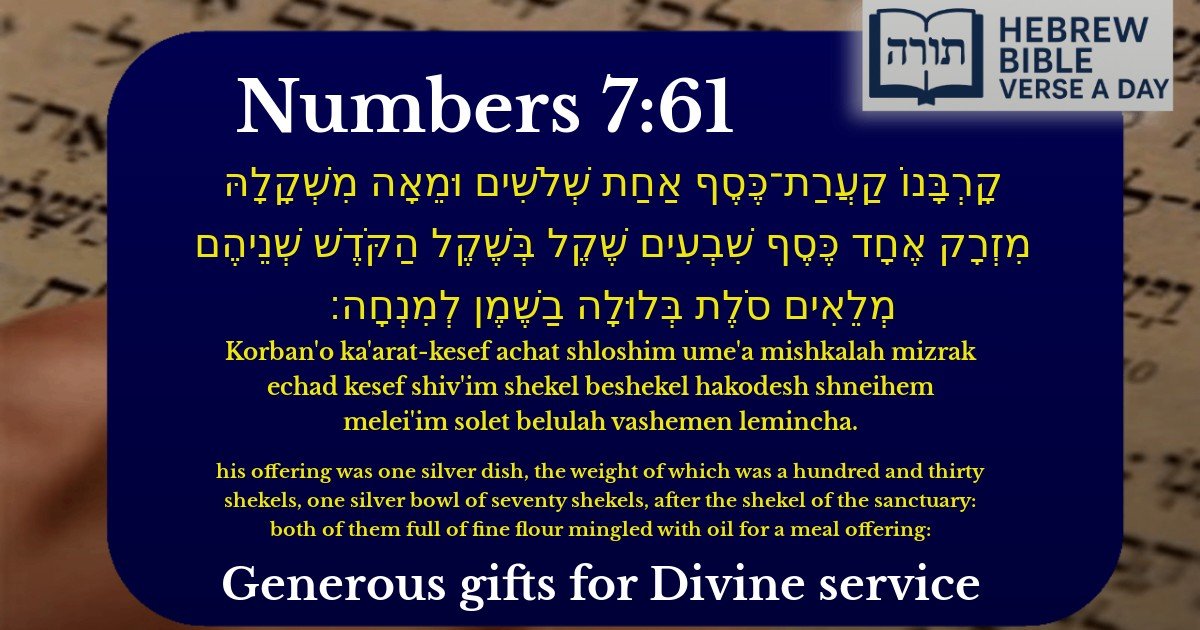
A: In Numbers 7:61, the silver dish (קַעֲרַת־כֶּסֶף) and bowl (מִזְרָק) were part of the offerings brought by the tribal leaders during the dedication of the Mishkan (Tabernacle). Rashi explains that these vessels were used to hold fine flour mixed with oil, symbolizing generosity and devotion to Hashem. The specific weights (130 shekels for the dish, 70 for the bowl) teach precision in fulfilling mitzvot.
Q: Why were the offerings in Numbers 7:61 filled with fine flour and oil?
A: The fine flour (סֹלֶת) and oil (שֶׁמֶן) mixture in the offerings represent purity and refinement in serving Hashem. The Talmud (Menachot 104b) teaches that flour symbolizes sustenance, while oil represents wisdom and enlightenment. Together, they signify dedicating one’s material and spiritual efforts to divine service.
Q: What does 'shekel of the sanctuary' mean in Numbers 7:61?
A: The 'shekel of the sanctuary' (שֶׁקֶל הַקֹּדֶשׁ) refers to a standardized holy measurement used for Temple offerings. Rambam (Hilchot Shekalim 1:1) explains that this shekel was universally recognized for sanctity, ensuring fairness and consistency in bringing korbanot (offerings). It reminds us that mitzvot require both proper intent and exact fulfillment.
Q: How does Numbers 7:61 apply to us today without the Temple?
A: Though we lack the Temple, the verse teaches timeless lessons: 1) Giving generously (like the silver vessels), 2) Offering our 'flour and oil'—using our resources and talents for mitzvot, and 3) Precision in observance (like the exact shekel weight). The Midrash (Bamidbar Rabbah 13:15) highlights that dedication to communal needs, as shown by the tribal leaders, remains essential.
Q: Why did each tribe bring identical offerings in Numbers 7?
A: Though each tribe brought the same offerings (as detailed in Numbers 7:61), Rashi notes that this repetition emphasizes unity—each leader had equal sincerity. The Midrash (Tanchuma Naso 12) adds that while the gifts were identical, each tribe’s unique intention and role in serving Hashem made their offerings distinct in spiritual value.


Context in the Torah
This verse (Bamidbar 7:13) describes the offering brought by Nachshon ben Aminadav, the prince of the tribe of Yehudah, during the dedication of the Mishkan. The offering consisted of a silver dish (ka'arat kesef) and a silver bowl (mizrak kesef), both filled with fine flour mixed with oil for a meal offering (mincha).
Rashi's Explanation
Rashi (Bamidbar 7:13) notes that the weight of the silver dish (130 shekels) and the silver bowl (70 shekels) correspond to the lifespan of Sarah Imeinu (130 years when she bore Yitzchak) and Yosef HaTzaddik (who lived 110 years, with 70 representing the years of his leadership in Egypt). This teaches that the offerings were brought with deep spiritual intent, connecting the dedication of the Mishkan to the legacy of our forefathers.
Symbolism of the Vessels
The ka'arat kesef (silver dish) and mizrak kesef (silver bowl) represent different aspects of avodah (service to Hashem):
The Mincha Offering
The fine flour (solet) mixed with oil represents humility (flour is ground finely) and divine inspiration (oil symbolizes wisdom, as in the anointing of kings and kohanim). The Rambam (Hilchos Maaseh HaKorbanos 13:3) explains that meal offerings demonstrate that even simple, mundane acts can be elevated to holiness when dedicated to Hashem.
Shekel HaKodesh
The weights are measured according to the "shekel of the sanctuary" (shekel hakodesh), which the Talmud (Bechoros 50a) explains was a standardized weight used for all sacred contributions. This teaches the importance of precision and sincerity in divine service.
Nachshon's Leadership
Midrash Tanchuma (Naso 12) highlights that Nachshon was the first to bring his offering, demonstrating his zeal for avodas Hashem. His tribe, Yehudah, is associated with kingship (Bereishis 49:10), and his offering sets a precedent for leadership in spiritual matters.