Frequently Asked Questions
Q: What does Numbers 7:63 mean?
A: Numbers 7:63 describes the specific offerings brought by the leader of the tribe of Asher on the occasion of the dedication of the Mishkan (Tabernacle). The verse lists three animals: a young bull, a ram, and a one-year-old lamb, all to be offered as an olah (burnt offering). According to Rashi, these offerings symbolize complete devotion to Hashem, as the olah is entirely consumed on the altar.
Q: Why are the animals specified in Numbers 7:63 important?
A: The Torah specifies the types and ages of the animals (a young bull, a ram, and a one-year-old lamb) to teach us about the standards required for korbanot (offerings). The Rambam explains in Hilchot Ma'aseh HaKorbanot that each type of animal and its age reflects different spiritual meanings and levels of sacrifice. The precision in these details emphasizes the care and reverence required in serving Hashem.
Q: What can we learn from Numbers 7:63 today?
A: Although we do not currently bring korbanot (offerings) without the Beit HaMikdash (Temple), the verse teaches us the importance of giving our best to Hashem with sincerity. The Midrash Tanchuma explains that just as the tribal leaders brought their finest animals, we should dedicate our finest efforts in prayer, charity, and mitzvot today.
Q: Why were these offerings brought during the Mishkan's dedication?
A: The offerings in Numbers 7:63 were part of the twelve-day dedication ceremony for the Mishkan, where each tribal leader brought identical offerings. The Talmud (Sotah 13b) teaches that this unity in bringing korbanot demonstrated the collective commitment of all tribes to the service of Hashem, setting a foundation for future worship in the Mishkan and later the Beit HaMikdash.
Q: How does the burnt offering (olah) differ from other korbanot?
A: The olah (burnt offering) mentioned in Numbers 7:63 is unique because it is entirely consumed on the altar, with no part eaten by people. Rashi explains that this symbolizes total submission to Hashem's will. Unlike other korbanot (like shelamim or chatat), the olah represents complete dedication, reflecting the idea that serving Hashem requires our wholehearted commitment.

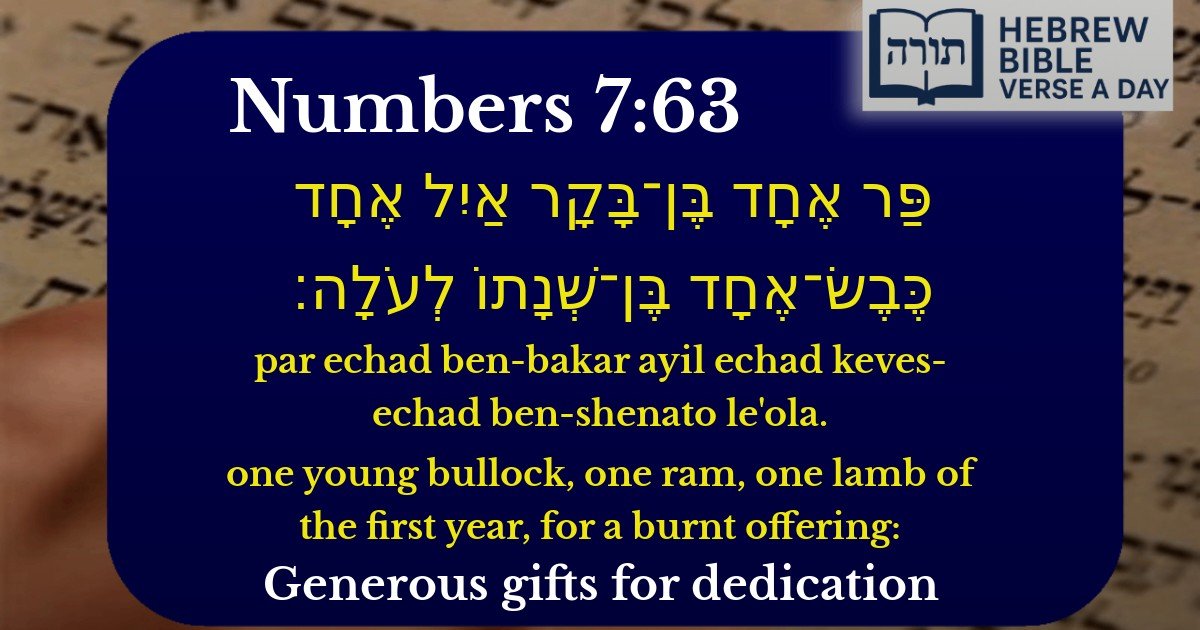

Explanation of the Verse
The verse describes the sacrificial offerings brought for a burnt offering (olah), consisting of three distinct animals: a young bullock (par echad ben-bakar), a ram (ayil echad), and a lamb in its first year (keves echad ben-shanato). Each of these animals holds symbolic and halachic significance in Jewish tradition.
Symbolism of the Offerings
Halachic Significance
The Torah specifies these three animals for the burnt offering to teach that sacrifices must be of the highest quality. The Rambam (Hilchot Ma’aseh HaKorbanot 1:14) rules that only unblemished animals may be offered, reinforcing the idea that one must give their best to Hashem. Additionally, the requirement of a "lamb of the first year" underscores the importance of freshness and vitality in divine service.
Spiritual Lessons
The burnt offering (olah) is unique in that it is entirely consumed on the altar, symbolizing total dedication to Hashem. The Sforno (Vayikra 1:3) explains that the three animals represent different levels of spiritual commitment: the bullock for those who require atonement, the ram for those seeking closeness to Hashem, and the lamb for those in a state of purity. Together, they encompass the full spectrum of divine service.