Frequently Asked Questions
Q: What does the 'golden spoon full of incense' represent in Numbers 7:74?
A: In Numbers 7:74, the golden spoon (כַּף זָהָב) filled with incense (קְטֹרֶת) was part of the offerings brought by the tribal leaders during the dedication of the Mishkan (Tabernacle). According to Rashi, this symbolizes the importance of sincere prayer and devotion, as incense represents the prayers of the Jewish people ascending to Heaven (based on Psalms 141:2).
Q: Why was the spoon made of gold in this verse?
A: Gold represents purity and holiness in Jewish tradition. The spoon was made of gold to signify the elevated spiritual nature of the incense offering, which was used in the Mishkan's service. The Rambam (Hilchot Klei HaMikdash 1:6) explains that vessels used in divine service must be made from noble materials to honor the sacredness of the mitzvah.
Q: What is the significance of the incense (ketoret) in this verse?
A: The ketoret (incense) was a special blend of spices offered daily in the Mishkan and later in the Beit HaMikdash (Temple). The Talmud (Keritot 6a) teaches that the ketoret atones for sins and fosters unity among the Jewish people. Its inclusion in this verse highlights the importance of spiritual connection and atonement in divine service.
Q: Why does the verse specify the weight of the spoon (ten shekels)?
A: The precise measurement of ten shekels teaches the importance of exactness in fulfilling mitzvot, especially in the Mishkan's service. The Midrash (Bamidbar Rabbah 13:15) notes that every detail in the offerings had spiritual significance, and the weight reflects the careful dedication required in serving Hashem.
Q: How does this verse apply to us today without the Temple?
A: Although we no longer bring physical incense offerings, the verse reminds us of the power of prayer (which the incense symbolizes). The Talmud (Berachot 26b) teaches that prayer was established in place of the Temple offerings. Today, we can strive to offer our prayers with the same sincerity and devotion as the ketoret in the Mishkan.

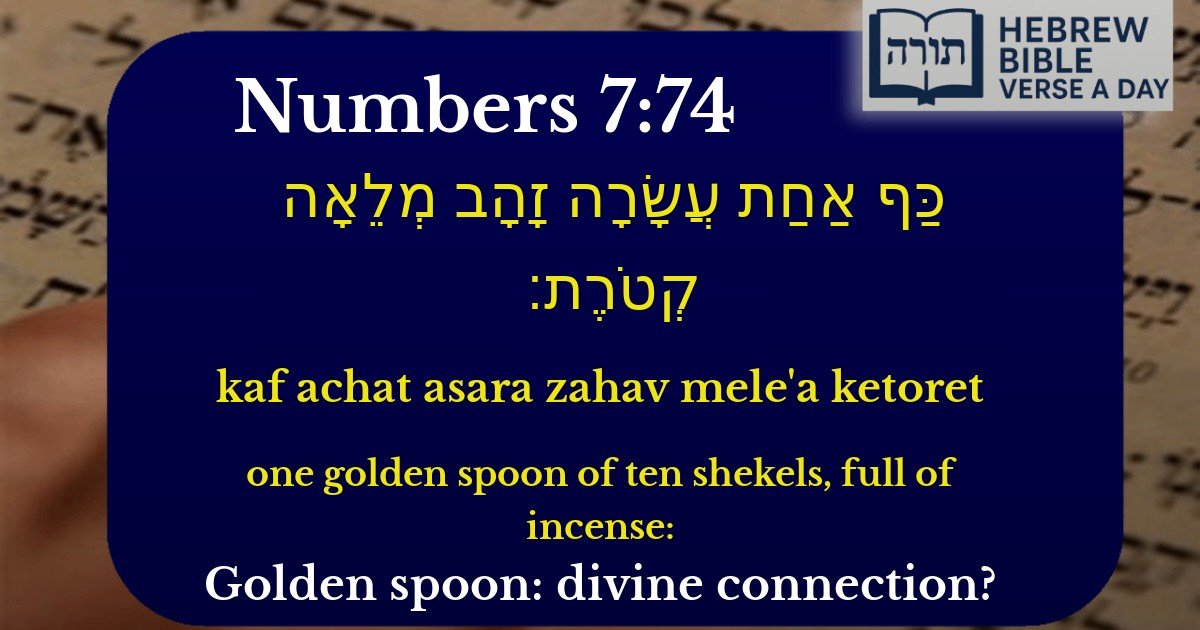

The Golden Spoon (Kaf Achas) in the Temple Service
The verse describes a golden spoon (kaf achas) weighing ten shekels, filled with incense (ketoret). This utensil was used in the daily service of the Mishkan (Tabernacle) and later the Beis HaMikdash (Temple). Rashi (on Shemos 25:29) explains that the kaf was a shallow vessel resembling a palm (kaf means "palm"), specifically designated for measuring and offering the sacred incense.
Significance of the Ten Shekel Weight
The weight of ten shekels holds symbolic meaning. The Midrash (Bamidbar Rabbah 14:11) connects this to the Ten Commandments, suggesting that the incense offering parallels the acceptance of Torah. Rambam (Hilchos Klei HaMikdash 2:4) emphasizes the precision required in Temple vessels, where even the weight carried spiritual significance.
The Incense (Ketoret) and Its Spiritual Role
The ketoret was a unique offering with profound spiritual implications. The Talmud (Kerisos 6a) teaches that the incense atoned for lashon hara (evil speech), as its rising smoke symbolizes the elevation of words to holiness. The Zohar (Vayikra 16a) further explains that the ketoret unified the spiritual and physical realms, bringing divine favor.
Practical Halachic Details