Frequently Asked Questions
Q: What does Numbers 7:75 mean?
A: Numbers 7:75 describes the offerings brought by the leader of the tribe of Gad, Eliasaph ben Deuel, for the dedication of the Mishkan (Tabernacle). The verse specifies three animals: a young bull, a ram, and a one-year-old lamb, all to be offered as an olah (burnt offering), which is completely consumed on the altar.
Q: Why were these specific animals chosen for the burnt offering?
A: According to Jewish tradition, each animal in the burnt offering represents different levels of atonement and dedication to Hashem. The bull (par) atones for sinful thoughts, the ram (ayil) for harsh speech, and the lamb (keves) for unintentional sins (Rashi on Vayikra 1:3; Talmud Zevachim 6a). The age of the lamb (one year) signifies purity and innocence.
Q: Why is this verse important in the Torah?
A: This verse is part of a larger section (Numbers 7) detailing the offerings brought by each tribal leader during the Mishkan's dedication. It emphasizes the unity of the tribes in serving Hashem, as each leader brought identical offerings despite their individual uniqueness (Midrash Bamidbar Rabbah 13:14). It also highlights the importance of communal and individual dedication to divine service.
Q: What can we learn from Numbers 7:75 today?
A: Though we no longer bring animal sacrifices, the principles remain relevant. The burnt offering (olah) symbolizes complete devotion to Hashem. Today, prayer, Torah study, and acts of kindness serve as substitutes (Hoshea 14:3, Talmud Berachos 26b). The verse teaches that serving Hashem requires sincerity and consistency, just as the offerings were brought daily in the Mishkan.
Q: Why does the verse specify 'one' for each animal?
A: The repetition of 'one' (echad) teaches that each offering must be brought with singular intent and wholehearted devotion (Rambam, Hilchos Maaseh HaKorbanos 19:16). It also reflects the unity of the Jewish people in serving Hashem, as all twelve tribes brought identical offerings despite their differences (Midrash Tanchuma, Naso 14).

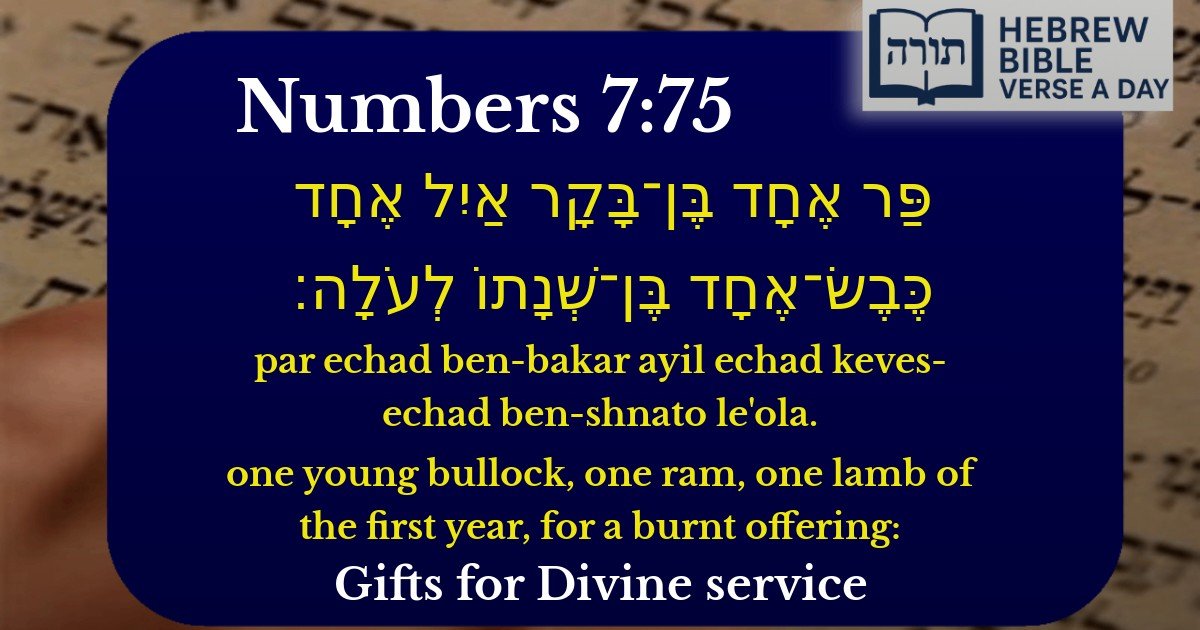

Explanation of the Verse
The verse describes the sacrificial offerings brought for a burnt offering (olah), consisting of three distinct animals: a young bullock (par echad ben-bakar), a ram (ayil echad), and a lamb in its first year (keves echad ben-shanato). These offerings hold deep symbolic and halachic significance in Jewish tradition.
Rashi's Commentary
Rashi (Bamidbar 28:3) explains that the olah offering is entirely consumed by fire on the altar, symbolizing complete devotion to Hashem. The three animals represent different levels of atonement and spiritual elevation:
Symbolism in the Offerings
The Midrash (Bamidbar Rabbah 21:21) teaches that these three animals correspond to the three patriarchs:
This connection emphasizes that the sacrifices invoke the merit of the Avot.
Halachic Requirements
The Rambam (Hilchot Ma'aseh HaKorbanot 1:14) details the halachic specifications for these offerings:
Spiritual Lessons
The Kli Yakar (Bamidbar 28:3) teaches that these offerings reflect the hierarchy of creation:
By offering all three, we acknowledge that every aspect of our being—strength, leadership, and purity—must be dedicated to divine service.