

Join Our Newsletter To Be Informed When New Videos Are Posted
Hebrew Text
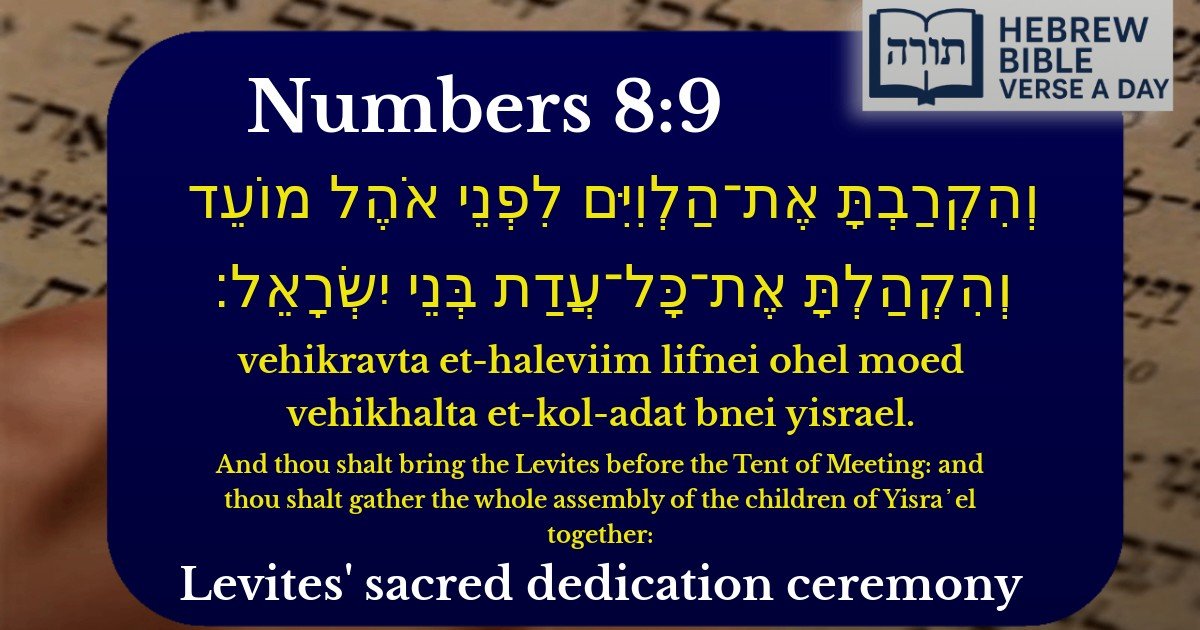
וְהִקְרַבְתָּ אֶת־הַלְוִיִּם לִפְנֵי אֹהֶל מוֹעֵד וְהִקְהַלְתָּ אֶת־כָּל־עֲדַת בְּנֵי יִשְׂרָאֵל׃
English Translation
And thou shalt bring the Levites before the Tent of Meeting: and thou shalt gather the whole assembly of the children of Yisra᾽el together:
Transliteration
Vehikravta et-haleviim lifnei ohel moed vehikhalta et-kol-adat bnei yisrael.
Hebrew Leining Text
וְהִקְרַבְתָּ֙ אֶת־הַלְוִיִּ֔ם לִפְנֵ֖י אֹ֣הֶל מוֹעֵ֑ד וְהִ֨קְהַלְתָּ֔ אֶֽת־כׇּל־עֲדַ֖ת בְּנֵ֥י יִשְׂרָאֵֽל׃
🎵 Listen to leining
Parasha Commentary
📚 Talmud Citations
This verse is quoted in the Talmud.
📖 Arakhin 11a
The verse is referenced in the discussion about the sanctity and duties of the Levites in the Temple service.
📖 Sotah 37b
The verse is cited in the context of the assembly of the Israelites and the role of the Levites in the communal offerings.
Context of the Verse
The verse (Bamidbar 8:9) describes the process of consecrating the Levites for their sacred service in the Mishkan (Tabernacle). This follows Hashem's command to separate the Levites from the rest of Bnei Yisrael for their unique role in avodat hakodesh (holy service).
Rashi's Explanation
Rashi explains that the phrase "וְהִקְרַבְתָּ אֶת־הַלְוִיִּם" ("And thou shalt bring the Levites") refers to physically presenting the Levites before the Ohel Moed as an offering. This parallels the korbanot (sacrifices), where animals were brought near for sanctification. The Levites themselves become a type of "korban" dedicated to divine service.
Purpose of Gathering All of Israel
The second part of the verse, "וְהִקְהַלְתָּ אֶת־כָּל־עֲדַת בְּנֵי יִשְׂרָאֵל" ("and thou shalt gather the whole assembly"), teaches that the entire nation must witness this consecration. The Ramban explains that this public ceremony:
Symbolism in the Midrash
The Midrash Tanchuma connects this verse to the broader theme of kedushah (holiness) in the Israelite camp. Just as the Mishkan stood at the center, with the tribes arranged around it, the Levites' consecration at the Ohel Moed represents:
Practical Halachic Implications
The Talmud (Arachin 11a) derives from this verse that the Levites' service requires proper semichah (laying of hands) and public declaration, similar to other consecration rituals. This establishes important principles for: