

Join Our Newsletter To Be Informed When New Videos Are Posted
Hebrew Text
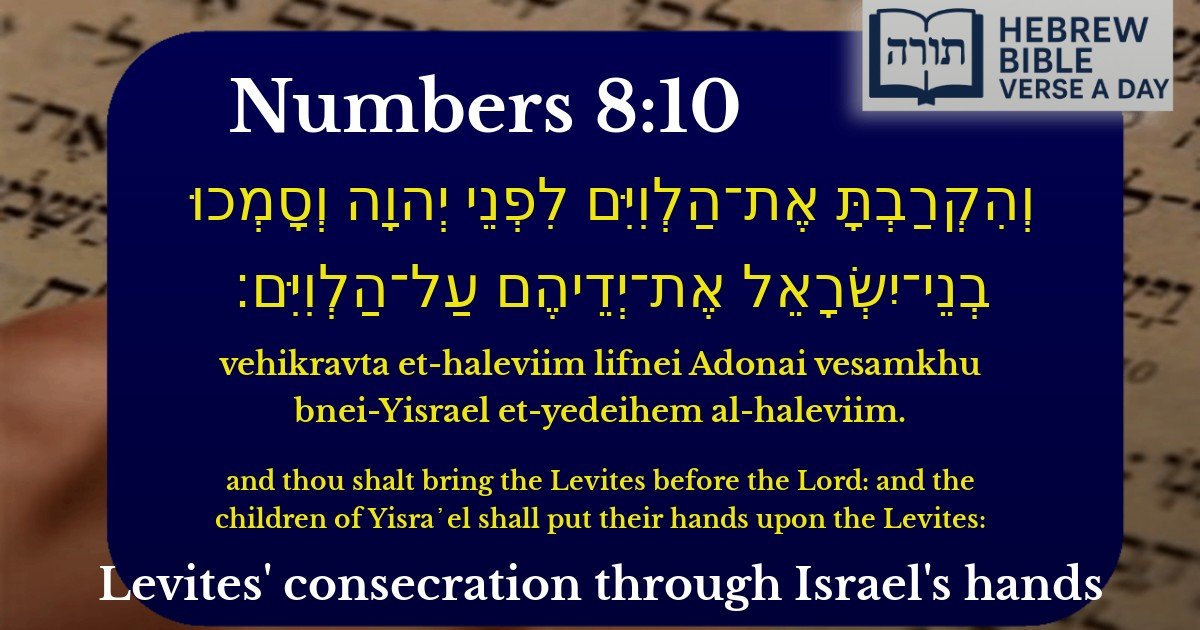
וְהִקְרַבְתָּ אֶת־הַלְוִיִּם לִפְנֵי יְהוָה וְסָמְכוּ בְנֵי־יִשְׂרָאֵל אֶת־יְדֵיהֶם עַל־הַלְוִיִּם׃
English Translation
and thou shalt bring the Levites before the Lord: and the children of Yisra᾽el shall put their hands upon the Levites:
Transliteration
Vehikravta et-haleviim lifnei Adonai vesamkhu bnei-Yisrael et-yedeihem al-haleviim.
Hebrew Leining Text
וְהִקְרַבְתָּ֥ אֶת־הַלְוִיִּ֖ם לִפְנֵ֣י יְהֹוָ֑ה וְסָמְכ֧וּ בְנֵי־יִשְׂרָאֵ֛ל אֶת־יְדֵיהֶ֖ם עַל־הַלְוִיִּֽם׃
🎵 Listen to leining
Parasha Commentary
📚 Talmud Citations
This verse is quoted in the Talmud.
📖 Arakhin 11b
The verse is referenced in a discussion about the consecration of the Levites and their service in the Temple.
📖 Chullin 24b
Mentioned in the context of the laying on of hands (semicha) and its significance in various rituals.
Context and Overview
The verse (Bamidbar 8:10) describes the ceremony of consecrating the Levites for their service in the Mishkan (Tabernacle). This ritual involves the Israelites laying their hands upon the Levites, symbolizing their transfer of sacred duties to this tribe. The process parallels the semichah (laying of hands) performed for korbanot (sacrifices), indicating the Levites' elevated role in divine service.
Rashi's Explanation
Rashi (Bamidbar 8:10) explains that the phrase "וְסָמְכוּ בְנֵי־יִשְׂרָאֵל אֶת־יְדֵיהֶם" ("the children of Israel shall put their hands") signifies that the Israelites appointed the Levites as their representatives in divine service. The semichah was performed by the elders of Israel, acting on behalf of the entire nation, to designate the Levites as substitutes for the firstborns, who originally held this role before the sin of the Golden Calf (Rashi cites Bamidbar 3:12).
Rambam's Perspective
In Hilchot Klei HaMikdash (3:6), the Rambam elaborates that the semichah performed on the Levites was a formal act of dedication, akin to the consecration of a korban. This act signified that the Levites were now set apart for sacred service, replacing the firstborns who forfeited this privilege due to their involvement in idolatry.
Midrashic Interpretation
The Midrash Tanchuma (Bamidbar 6) teaches that the laying of hands symbolized a transfer of spiritual responsibility. Just as the Levites would later bear the Ark and serve in the Mishkan, the Israelites' act of semichah demonstrated their collective support and acknowledgment of the Levites' role as intermediaries in divine worship.
Symbolism of the Ceremony
Halachic Implications
The Talmud (Chullin 13b) notes that the semichah performed here differs from that of korbanot, as it was not a requirement for the Levites' service but rather a symbolic act of designation. This distinction underscores the unique status of the Levites as a tribe wholly dedicated to divine service, separate from the rest of Israel.