

Join Our Newsletter To Be Informed When New Videos Are Posted
Hebrew Text
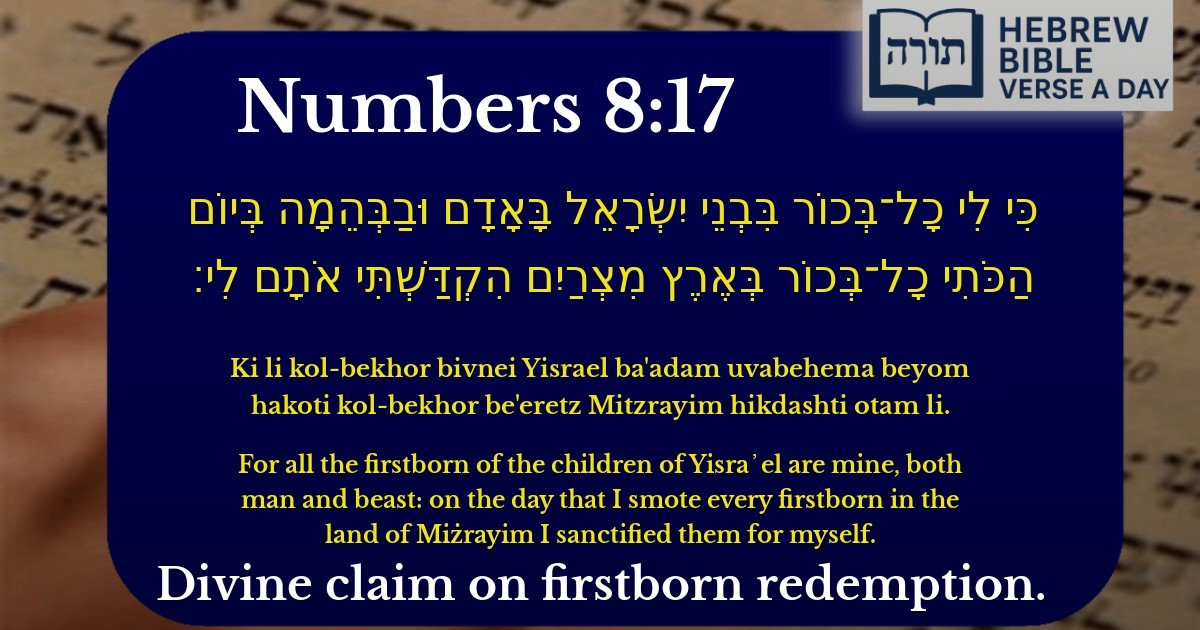
כִּי לִי כָל־בְּכוֹר בִּבְנֵי יִשְׂרָאֵל בָּאָדָם וּבַבְּהֵמָה בְּיוֹם הַכֹּתִי כָל־בְּכוֹר בְּאֶרֶץ מִצְרַיִם הִקְדַּשְׁתִּי אֹתָם לִי׃
English Translation
For all the firstborn of the children of Yisra᾽el are mine, both man and beast: on the day that I smote every firstborn in the land of Miżrayim I sanctified them for myself.
Transliteration
Ki li kol-bekhor bivnei Yisrael ba'adam uvabehema beyom hakoti kol-bekhor be'eretz Mitzrayim hikdashti otam li.
Hebrew Leining Text
כִּ֣י לִ֤י כׇל־בְּכוֹר֙ בִּבְנֵ֣י יִשְׂרָאֵ֔ל בָּאָדָ֖ם וּבַבְּהֵמָ֑ה בְּי֗וֹם הַכֹּתִ֤י כׇל־בְּכוֹר֙ בְּאֶ֣רֶץ מִצְרַ֔יִם הִקְדַּ֥שְׁתִּי אֹתָ֖ם לִֽי׃
🎵 Listen to leining
Parasha Commentary
📚 Talmud Citations
This verse is quoted in the Talmud.
📖 Bechorot 4b
The verse is discussed in the context of the laws regarding the firstborn of both humans and animals, and how they are sanctified to God.
📖 Pesachim 96b
The verse is referenced in a discussion about the sanctification of the firstborn during the Exodus from Egypt.
Understanding the Sanctity of the Firstborn
The verse (Bamidbar 3:13) states: "כִּי לִי כָל־בְּכוֹר בִּבְנֵי יִשְׂרָאֵל בָּאָדָם וּבַבְּהֵמָה" ("For all the firstborn of the children of Yisrael are Mine, both man and beast"). This declaration establishes a fundamental principle in Jewish law—the inherent sanctity of firstborn males, both human and animal, as belonging to Hashem.
Rashi's Explanation
Rashi explains that this sanctity originated during the Exodus from Egypt, when Hashem struck down the Egyptian firstborn but spared the Israelite firstborn. As a result, the Israelite firstborn were consecrated to divine service. Rashi emphasizes that this status was not voluntary but a divine decree: "הִקְדַּשְׁתִּי אֹתָם לִי" ("I sanctified them for Myself").
Rambam's Perspective
In Hilchot Bikkurim, the Rambam (Maimonides) elaborates that the firstborn's sanctity obligates their redemption (pidyon haben) for humans and sacrificial offerings for kosher animals. Non-kosher firstborn animals are exempt but still retain a degree of sanctity. This reflects the verse's distinction between human and animal firstborn while affirming their shared origin in the Exodus miracle.
Midrashic Insights
Halachic Implications
The Talmud (Bechorot 4b) derives from this verse that a firstborn's sanctity applies even if the mother's labor began in Egypt but concluded after the Exodus. This reinforces the idea that their status stems from divine intervention, not human action. The Shulchan Aruch (Yoreh De'ah 305) codifies the practical laws of pidyon haben based on this principle.