

Join Our Newsletter To Be Informed When New Videos Are Posted
Hebrew Text
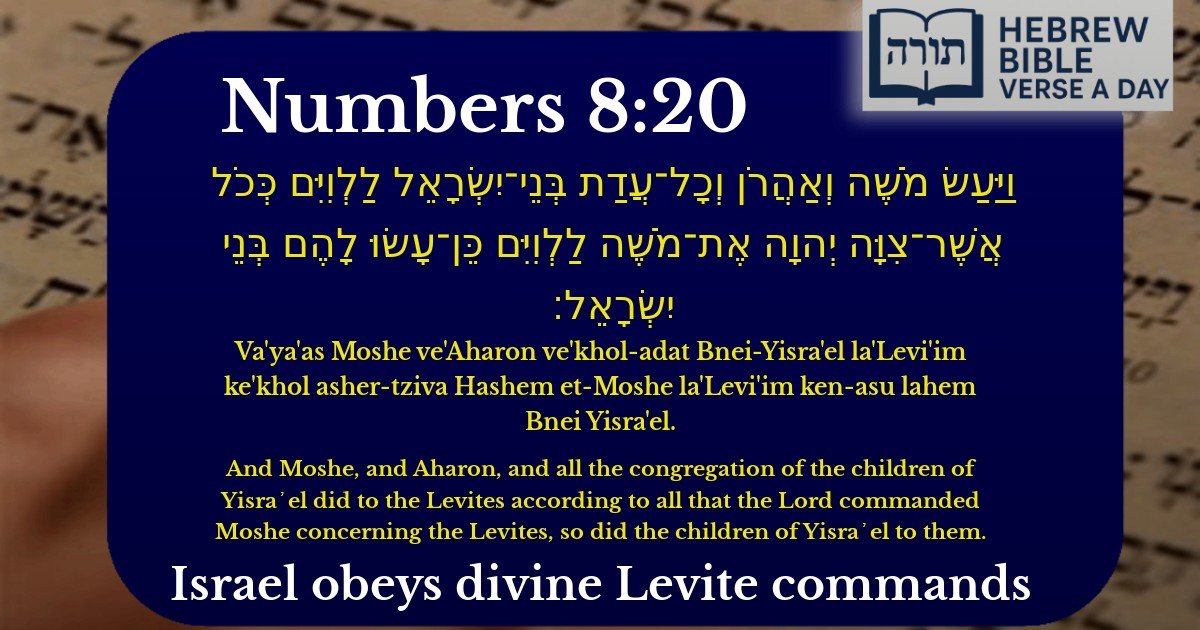
וַיַּעַשׂ מֹשֶׁה וְאַהֲרֹן וְכָל־עֲדַת בְּנֵי־יִשְׂרָאֵל לַלְוִיִּם כְּכֹל אֲשֶׁר־צִוָּה יְהוָה אֶת־מֹשֶׁה לַלְוִיִּם כֵּן־עָשׂוּ לָהֶם בְּנֵי יִשְׂרָאֵל׃
English Translation
And Moshe, and Aharon, and all the congregation of the children of Yisra᾽el did to the Levites according to all that the Lord commanded Moshe concerning the Levites, so did the children of Yisra᾽el to them.
Transliteration
Va'ya'as Moshe ve'Aharon ve'khol-adat Bnei-Yisra'el la'Levi'im ke'khol asher-tziva Hashem et-Moshe la'Levi'im ken-asu lahem Bnei Yisra'el.
Hebrew Leining Text
וַיַּ֨עַשׂ מֹשֶׁ֧ה וְאַהֲרֹ֛ן וְכׇל־עֲדַ֥ת בְּנֵי־יִשְׂרָאֵ֖ל לַלְוִיִּ֑ם כְּ֠כֹ֠ל אֲשֶׁר־צִוָּ֨ה יְהֹוָ֤ה אֶת־מֹשֶׁה֙ לַלְוִיִּ֔ם כֵּן־עָשׂ֥וּ לָהֶ֖ם בְּנֵ֥י יִשְׂרָאֵֽל׃
🎵 Listen to leining
Parasha Commentary
📚 Talmud Citations
This verse is not quoted in the Talmud.
Context of the Verse
This verse (Bamidbar 8:20) describes the fulfillment of Hashem's commandments regarding the consecration of the Levi'im (Levites) for their sacred service in the Mishkan (Tabernacle). The verse emphasizes the collective participation of Moshe, Aharon, and the entire congregation of Bnei Yisrael in carrying out these instructions precisely as commanded.
Rashi's Explanation
Rashi (Bamidbar 8:20) highlights the phrase "כְּכֹל אֲשֶׁר־צִוָּה ה' אֶת־מֹשֶׁה" ("according to all that the Lord commanded Moshe") to teach that the people meticulously followed every detail of the mitzvah without deviation. He notes that this underscores the principle of כָּל הַמְשַׁנֶּה מִדִּבְרֵי חֲכָמִים חַיָּב מִיתָה ("one who alters the words of the Sages is liable for death")—emphasizing the importance of adhering strictly to divine commandments as transmitted through Moshe Rabbeinu.
Rambam's Perspective
In Hilchos Klei HaMikdash (3:1-2), the Rambam elaborates on the unique role of the Levi'im, explaining that their consecration involved specific rituals—such as sprinkling with purifying waters, shaving their bodies, and bringing korbanot (offerings). This verse demonstrates the unity of Klal Yisrael in fulfilling these requirements, setting a precedent for collective responsibility in avodas Hashem (divine service).
Midrashic Insights
Halachic Implications
The Sefer HaChinuch (Mitzvah 392) derives from this verse the importance of communal involvement in appointing and honoring those who serve in sacred roles. The Levi'im's consecration serves as a model for later institutions, such as the appointment of kohanim and Torah scholars, requiring broad consensus and respect from the community.