
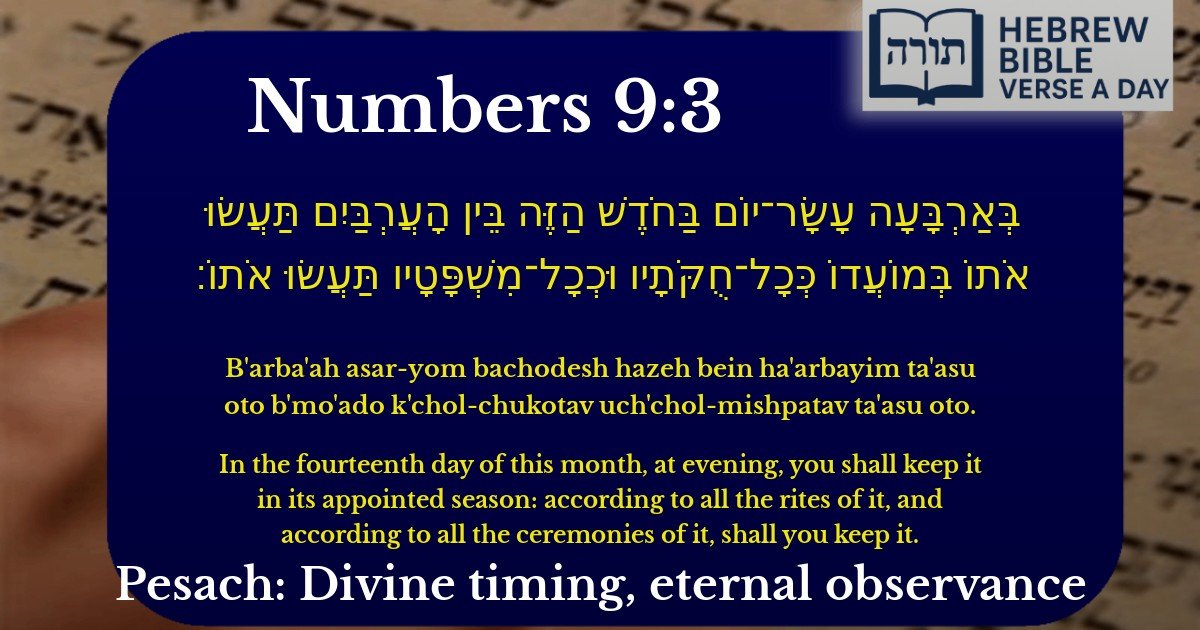

Numbers 9:3 - Pesach: Divine timing, eternal observance

Numbers 9:3 - במדבר 9:3

Hebrew Text

בְּאַרְבָּעָה עָשָׂר־יוֹם בַּחֹדֶשׁ הַזֶּה בֵּין הָעֲרְבַּיִם תַּעֲשׂוּ אֹתוֹ בְּמוֹעֲדוֹ כְּכָל־חֻקֹּתָיו וּכְכָל־מִשְׁפָּטָיו תַּעֲשׂוּ אֹתוֹ׃

English Translation

In the fourteenth day of this month, at evening, you shall keep it in its appointed season: according to all the rites of it, and according to all the ceremonies of it, shall you keep it.

Transliteration

B'arba'ah asar-yom bachodesh hazeh bein ha'arbayim ta'asu oto b'mo'ado k'chol-chukotav uch'chol-mishpatav ta'asu oto.

Hebrew Leining Text

בְּאַרְבָּעָ֣ה עָשָֽׂר־י֠וֹם בַּחֹ֨דֶשׁ הַזֶּ֜ה בֵּ֧ין הָֽעַרְבַּ֛יִם תַּעֲשׂ֥וּ אֹת֖וֹ בְּמֹעֲד֑וֹ כְּכׇל־חֻקֹּתָ֥יו וּכְכׇל־מִשְׁפָּטָ֖יו תַּעֲשׂ֥וּ אֹתֽוֹ׃

🎵 Listen to leining

Parasha Commentary

Context and Source

The verse (Numbers 9:3) discusses the observance of Pesach Sheni (the "Second Passover"), a supplementary opportunity for those who were ritually impure or unable to bring the Passover offering on its original date (14 Nisan). This mitzvah is unique in allowing a second chance for those who missed the initial observance.

Key Phrases and Interpretations

  • "בֵּין הָעֲרְבַּיִם" (at evening): Rashi explains this refers to the afternoon hours, specifically from midday onward, when the Passover sacrifice was brought in the Temple (Pesachim 58a). The Talmud (Berachot 2b) notes that "bein ha'arbayim" spans from when the sun begins to descend (after noon) until nightfall.
  • "כְּכָל־חֻקֹּתָיו וּכְכָל־מִשְׁפָּטָיו" (according to all its rites and ceremonies): Rambam (Hilchot Korban Pesach 1:1-3) emphasizes that the same laws apply to Pesach Sheni as the original Passover, including the prohibition of leaven, eating the sacrifice with matzah and bitter herbs, and not breaking its bones.

Halachic Significance

The Mishnah (Pesachim 9:1) teaches that Pesach Sheni is observed on 14 Iyar, exactly one month after the original date. The Talmud (Pesachim 93a) derives from this verse that the mitzvah applies only to those who were unavoidably prevented from bringing the offering (e.g., due to impurity or distance), not to those who willfully neglected it.

Midrashic Insight

The Midrash (Bamidbar Rabbah 9:7) highlights the exceptional kindness of this mitzvah, noting that HaShem grants a second chance to those who sincerely desired to fulfill the mitzvah but were prevented. This reflects the principle of "rachmana liba ba'i"—the Merciful One desires the heart (Sanhedrin 106b).

📚 Talmud Citations

This verse is quoted in the Talmud.

📖 Pesachim 58a
The verse is discussed in the context of the timing and proper observance of the Passover sacrifice.
📖 Zevachim 56a
The verse is referenced in a discussion about the laws and procedures for sacrifices, particularly the Passover offering.

Frequently Asked Questions

Q: What does 'between the evenings' (בֵּין הָעֲרְבַּיִם) mean in Numbers 9:3?
A: According to Rashi and the Talmud (Pesachim 61a), 'between the evenings' refers to the time period from midday until nightfall. This is the time when the Korban Pesach (Passover sacrifice) was to be offered in the Temple.
Q: Why is the 14th day of the month important in this verse?
A: The 14th day of the month of Nisan is the day when the Passover sacrifice was brought in preparation for the holiday of Pesach (Passover). This date is significant because it commemorates the Exodus from Egypt, as described in the Torah (Exodus 12:6).
Q: What does it mean to keep the Passover 'according to all its rites and ceremonies'?
A: This means observing all the detailed laws and traditions associated with the Passover sacrifice, including how it was slaughtered, roasted, eaten with matzah and maror (bitter herbs), and consumed in a specific manner. The Rambam (Maimonides) outlines these laws in his Mishneh Torah (Hilchot Korban Pesach).
Q: How does this verse apply to Jews today without the Temple?
A: Since the destruction of the Temple, we no longer bring the Passover sacrifice. However, we still commemorate the Exodus through the Seder meal on Passover night, which includes matzah, maror, and retelling the story of Yetziat Mitzrayim (the Exodus). The mitzvah of remembering the Passover sacrifice remains important (Pesachim 116a).
Q: What is the significance of performing the Passover sacrifice 'in its appointed season'?
A: The Torah emphasizes performing mitzvot at their designated times. The Passover sacrifice must be brought specifically on the 14th of Nisan, teaching us the importance of precision in fulfilling commandments. The Midrash (Mechilta) notes that this shows our commitment to following Hashem's commandments exactly as instructed.