
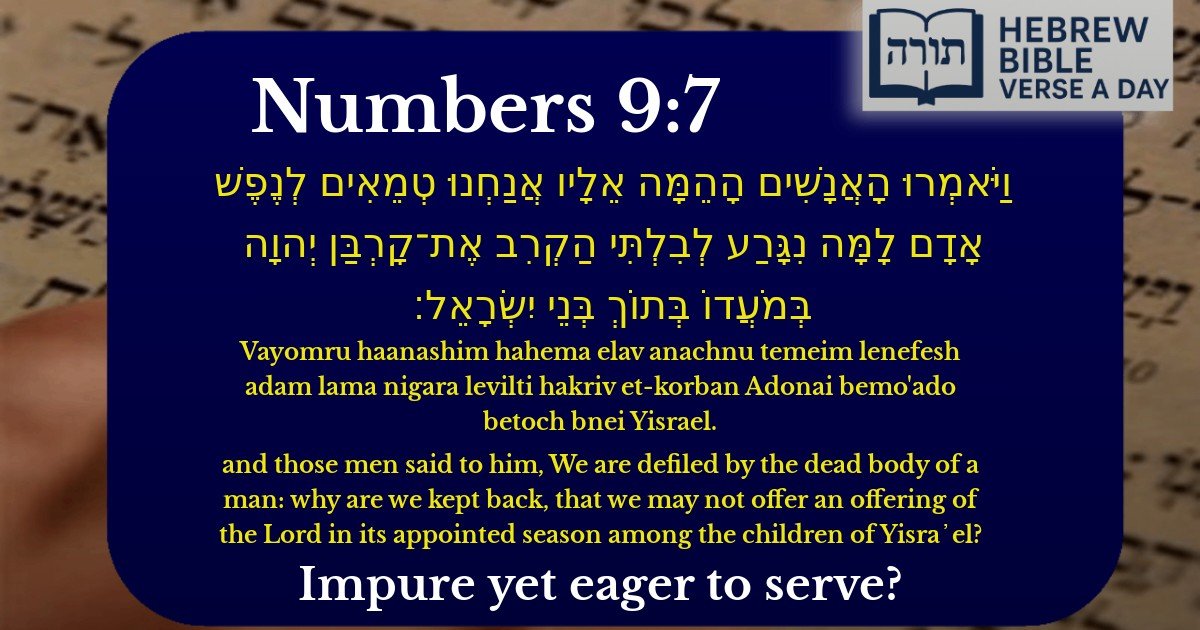

Numbers 9:7 - Impure yet eager to serve?

Numbers 9:7 - במדבר 9:7

Hebrew Text

וַיֹּאמְרוּ הָאֲנָשִׁים הָהֵמָּה אֵלָיו אֲנַחְנוּ טְמֵאִים לְנֶפֶשׁ אָדָם לָמָּה נִגָּרַע לְבִלְתִּי הַקְרִב אֶת־קָרְבַּן יְהוָה בְּמֹעֲדוֹ בְּתוֹךְ בְּנֵי יִשְׂרָאֵל׃

English Translation

and those men said to him, We are defiled by the dead body of a man: why are we kept back, that we may not offer an offering of the Lord in its appointed season among the children of Yisra᾽el?

Transliteration

Vayomru haanashim hahema elav anachnu temeim lenefesh adam lama nigara levilti hakriv et-korban Adonai bemo'ado betoch bnei Yisrael.

Hebrew Leining Text

וַ֠יֹּאמְר֠וּ הָאֲנָשִׁ֤ים הָהֵ֙מָּה֙ אֵלָ֔יו אֲנַ֥חְנוּ טְמֵאִ֖ים לְנֶ֣פֶשׁ אָדָ֑ם לָ֣מָּה נִגָּרַ֗ע לְבִלְתִּ֨י הַקְרִ֜יב אֶת־קׇרְבַּ֤ן יְהֹוָה֙ בְּמֹ֣עֲד֔וֹ בְּת֖וֹךְ בְּנֵ֥י יִשְׂרָאֵֽל׃

🎵 Listen to leining

Parasha Commentary

Context in the Torah

This verse appears in Bamidbar (Numbers) 9:6, where a group of men who were tamei (ritually impure) due to contact with a dead body approached Moshe with a concern. They were distressed because their impurity prevented them from bringing the Korban Pesach (Paschal offering) at its designated time along with the rest of Bnei Yisrael.

Rashi's Explanation

Rashi (Bamidbar 9:7) explains that these men were tamei l'nefesh adam (impure from a human corpse), likely due to their involvement in carrying Yosef's bones out of Egypt (as mentioned in Shemot 13:19). Their question—"Why should we be excluded?"—reflects their deep desire to fulfill the mitzvah despite their impurity. Rashi emphasizes their righteousness, as they did not resign themselves to exclusion but actively sought a solution.

Halachic Implications

The Rambam (Hilchot Korban Pesach 5:1-2) derives from this episode the principle of Pesach Sheni (the "Second Passover" on the 14th of Iyar). Because these men demonstrated sincere longing to serve Hashem, Hashem instituted a second opportunity for those who were impure or distant during the first Pesach. This teaches that sincere spiritual yearning can lead to divine accommodation.

Midrashic Insights

  • The Midrash Tanchuma (Bamidbar 9) praises these men for their zeal, contrasting them with those who might have used impurity as an excuse to avoid the mitzvah.
  • The Sifrei (Bamidbar 9:6) highlights that their phrasing—"Why should we be excluded?"—shows collective responsibility, as they saw their exclusion as a loss for all of Klal Yisrael.

Spiritual Lessons

This incident teaches:

  • The importance of ratzon (sincere desire) in avodat Hashem—when one genuinely seeks to fulfill mitzvot, Hashem provides pathways.
  • That halachic obstacles (like tumah) do not absolve us from striving to connect with Hashem.
  • The value of questioning and advocating for spiritual inclusion, as these men did not passively accept their exclusion.

📚 Talmud Citations

This verse is quoted in the Talmud.

📖 Pesachim 77a
The verse is referenced in the discussion about the laws of Pesach Sheni (the second Passover), where individuals who were ritually impure or on a distant journey at the time of the first Passover were given a second opportunity to offer the Passover sacrifice.

Frequently Asked Questions

Q: What does Numbers 9:7 mean?
A: Numbers 9:7 describes a group of men who were ritually impure (טְמֵאִים) due to contact with a dead body. They approached Moshe (Moses) with a concern: even though they wanted to bring the Passover offering (קָרְבַּן יְהוָה) at its proper time, their impurity prevented them from doing so. This verse highlights their sincere desire to fulfill the mitzvah despite their temporary state of impurity.
Q: Why is this verse important in Judaism?
A: This verse is important because it led to the establishment of Pesach Sheni (the 'Second Passover') in Numbers 9:9-12. Hashem responded by giving those who were impure or unable to bring the Passover offering at its proper time a second chance a month later. This teaches the value of sincere desire to serve Hashem and His willingness to accommodate those who genuinely seek to fulfill mitzvot.
Q: What can we learn from the men in this verse?
A: We learn from these men the importance of zeal for mitzvot and not being complacent about missing opportunities to serve Hashem. Rashi explains that they could have easily accepted their impurity as an excuse, but instead, they proactively sought a solution. This teaches us to always strive to connect with Hashem, even when facing obstacles.
Q: How does the concept of Pesach Sheni apply today?
A: While we do not currently bring the Passover offering without the Beit Hamikdash (Temple), the principle of Pesach Sheni still applies. The Talmud (Pesachim 93a) discusses its laws, and today it serves as a reminder that it's never too late to correct missed spiritual opportunities. The Lubavitcher Rebbe emphasized that Pesach Sheni symbolizes the power of teshuvah (repentance) and second chances in avodat Hashem (divine service).
Q: What does 'defiled by the dead body of a man' mean in this context?
A: In Jewish law (based on Numbers 19), contact with a human corpse causes tum'at met (impurity from the dead), the most severe form of ritual impurity. The men in this verse had become tamei (impure) this way, which temporarily restricted their participation in certain holy activities like bringing the Passover offering. The Torah provides purification processes (involving the ashes of the red heifer) to restore purity.