

Join Our Newsletter To Be Informed When New Videos Are Posted
Hebrew Text
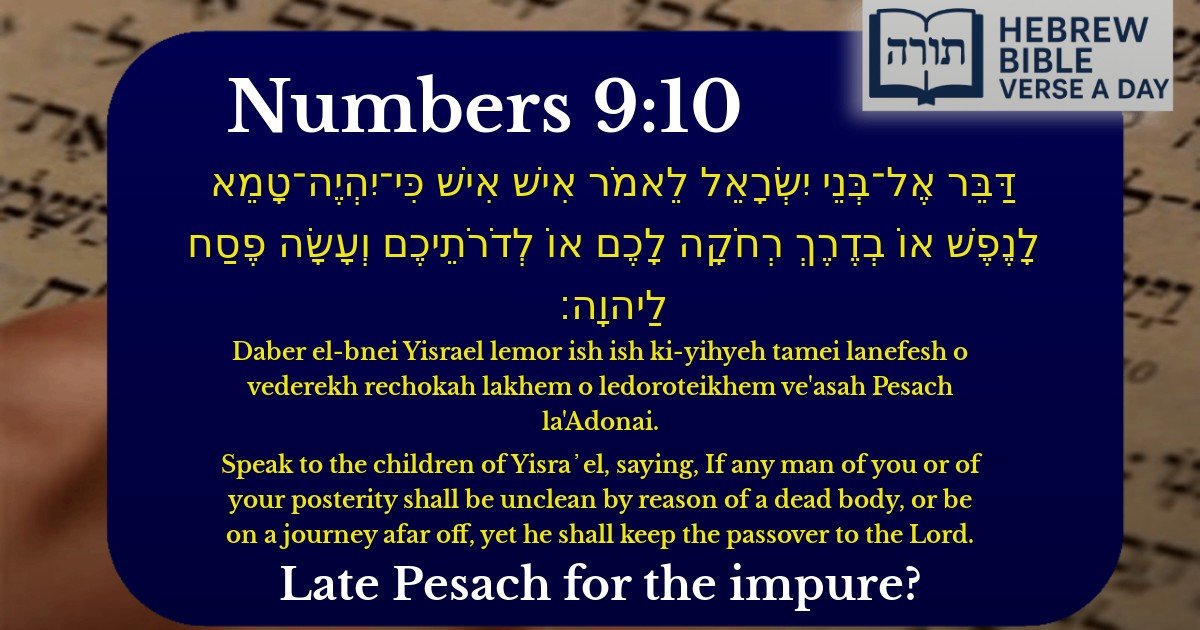
דַּבֵּר אֶל־בְּנֵי יִשְׂרָאֵל לֵאמֹר אִישׁ אִישׁ כִּי־יִהְיֶה־טָמֵא לָנֶפֶשׁ אוֹ בְדֶרֶךְ רְחֹקָה לָכֶם אוֹ לְדֹרֹתֵיכֶם וְעָשָׂה פֶסַח לַיהוָה׃
English Translation
Speak to the children of Yisra᾽el, saying, If any man of you or of your posterity shall be unclean by reason of a dead body, or be on a journey afar off, yet he shall keep the passover to the Lord.
Transliteration
Daber el-bnei Yisrael lemor ish ish ki-yihyeh tamei lanefesh o vederekh rechokah lakhem o ledoroteikhem ve'asah Pesach la'Adonai.
Hebrew Leining Text
דַּבֵּ֛ר אֶל־בְּנֵ֥י יִשְׂרָאֵ֖ל לֵאמֹ֑ר אִ֣ישׁ אִ֣ישׁ כִּי־יִהְיֶֽה־טָמֵ֣א ׀ לָנֶ֡פֶשׁ אוֹ֩ בְדֶ֨רֶךְ רְחֹקָ֜הׄ לָכֶ֗ם א֚וֹ לְדֹרֹ֣תֵיכֶ֔ם וְעָ֥שָׂה פֶ֖סַח לַיהֹוָֽה׃
🎵 Listen to leining
Parasha Commentary
📚 Talmud Citations
This verse is quoted in the Talmud.
📖 Pesachim 93a
The verse is discussed in the context of the laws concerning the second Passover (Pesach Sheni) for those who were unclean or on a distant journey during the first Passover.
Context of the Verse
The verse (Bamidbar 9:10) addresses individuals who are unable to bring the Korban Pesach (Paschal offering) at its designated time due to impurity (tum'as nefesh) or being on a distant journey (derech rechokah). The Torah provides a solution—the observance of Pesach Sheni (the "Second Passover") one month later, on the 14th of Iyar.
Rashi's Explanation
Rashi (Bamidbar 9:10) clarifies that tum'as nefesh refers specifically to impurity contracted through contact with a human corpse. He also explains that derech rechokah means being outside the permissible boundaries of Yerushalayim at the time of the Korban Pesach, rendering one unable to participate in the offering.
Rambam's Halachic Perspective
In Hilchos Korban Pesach (5:1-3), the Rambam codifies the laws of Pesach Sheni, emphasizing that this mitzvah applies equally to those who were tamei (ritually impure) or on a distant journey. He notes that this second opportunity demonstrates Hashem's compassion, ensuring no Jew is permanently excluded from this foundational mitzvah.
Talmudic Discussion (Pesachim 93a)
The Gemara discusses the parameters of derech rechokah, defining it as being beyond the threshold of the Azarah (Temple courtyard) when the Korban Pesach is offered. The Sages derive from this verse that even intentional neglect does not permanently exclude one from fulfilling the mitzvah, as Pesach Sheni provides a second chance.
Midrashic Insight (Bamidbar Rabbah 9:12)
The Midrash highlights the exceptional nature of Pesach Sheni, noting that it is the only mitzvah in the Torah where missing the original time does not result in permanent loss. This teaches about the unique importance of the Korban Pesach in connecting the Jewish people to Hashem.
Key Lessons