Frequently Asked Questions
Q: What does Numbers 9:11 mean?
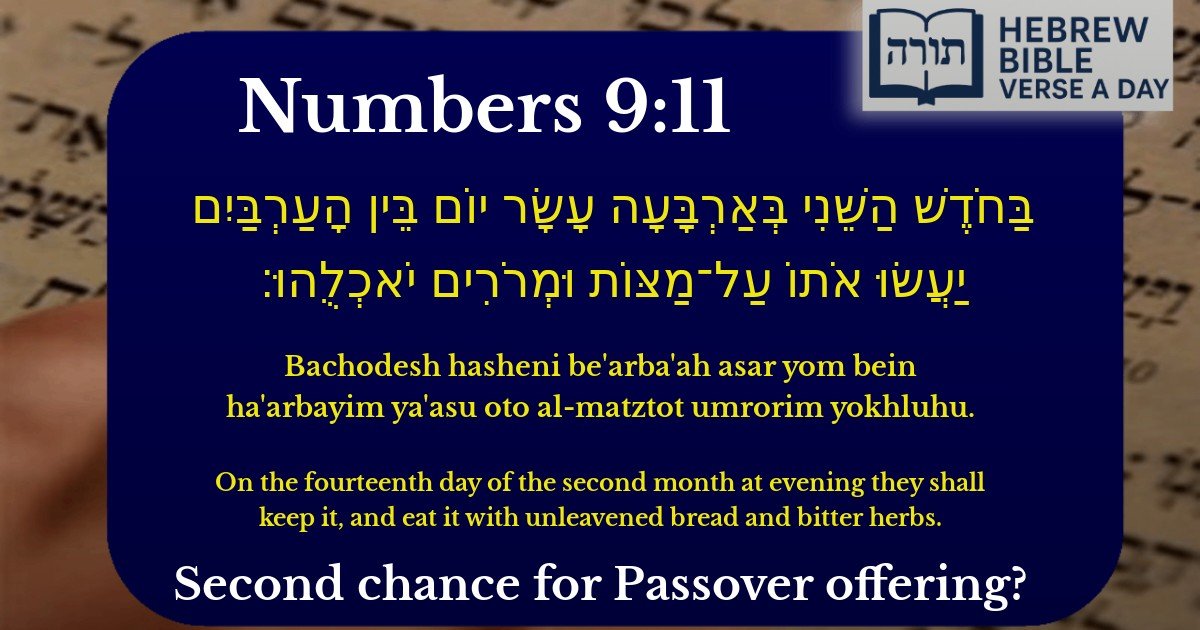
A: Numbers 9:11 discusses the Pesach Sheni (Second Passover), an opportunity for those who were ritually impure or unable to bring the Passover offering in Nissan (the first month) to observe it a month later, on the 14th of Iyar. They must eat it with matzah (unleavened bread) and maror (bitter herbs), just like the regular Passover.
Q: Why is Pesach Sheni important?
A: Pesach Sheni teaches us about second chances in serving Hashem. The Talmud (Pesachim 93a) explains that when people who were impure asked Moshe for an opportunity to bring the Passover offering, Hashem granted their request. This shows that sincere desire to fulfill mitzvot is precious to Hashem, even if one couldn't do it at the proper time.
Q: What can we learn from Numbers 9:11 today?
A: We learn that Torah makes accommodations for those who genuinely want to serve Hashem but face obstacles. The Rambam (Hilchot Korban Pesach 5:1-2) explains the laws of Pesach Sheni, showing that the Torah values sincere effort. Today, though we don't have the Temple, this teaches us to always seek ways to grow in mitzvah observance.
Q: Why do they eat matzah and maror on Pesach Sheni?
A: Rashi explains that Pesach Sheni must mirror the original Passover in Nissan (Exodus 12:8), which requires eating the sacrifice with matzah and maror. Matzah represents redemption and humility, while maror reminds us of the bitterness of slavery. These elements remain essential to properly observe this mitzvah, even in the second month.
Q: Does Pesach Sheni apply today without the Temple?
A: While we cannot bring the Passover offering without the Temple, the Midrash (Bamidbar Rabbah 15) emphasizes the spiritual message of Pesach Sheni: it's never too late to correct missed opportunities in serving Hashem. Many have the custom to eat matzah on Pesach Sheni (14 Iyar) to commemorate this idea, as mentioned in Mishnah Berurah (489:10).


Context of the Verse
The verse (Bamidbar 9:11) discusses the observance of Pesach Sheni (the "Second Passover"), which was instituted for those who were unable to bring the Korban Pesach (Passover offering) at its proper time in Nisan due to ritual impurity or being on a distant journey. The Torah grants them a second opportunity to observe the mitzvah one month later, on the 14th of Iyar.
Key Elements of the Verse
Halachic Implications
According to the Rambam (Hilchot Korban Pesach 5:7-8), Pesach Sheni is observed in the same manner as the first Pesach, with the following distinctions:
Midrashic Insight
The Midrash (Bamidbar Rabbah 9:7) highlights the exceptional nature of Pesach Sheni as an act of divine compassion. When those who were impure approached Moshe with their dilemma, Hashem responded with this additional opportunity, teaching that sincere desire to fulfill mitzvot is met with divine accommodation.
Spiritual Lesson
The Sefat Emet (on Pesach Sheni) teaches that this mitzvah symbolizes the concept of teshuvah (repentance)—even if one misses an initial opportunity, sincere effort can lead to a "second chance" in divine service.