

Join Our Newsletter To Be Informed When New Videos Are Posted
Hebrew Text
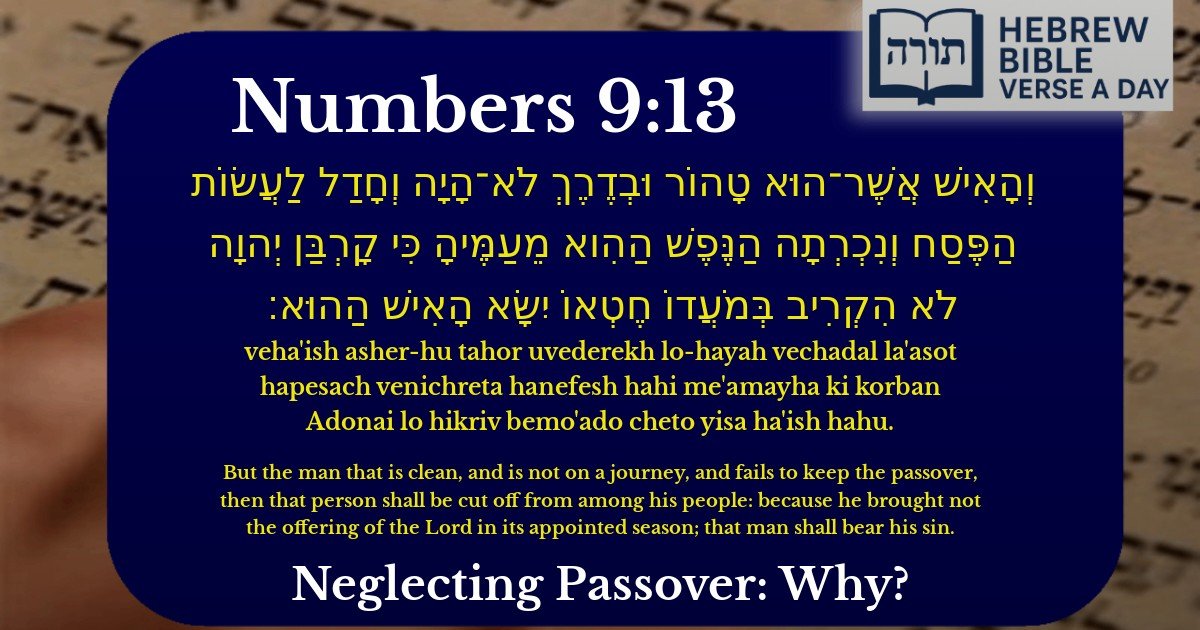
וְהָאִישׁ אֲשֶׁר־הוּא טָהוֹר וּבְדֶרֶךְ לֹא־הָיָה וְחָדַל לַעֲשׂוֹת הַפֶּסַח וְנִכְרְתָה הַנֶּפֶשׁ הַהִוא מֵעַמֶּיהָ כִּי קָרְבַּן יְהוָה לֹא הִקְרִיב בְּמֹעֲדוֹ חֶטְאוֹ יִשָּׂא הָאִישׁ הַהוּא׃
English Translation
But the man that is clean, and is not on a journey, and fails to keep the passover, then that person shall be cut off from among his people: because he brought not the offering of the Lord in its appointed season; that man shall bear his sin.
Transliteration
Veha'ish asher-hu tahor uvederekh lo-hayah vechadal la'asot hapesach venichreta hanefesh hahi me'amayha ki korban Adonai lo hikriv bemo'ado cheto yisa ha'ish hahu.
Hebrew Leining Text
וְהָאִישׁ֩ אֲשֶׁר־ה֨וּא טָה֜וֹר וּבְדֶ֣רֶךְ לֹא־הָיָ֗ה וְחָדַל֙ לַעֲשׂ֣וֹת הַפֶּ֔סַח וְנִכְרְתָ֛ה הַנֶּ֥פֶשׁ הַהִ֖וא מֵֽעַמֶּ֑יהָ כִּ֣י ׀ קׇרְבַּ֣ן יְהֹוָ֗ה לֹ֤א הִקְרִיב֙ בְּמֹ֣עֲד֔וֹ חֶטְא֥וֹ יִשָּׂ֖א הָאִ֥ישׁ הַהֽוּא׃
🎵 Listen to leining
Parasha Commentary
📚 Talmud Citations
This verse is quoted in the Talmud.
📖 Pesachim 93a
The verse is discussed in the context of the laws concerning the Passover sacrifice, particularly regarding those who are obligated to bring the sacrifice but fail to do so.
The Severity of Neglecting the Korban Pesach
The verse (Bamidbar 9:13) establishes a severe punishment of karet (being cut off from one's people) for one who is tahor (ritually pure) and not on a journey, yet neglects to bring the Korban Pesach. Rashi explains that this demonstrates the gravity of the mitzvah, as it is one of the few commandments where intentional neglect incurs karet (Pesachim 82a). The Rambam (Hilchot Korban Pesach 1:1) emphasizes that this applies even if one fails to participate in the communal aspect of the offering.
Conditions for Liability
The Nature of the Sin
The phrase "חֶטְאוֹ יִשָּׂא" ("that man shall bear his sin") is interpreted by the Ramban as indicating that the individual bears full responsibility for his deliberate neglect. The Talmud (Pesachim 93a) discusses that this applies even if one was not part of the original group registered for a particular Korban Pesach, highlighting the personal obligation.
Spiritual Implications
The Midrash Tanchuma (Bamidbar 17) connects this mitzvah to the foundational relationship between Hashem and Klal Yisrael, as the Korban Pesach commemorates Yetziat Mitzrayim. Neglecting it is akin to rejecting the covenant. The Kli Yakar adds that the communal nature of the offering underscores the importance of unity in avodat Hashem.