

Join Our Newsletter To Be Informed When New Videos Are Posted
Hebrew Text
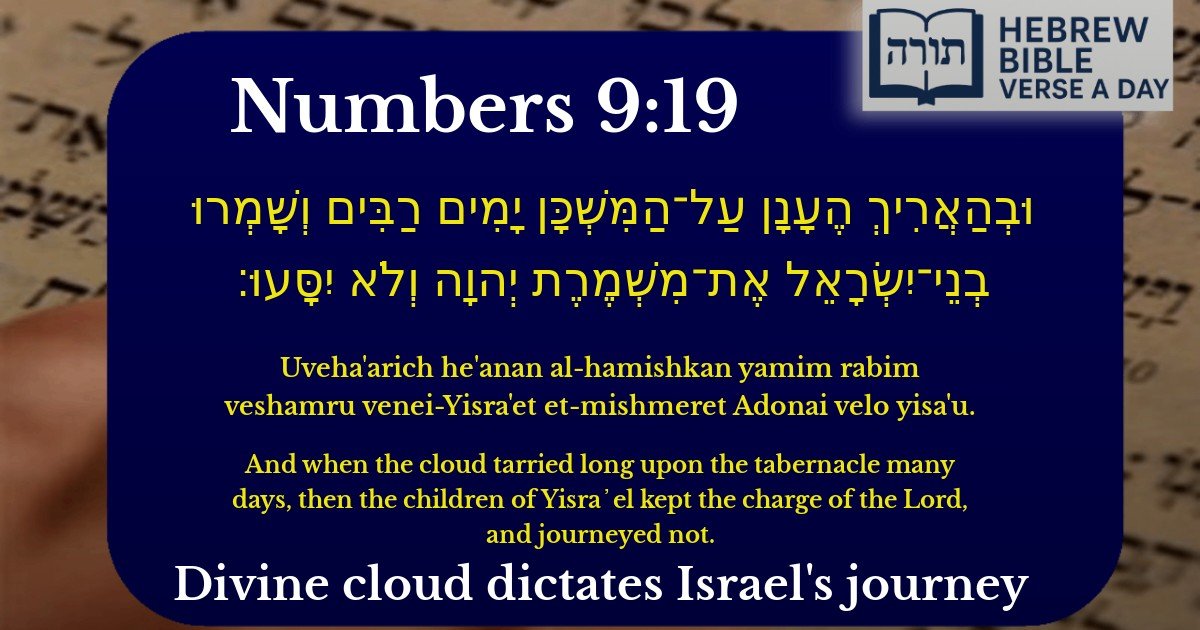
וּבְהַאֲרִיךְ הֶעָנָן עַל־הַמִּשְׁכָּן יָמִים רַבִּים וְשָׁמְרוּ בְנֵי־יִשְׂרָאֵל אֶת־מִשְׁמֶרֶת יְהוָה וְלֹא יִסָּעוּ׃
English Translation
And when the cloud tarried long upon the tabernacle many days, then the children of Yisra᾽el kept the charge of the Lord, and journeyed not.
Transliteration
Uveha'arich he'anan al-hamishkan yamim rabim veshamru venei-Yisra'et et-mishmeret Adonai velo yisa'u.
Hebrew Leining Text
וּבְהַאֲרִ֧יךְ הֶֽעָנָ֛ן עַל־הַמִּשְׁכָּ֖ן יָמִ֣ים רַבִּ֑ים וְשָׁמְר֧וּ בְנֵי־יִשְׂרָאֵ֛ל אֶת־מִשְׁמֶ֥רֶת יְהֹוָ֖ה וְלֹ֥א יִסָּֽעוּ׃
🎵 Listen to leining
Parasha Commentary
📚 Talmud Citations
This verse is not quoted in the Talmud.
Understanding the Verse in Context
The verse (Bamidbar 9:19) describes the relationship between the Anan HaKavod (Cloud of Glory) and the encampment of Bnei Yisrael in the wilderness. The presence of the cloud indicated Hashem's guidance, and its movement or stillness dictated when the nation would travel or remain in place.
Rashi's Explanation
Rashi (Bamidbar 9:19) emphasizes that Bnei Yisrael did not journey unless the cloud lifted, even if it remained stationary for an extended period. Their obedience to Hashem's command—symbolized by the cloud—demonstrated their complete trust in divine providence. Rashi further notes that this teaches the importance of patience and submission to Hashem's will, even when circumstances seem prolonged.
Rambam's Perspective on Divine Guidance
In Moreh Nevuchim (3:24), Rambam explains that the cloud was a visible manifestation of the Shechinah (Divine Presence), ensuring that Bnei Yisrael would not rely on human calculations for their travels. This reinforced the principle that their journey was entirely directed by Hashem, not by natural or human planning.
Midrashic Insights
The Midrash (Bamidbar Rabbah 2:9) elaborates that the cloud's prolonged stay was a test of Bnei Yisrael's faith. Even when the delay seemed unnecessary, they remained steadfast in their commitment to follow Hashem's command. This mirrors Avraham Avinu's unwavering faith during his tests.
Halachic Implications
The Talmud (Shabbat 31a) derives from this verse the concept of Shmirat HaMitzvot (guarding the commandments). Just as Bnei Yisrael meticulously observed the cloud's movements, Jews must be equally vigilant in observing mitzvot, regardless of external circumstances.
Key Lessons