

Join Our Newsletter To Be Informed When New Videos Are Posted
Hebrew Text
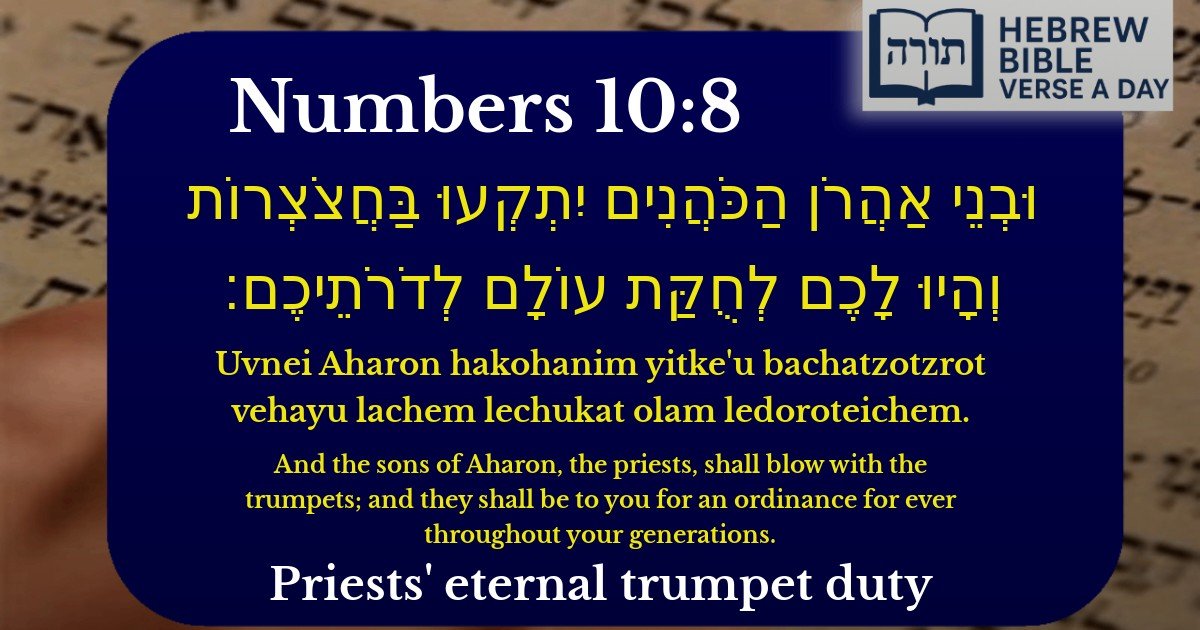
וּבְנֵי אַהֲרֹן הַכֹּהֲנִים יִתְקְעוּ בַּחֲצֹצְרוֹת וְהָיוּ לָכֶם לְחֻקַּת עוֹלָם לְדֹרֹתֵיכֶם׃
English Translation
And the sons of Aharon, the priests, shall blow with the trumpets; and they shall be to you for an ordinance for ever throughout your generations.
Transliteration
Uvnei Aharon hakohanim yitke'u bachatzotzrot vehayu lachem lechukat olam ledoroteichem.
Hebrew Leining Text
וּבְנֵ֤י אַהֲרֹן֙ הַכֹּ֣הֲנִ֔ים יִתְקְע֖וּ בַּחֲצֹֽצְר֑וֹת וְהָי֥וּ לָכֶ֛ם לְחֻקַּ֥ת עוֹלָ֖ם לְדֹרֹתֵיכֶֽם׃
🎵 Listen to leining
Parasha Commentary
📚 Talmud Citations
This verse is quoted in the Talmud.
📖 Rosh Hashanah 26b
The verse is discussed in the context of the mitzvah of blowing trumpets, particularly regarding who is qualified to perform this commandment and its eternal nature.
📖 Arakhin 11a
The verse is referenced in a discussion about the role of the priests in Temple service and the specific commandments assigned to them.
The Role of the Kohanim in Blowing the Trumpets
The verse (Bamidbar 10:8) establishes that the mitzvah of blowing the chatzotzrot (trumpets) is specifically assigned to the sons of Aharon, the Kohanim. Rashi explains that this task is reserved for the Kohanim because of their elevated sanctity and their role in facilitating the divine service in the Mishkan and later in the Beit HaMikdash. The Rambam (Hilchot Klei HaMikdash 3:5) further elaborates that this mitzvah is performed exclusively by Kohanim, emphasizing their unique status in leading the nation in both times of war and peace.
The Eternal Nature of the Mitzvah
The phrase "לְחֻקַּת עוֹלָם לְדֹרֹתֵיכֶם" ("an ordinance forever throughout your generations") underscores the perpetual obligation of this commandment. The Sifrei (Bamidbar 78) teaches that this mitzvah applies in all generations, even when the Beit HaMikdash is not standing, as it is tied to the broader role of the Kohanim in guiding the Jewish people. The Ramban adds that the trumpets serve as a means of communication between Hashem and Bnei Yisrael, symbolizing the enduring relationship between the Creator and His people.
Purposes of the Trumpets
The Kohanim as Intermediaries
The Kli Yakar highlights that the Kohanim, as spiritual leaders, serve as the conduit between the people and Hashem. The blowing of the trumpets by the Kohanim represents their role in awakening the nation to repentance, unity, and divine service. This aligns with the teaching in Pirkei Avot (4:13) that the Kohanim are entrusted with preserving the sanctity of the Jewish people.