

Join Our Newsletter To Be Informed When New Videos Are Posted
Hebrew Text
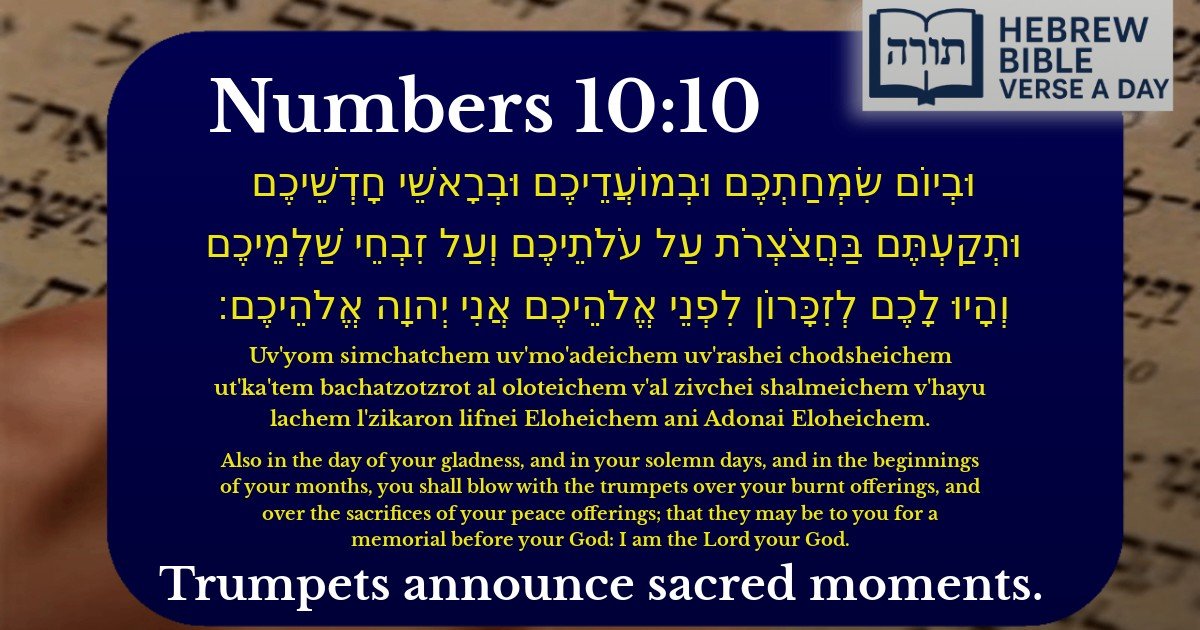
וּבְיוֹם שִׂמְחַתְכֶם וּבְמוֹעֲדֵיכֶם וּבְרָאשֵׁי חָדְשֵׁיכֶם וּתְקַעְתֶּם בַּחֲצֹצְרֹת עַל עֹלֹתֵיכֶם וְעַל זִבְחֵי שַׁלְמֵיכֶם וְהָיוּ לָכֶם לְזִכָּרוֹן לִפְנֵי אֱלֹהֵיכֶם אֲנִי יְהוָה אֱלֹהֵיכֶם׃
English Translation
Also in the day of your gladness, and in your solemn days, and in the beginnings of your months, you shall blow with the trumpets over your burnt offerings, and over the sacrifices of your peace offerings; that they may be to you for a memorial before your God: I am the Lord your God.
Transliteration
Uv'yom simchatchem uv'mo'adeichem uv'rashei chodsheichem ut'ka'tem bachatzotzrot al oloteichem v'al zivchei shalmeichem v'hayu lachem l'zikaron lifnei Eloheichem ani Adonai Eloheichem.
Hebrew Leining Text
וּבְי֨וֹם שִׂמְחַתְכֶ֥ם וּֽבְמוֹעֲדֵיכֶם֮ וּבְרָאשֵׁ֣י חׇדְשֵׁיכֶם֒*(בספרי ספרד ואשכנז חׇדְשֵׁכֶם֒) וּתְקַעְתֶּ֣ם בַּחֲצֹֽצְרֹ֗ת עַ֚ל עֹלֹ֣תֵיכֶ֔ם וְעַ֖ל זִבְחֵ֣י שַׁלְמֵיכֶ֑ם וְהָי֨וּ לָכֶ֤ם לְזִכָּרוֹן֙ לִפְנֵ֣י אֱלֹֽהֵיכֶ֔ם אֲנִ֖י יְהֹוָ֥ה אֱלֹהֵיכֶֽם׃ {פ}
🎵 Listen to leining
Parasha Commentary
📚 Talmud Citations
This verse is quoted in the Talmud.
📖 Rosh Hashanah 26b
The verse is discussed in the context of the mitzvah of blowing trumpets on various occasions, including festivals and the New Moon, as part of the Temple service.
📖 Arakhin 10b
The verse is referenced in a discussion about the use of trumpets in the Temple during sacrifices and festive occasions.
Context and Source
The verse appears in Bamidbar (Numbers) 10:10, where Hashem commands the Jewish people to sound the chatzotzrot (trumpets) during times of joy, festivals, and Rosh Chodesh (the beginning of the month). This mitzvah is connected to the offerings brought in the Mishkan (Tabernacle) and later the Beit HaMikdash (Temple).
Purpose of the Trumpets
Rashi explains that the sounding of the trumpets serves as a zikaron (memorial) before Hashem, meaning it evokes divine mercy and remembrance for Israel. The Rambam (Hilchot Ta’aniyot 1:1) elaborates that the trumpets were blown during times of distress as well, demonstrating that they serve as a means of prayer and connection to Hashem in both joyous and difficult times.
Connection to Festivals and Rosh Chodesh
The verse specifies three occasions for sounding the trumpets:
Trumpets and Korbanot (Offerings)
The verse links the trumpets to olot (burnt offerings) and shalmei (peace offerings). The Kli Yakar explains that the sound of the trumpets elevates the korbanot, making them a more complete service before Hashem. The Sefer HaChinuch (Mitzvah 384) adds that the sound serves as a public declaration of faith, reinforcing the spiritual significance of the sacrifices.
Divine Remembrance and Relationship
The verse concludes with "I am Hashem your God," emphasizing that this mitzvah strengthens the covenant between Hashem and Israel. The Sforno teaches that the trumpets remind us that all joy and festivals are sanctified by our connection to the Divine. The Netziv (Ha'amek Davar) notes that this mitzvah ensures that our celebrations remain spiritually focused rather than merely physical.