Frequently Asked Questions
Q: Who was Netanel ben Tzuar mentioned in Numbers 10:15?
A: Netanel ben Tzuar was the leader (nasi) of the tribe of Yissakhar during the Israelites' journey in the wilderness. According to Rashi, he was chosen for his wisdom and leadership qualities. The Midrash (Bamidbar Rabbah) also highlights that the tribe of Yissakhar was known for their Torah scholarship, and Netanel represented this virtue.
Q: Why is the tribe of Yissakhar mentioned in this verse?
A: The tribe of Yissakhar is mentioned here as part of the orderly arrangement of the Israelite camp during their travels in the wilderness. Each tribe had a specific role, and Yissakhar's role, as explained in the Talmud (Berachot 17a), was deeply connected to Torah study. Their leader, Netanel, guided them in both spiritual and practical matters.
Q: What can we learn from Netanel ben Tzuar's leadership?
A: Netanel ben Tzuar's leadership teaches us the importance of wisdom and dedication to Torah values. The Rambam (Hilchot De'ot) emphasizes that a true leader must embody Torah principles and guide others with humility and knowledge. Netanel, as the representative of Yissakhar—a tribe known for scholarship—exemplified this ideal.
Q: Why does the Torah list the leaders of each tribe in Numbers?
A: The Torah lists the leaders of each tribe to show the importance of structure and unity among the Jewish people. According to Rashi, each leader was chosen for their unique qualities, and their roles were essential for the nation's journey. The Midrash (Tanchuma) adds that this teaches us that every individual and tribe has a distinct purpose in serving Hashem.
Q: How does the role of Yissakhar's tribe apply to us today?
A: The tribe of Yissakhar, represented by Netanel ben Tzuar, reminds us of the value of Torah study and supporting those who dedicate themselves to learning. The Talmud (Megillah 26b) discusses how Yissakhar and Zevulun had a partnership—one studied Torah while the other supported them financially. This model is still relevant today in fostering Torah communities.

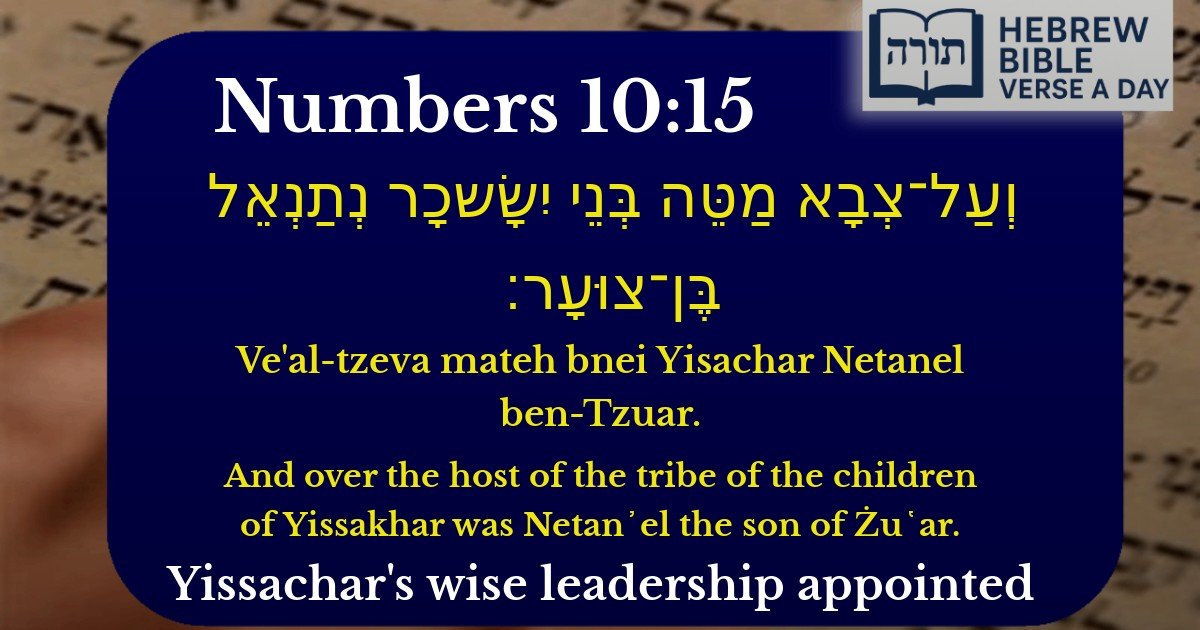

Netan'el ben Tzu'ar as Nasi of Shevet Yissakhar
The verse (Bamidbar 10:15) identifies Netan'el ben Tzu'ar as the leader (nasi) of the tribe of Yissakhar during the wilderness journey. Rashi notes that this appointment reflects the Torah's principle that leadership positions are assigned based on merit and Divine wisdom, not merely lineage or personal ambition.
The Significance of the Name "Netan'el"
Several commentators explore the meaning of his name:
Yissakhar's Tribal Character
The Midrash (Bamidbar Rabbah 13:16) highlights that Yissakhar was particularly devoted to Torah study, and Netan'el's leadership reflects this:
The Meaning of "Tzu'ar"
Ramban suggests that "Tzu'ar" (צוּעַר) may hint at humility (from the root צער - small), teaching that true Torah leaders must embody modesty, as seen in Netan'el's quiet but essential role among the tribal princes.