

Join Our Newsletter To Be Informed When New Videos Are Posted
Hebrew Text
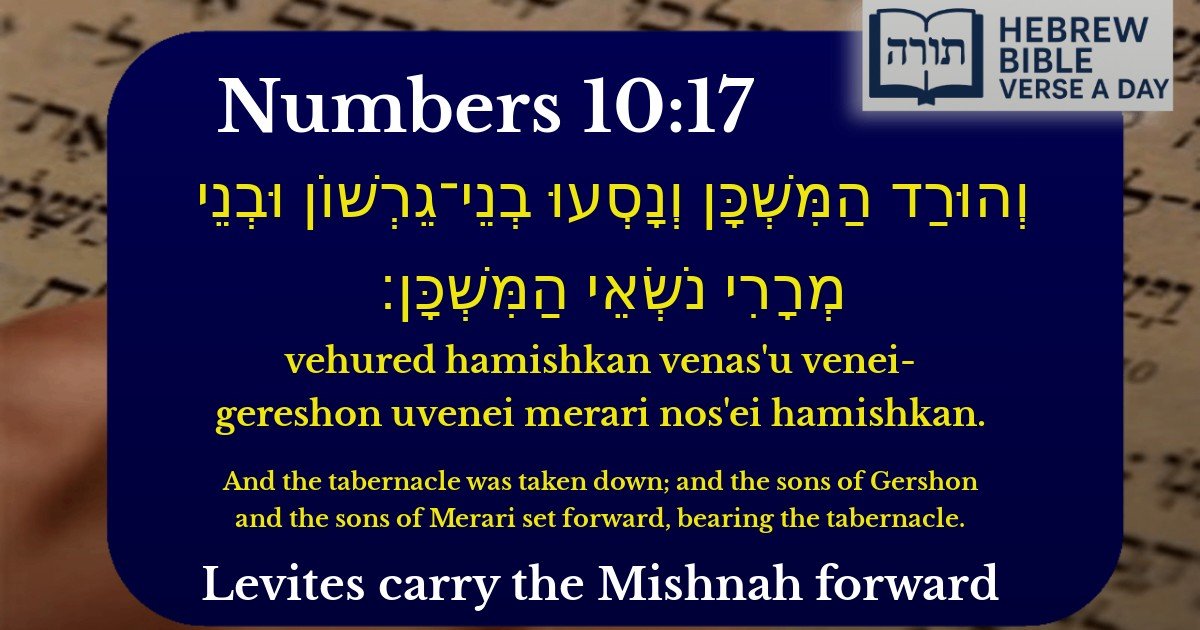
וְהוּרַד הַמִּשְׁכָּן וְנָסְעוּ בְנֵי־גֵרְשׁוֹן וּבְנֵי מְרָרִי נֹשְׂאֵי הַמִּשְׁכָּן׃
English Translation
And the tabernacle was taken down; and the sons of Gershon and the sons of Merari set forward, bearing the tabernacle.
Transliteration
Vehured hamishkan venas'u venei-gereshon uvenei merari nos'ei hamishkan.
Hebrew Leining Text
וְהוּרַ֖ד הַמִּשְׁכָּ֑ן וְנָסְע֤וּ בְנֵֽי־גֵרְשׁוֹן֙ וּבְנֵ֣י מְרָרִ֔י נֹשְׂאֵ֖י הַמִּשְׁכָּֽן׃
🎵 Listen to leining
Parasha Commentary
📚 Talmud Citations
This verse is not quoted in the Talmud.
Context in the Wilderness Journey
The verse (Bamidbar 10:17) describes the orderly dismantling and transport of the Mishkan (Tabernacle) during Bnei Yisrael's travels in the wilderness. According to Rashi, this was part of the Divinely ordained sequence for the tribes' movements, where the Mishkan's components were carried by the families of Gershon and Merari from the tribe of Levi, following the departure of Yehuda's camp.
Roles of Gershon and Merari
Symbolism of the Mishkan's Transport
The Midrash Tanchuma (Bamidbar 12) highlights that the Mishkan's portability reflects Hashem's constant presence with Bnei Yisrael, even during their journeys. The Rambam (Hilchot Beit HaBechirah 1:1) derives from this that the Divine Presence accompanies Israel in exile, just as it did in the wilderness.
Orderly Process as a Model
Rabbeinu Bachya emphasizes that the meticulous procedure for dismantling and transporting the Mishkan teaches the importance of treating sacred objects with reverence. The sequence ensured that no part of the Mishkan was left unattended or disrespected during transit.