
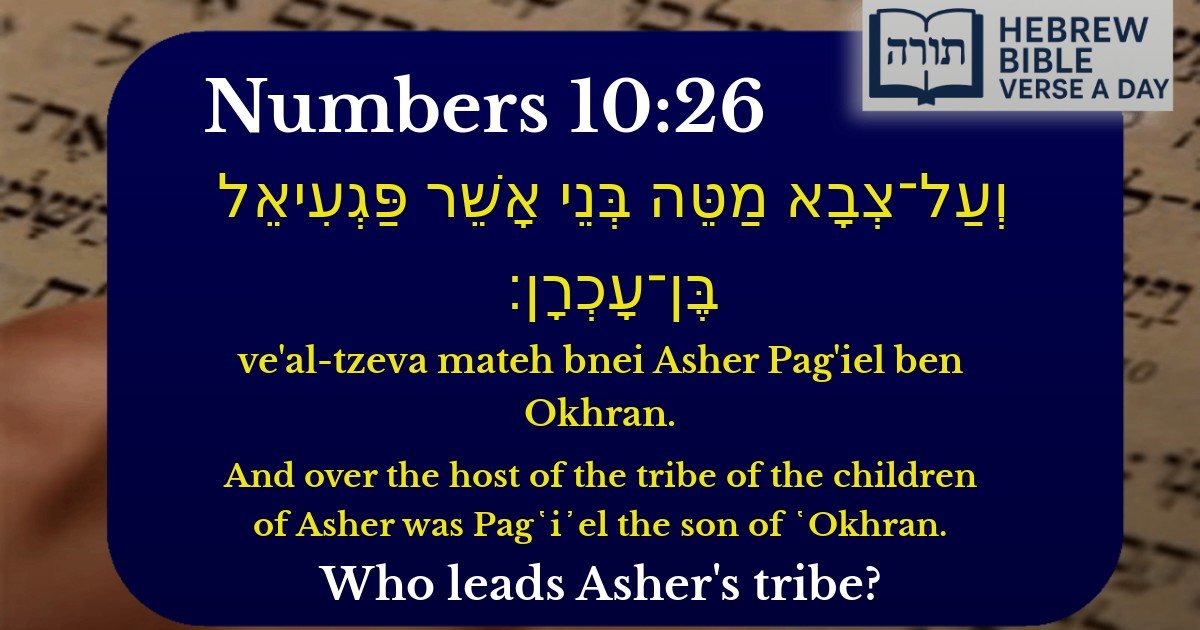

Numbers 10:26 - Who leads Asher's tribe?

Numbers 10:26 - במדבר 10:26

Hebrew Text

וְעַל־צְבָא מַטֵּה בְּנֵי אָשֵׁר פַּגְעִיאֵל בֶּן־עָכְרָן׃

English Translation

And over the host of the tribe of the children of Asher was Pag῾i᾽el the son of ῾Okhran.

Transliteration

Ve'al-tzeva mateh bnei Asher Pag'iel ben Okhran.

Hebrew Leining Text

וְעַ֨ל־צְבָ֔א מַטֵּ֖ה בְּנֵ֣י אָשֵׁ֑ר פַּגְעִיאֵ֖ל בֶּן־עׇכְרָֽן׃

🎵 Listen to leining

Parasha Commentary

The Nasi of Shevet Asher

The verse (Bamidbar 1:13) lists Pagiel ben Ochran as the leader (nasi) of the tribe of Asher during the census in the wilderness. Rashi explains that each tribal leader was chosen based on their righteousness and suitability for leadership. The name "Pagiel" can be broken down as "pagah El" (פָּגַע אֵל), meaning "he encountered G-d," suggesting a deep spiritual connection.

Significance of the Name "Ochran"

The father's name, Ochran (עָכְרָן), is related to the root acher (עכר), meaning "trouble" or "disturbance." The Midrash (Bamidbar Rabbah 2:7) notes that despite this seemingly negative connotation, Pagiel rose above any possible familial challenges to become a righteous leader. This teaches that one's lineage does not determine their spiritual potential.

Leadership Qualities of Pagiel

  • Humility and Service: The Rambam (Hilchot Melachim 2:6) emphasizes that true Jewish leadership requires humility and dedication to the people, traits exemplified by Pagiel.
  • Representation in Offerings: Pagiel later brings offerings for the Mishkan’s dedication (Bamidbar 7:72), showing his commitment to communal worship.

Shevet Asher’s Role

The tribe of Asher was blessed with material prosperity (Devarim 33:24), and Pagiel’s leadership ensured that their wealth was used for holy purposes. The Talmud (Menachot 85b) notes that Asher’s olive oil was used for the Menorah, symbolizing how physical blessings should elevate spirituality.

📚 Talmud Citations

This verse is not quoted in the Talmud.

Frequently Asked Questions

Q: Who was Pagiel ben Ochran mentioned in Numbers 10:26?
A: Pagiel ben Ochran was the leader appointed over the tribe of Asher during the Israelites' journey in the wilderness. According to Rashi, he was chosen as the prince (nasi) of his tribe to represent them in matters of leadership and organization, particularly when the camp traveled or encamped.
Q: Why does the Torah list the leaders of each tribe in Numbers 10?
A: The Torah lists the leaders of each tribe to emphasize the importance of orderly leadership and the unique role each tribe played in the Jewish people. The Rambam explains that structured leadership was essential for maintaining unity and discipline during the travels in the wilderness. Each leader had responsibility for his tribe's welfare and representation before Moshe and Aharon.
Q: What can we learn from the mention of Pagiel and the other tribal leaders?
A: We learn the value of appointed leadership and communal responsibility. The Midrash teaches that each leader was selected for their righteousness and capability, showing that leadership in Judaism is about serving the community. Additionally, it highlights that every tribe—and by extension, every individual—has a unique role in fulfilling the collective mission of the Jewish people.
Q: How does the tribe of Asher's role in the wilderness apply to us today?
A: Just as Asher had a specific place and role in the camp (as one of the tribes under the banner of Dan), every Jew today has a unique contribution to make. The Talmud (Sotah 13a) notes that Asher was known for its olive oil and blessings (see Genesis 49:20), teaching us that each person’s talents—whether material or spiritual—should be used to benefit the community.