

Join Our Newsletter To Be Informed When New Videos Are Posted
Hebrew Text
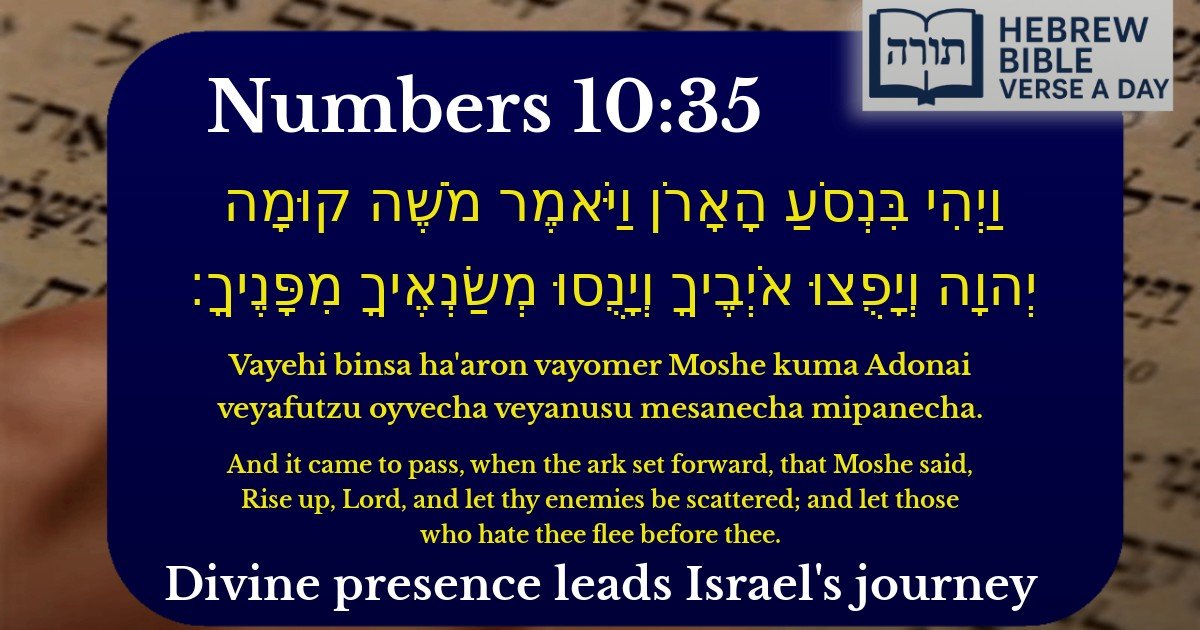
וַיְהִי בִּנְסֹעַ הָאָרֹן וַיֹּאמֶר מֹשֶׁה קוּמָה יְהוָה וְיָפֻצוּ אֹיְבֶיךָ וְיָנֻסוּ מְשַׂנְאֶיךָ מִפָּנֶיךָ׃
English Translation
And it came to pass, when the ark set forward, that Moshe said, Rise up, Lord, and let thy enemies be scattered; and let those who hate thee flee before thee.
Transliteration
Vayehi binsa ha'aron vayomer Moshe kuma Adonai veyafutzu oyvecha veyanusu mesanecha mipanecha.
Hebrew Leining Text
׆ וַיְהִ֛י בִּנְסֹ֥עַ הָאָרֹ֖ן וַיֹּ֣אמֶר מֹשֶׁ֑ה קוּמָ֣ה ׀ יְהֹוָ֗ה וְיָפֻ֙צוּ֙ אֹֽיְבֶ֔יךָ וְיָנֻ֥סוּ מְשַׂנְאֶ֖יךָ מִפָּנֶֽיךָ׃
🎵 Listen to leining
Parasha Commentary
📚 Talmud Citations
This verse is quoted in the Talmud.
📖 Sotah 35a
The verse is discussed in the context of the Ark's journey and its miraculous effects on the enemies of Israel.
📖 Shabbat 116a
The verse is referenced in a discussion about the sanctity and power of the Ark of the Covenant.
Context of the Verse
The verse (Bamidbar 10:35) describes Moshe's declaration when the Aron HaKodesh (Holy Ark) would begin to move during the Israelites' travels in the wilderness. This verse is famously set apart in the Torah with inverted nun letters before and after it, as noted in the Talmud (Shabbat 115b), indicating its unique significance.
Rashi's Explanation
Rashi explains that Moshe's words, "קוּמָה יְהוָה" ("Rise up, Lord"), were a prayer for Hashem's presence to accompany the Ark and lead Bnei Yisrael in battle against their enemies. The phrase "וְיָפֻצוּ אֹיְבֶיךָ" ("let Thy enemies be scattered") refers to those who oppose Hashem's will, not merely Israel's adversaries. Rashi emphasizes that the Ark symbolized the Divine Presence, and Moshe sought Hashem's intervention to ensure victory.
Rambam's Perspective
Rambam (Hilchot Tefillah 1:4) cites this verse as an example of how tefillah (prayer) should be directed toward Hashem, especially in times of national need. The phrasing demonstrates Moshe's recognition that victory depends entirely on Divine assistance, not human strength alone.
Midrashic Insights
Symbolism of the Ark
The Talmud (Sotah 35a) states that the Ark carried itself—those who carried it were merely symbolic bearers—highlighting that its movement was a supernatural manifestation of Hashem's will. Moshe's declaration acknowledged this reality, invoking Divine protection.
Halachic Significance
In the Siddur, this verse is recited when the Sefer Torah is taken out from the Aron Kodesh in synagogue, symbolizing that Torah study and mitzvot are our spiritual "weapons" against adversity (Mishnah Berurah 282:12).