

Join Our Newsletter To Be Informed When New Videos Are Posted
Hebrew Text
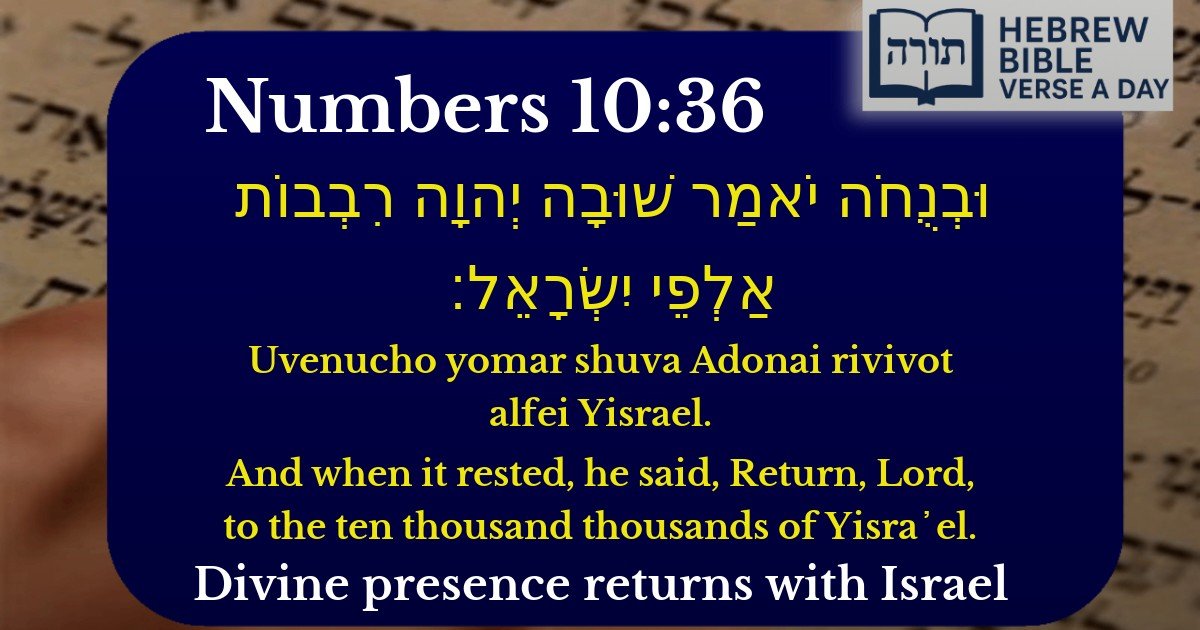
וּבְנֻחֹה יֹאמַר שׁוּבָה יְהוָה רִבְבוֹת אַלְפֵי יִשְׂרָאֵל׃
English Translation
And when it rested, he said, Return, Lord, to the ten thousand thousands of Yisra᾽el.
Transliteration
Uvenucho yomar shuva Adonai rivivot alfei Yisrael.
Hebrew Leining Text
וּבְנֻחֹ֖ה יֹאמַ֑ר שׁוּבָ֣ה יְהֹוָ֔ה רִֽבְב֖וֹת אַלְפֵ֥י יִשְׂרָאֵֽל׃ ׆ {פ}
🎵 Listen to leining
Parasha Commentary
📚 Talmud Citations
This verse is quoted in the Talmud.
📖 Shabbat 116a
The verse is referenced in a discussion about the resting of the Ark and the Divine Presence among Israel.
📖 Sotah 35a
The verse is cited in the context of the Ark's journey and the Divine Presence accompanying Israel.
Context in the Torah
The verse (Bamidbar 10:36) appears in the context of the Israelites' travels in the wilderness, where the Ark of the Covenant would lead them. When the Ark rested, Moshe would say this prayer, asking Hashem to return to the "ten thousand thousands of Yisrael."
Rashi's Explanation
Rashi explains that "שׁוּבָה יְהוָה" ("Return, Lord") refers to the Divine Presence (Shechinah) returning to dwell among Israel after the Ark came to rest. The phrase "רִבְבוֹת אַלְפֵי יִשְׂרָאֵל" ("ten thousand thousands of Israel") signifies the vast multitudes of the Jewish people, emphasizing that Hashem's presence is with them in their great numbers.
Midrashic Interpretation
The Midrash (Bamidbar Rabbah 2:9) elaborates that Moshe's words were a plea for Hashem's mercy, ensuring that His presence would not depart from Israel even when they were encamped. The term "רִבְבוֹת" (myriads) alludes to the 600,000 adult males who left Egypt, while "אַלְפֵי" (thousands) represents the tribes, showing that Hashem's providence extends to both the nation as a whole and its individual components.
Rambam's Perspective
Rambam (Hilchot Tefillah 1:4) discusses the importance of prayer during transitions, such as when the Ark moved or rested. Moshe's declaration serves as a model for invoking Hashem's presence in times of change, reinforcing the idea that divine protection is constant, whether in motion or at rest.
Kabbalistic Insight
The Zohar (Bamidbar 59a) interprets "שׁוּבָה יְהוָה" as a request for the Shechinah to return to its full revelation among Israel. The numerical language ("רִבְבוֹת אַלְפֵי") hints at the spiritual abundance (ריבוי) bestowed upon the Jewish people when they are united in purpose and devotion.
Practical Lesson