Frequently Asked Questions
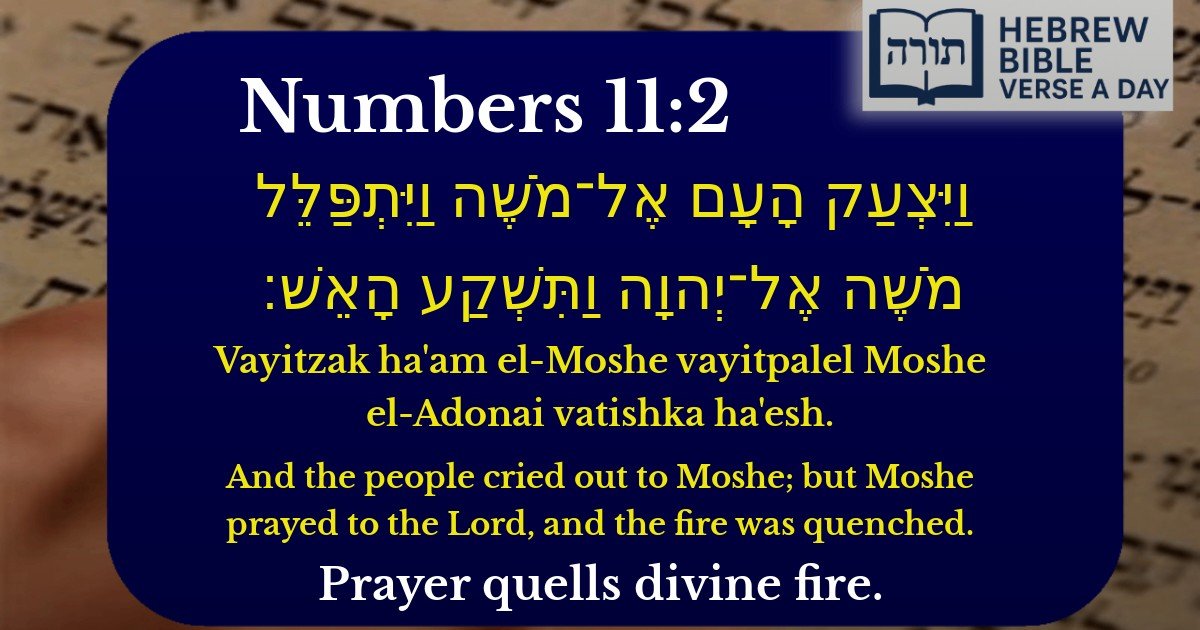
Q: What does Numbers 11:2 mean?
A: Numbers 11:2 describes a moment when the Jewish people cried out to Moshe (Moses) during a time of distress, and Moshe prayed to Hashem on their behalf, leading to the fire that was harming them being extinguished. According to Rashi, this teaches us about the power of prayer and Moshe's role as an intercessor for the Jewish people.
Q: Why did the people cry out to Moshe instead of praying directly to Hashem?
A: The Midrash explains that the people initially turned to Moshe because they were in a state of panic and saw him as their leader who could advocate for them. This highlights the importance of righteous leaders who can guide the people in connecting with Hashem, especially in times of crisis.
Q: What can we learn from Moshe's response in Numbers 11:2?
A: From Moshe's immediate prayer to Hashem, we learn the importance of turning to Hashem in times of trouble and the power of a leader's sincere prayer. The Rambam teaches that prayer is a fundamental mitzvah, and Moshe's example shows how a tzaddik (righteous person) can bring about divine mercy.
Q: How does this verse apply to us today?
A: This verse reminds us that, like the Jewish people in the desert, we should seek guidance from our leaders and teachers in times of difficulty. It also emphasizes that prayer is a powerful tool for salvation, as seen in Moshe's successful plea to Hashem. The Talmud (Berachot 32b) teaches that prayer can change harsh decrees.
Q: Why was fire the punishment in this verse?
A: Rashi explains that the fire was a divine response to the people's complaints and lack of faith. Fire often symbolizes purification in Jewish thought, as seen in other parts of Tanach. Here, it served as a wake-up call for the people to recognize their dependence on Hashem and Moshe's leadership.


Context in the Torah
The verse (Numbers 11:2) appears in the narrative of the Israelites' complaints in the wilderness. After leaving Sinai, the people began to complain, and fire from Hashem consumed the outskirts of the camp. The people cried out to Moshe, who then prayed to Hashem, and the fire subsided.
Rashi's Commentary
Rashi explains that the fire was a divine punishment for the people's ingratitude and rebelliousness. The phrase "וַיִּצְעַק הָעָם אֶל־מֹשֶׁה" ("the people cried out to Moshe") indicates that they recognized their sin and turned to Moshe as their intercessor. Rashi emphasizes that Moshe's prayer ("וַיִּתְפַּלֵּל מֹשֶׁה אֶל־יְהוָה") was effective because of his unique closeness to Hashem.
Rambam on Prayer and Repentance
Rambam (Maimonides) in Hilchot Teshuvah (Laws of Repentance) teaches that sincere prayer is a key component of repentance. Here, the people's cry to Moshe demonstrated their recognition of wrongdoing, and Moshe's prayer facilitated divine mercy. The sequence underscores the importance of righteous leaders as intermediaries during times of crisis.
Midrashic Insights
Halachic Implications
The Shulchan Aruch (Orach Chaim 98:1) derives from this verse that one should cry out to Hashem in times of distress, following the model of Moshe. Additionally, the Talmud (Berachot 32b) cites Moshe's prayer as an example of effective supplication, teaching that persistence and sincerity in prayer can bring about divine intervention.
Symbolism of the Fire
The Kli Yakar suggests that the fire represented the destructive power of discontent and lashon hara (evil speech), which had spread among the people. Moshe's prayer not only quelled the physical fire but also addressed the spiritual root of the problem—disunity and lack of faith.