

Join Our Newsletter To Be Informed When New Videos Are Posted
Hebrew Text
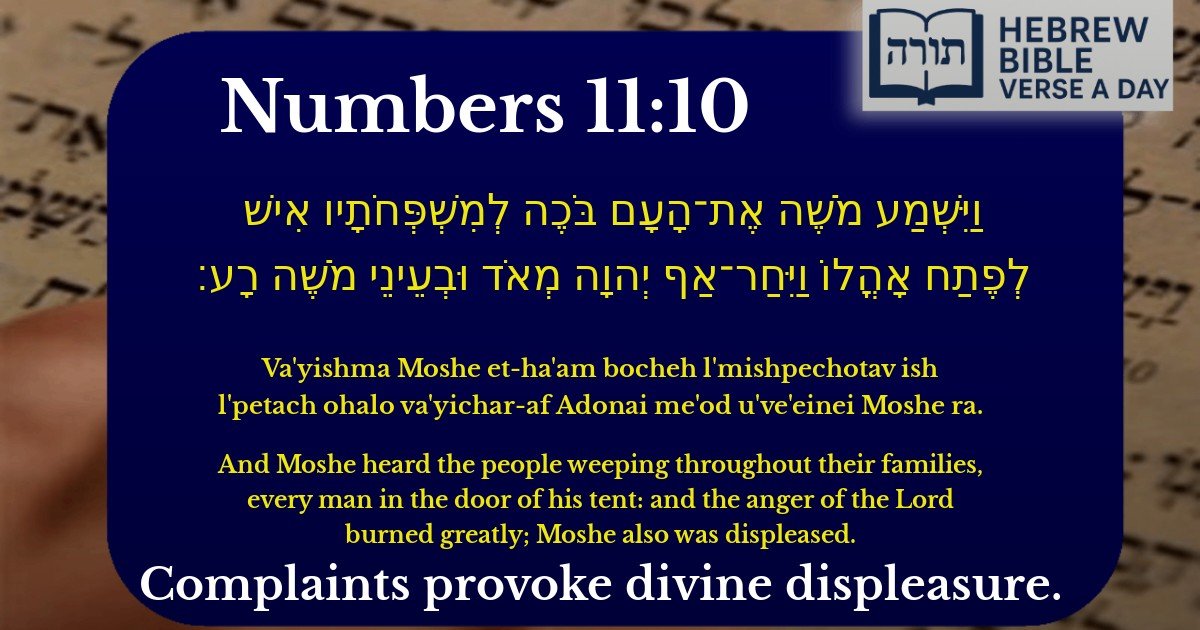
וַיִּשְׁמַע מֹשֶׁה אֶת־הָעָם בֹּכֶה לְמִשְׁפְּחֹתָיו אִישׁ לְפֶתַח אָהֳלוֹ וַיִּחַר־אַף יְהוָה מְאֹד וּבְעֵינֵי מֹשֶׁה רָע׃
English Translation
And Moshe heard the people weeping throughout their families, every man in the door of his tent: and the anger of the Lord burned greatly; Moshe also was displeased.
Transliteration
Va'yishma Moshe et-ha'am bocheh l'mishpechotav ish l'petach ohalo va'yichar-af Adonai me'od u've'einei Moshe ra.
Hebrew Leining Text
וַיִּשְׁמַ֨ע מֹשֶׁ֜ה אֶת־הָעָ֗ם בֹּכֶה֙ לְמִשְׁפְּחֹתָ֔יו אִ֖ישׁ לְפֶ֣תַח אׇהֳל֑וֹ וַיִּֽחַר־אַ֤ף יְהֹוָה֙ מְאֹ֔ד וּבְעֵינֵ֥י מֹשֶׁ֖ה רָֽע׃
🎵 Listen to leining
Parasha Commentary
📚 Talmud Citations
This verse is quoted in the Talmud.
📖 Ta'anit 11a
The verse is referenced in a discussion about communal mourning and the proper way to express grief, contrasting the people's weeping with more appropriate forms of lamentation.
📖 Sanhedrin 110a
The verse is cited in a discussion about the severity of the people's complaints and the consequences of provoking God's anger, as part of a broader analysis of rebellion against leadership.
Context of the Verse
This verse (Bamidbar 11:10) describes the reaction of Moshe and Hashem to the complaints of Bnei Yisrael in the wilderness. The people were weeping over their desire for meat, expressing dissatisfaction with the manna provided by Hashem. This incident follows their departure from Har Sinai and reflects a broader pattern of discontent during their journey.
Rashi's Explanation
Rashi explains that the phrase "לְמִשְׁפְּחֹתָיו" (throughout their families) indicates that the people were weeping over the newly imposed restrictions regarding forbidden marital relationships (arayot). The Torah had just been given at Har Sinai, and these laws were now in effect, causing distress among the people. Rashi connects this to the earlier mention of the "mixed multitude" (erev rav) who instigated the complaints.
Rambam's Perspective
Rambam (Moreh Nevuchim 3:46) discusses how the people's weeping reflected a lack of gratitude and spiritual immaturity. Despite the miracles of the Exodus and the daily provision of manna, they focused on physical desires rather than embracing their divine mission. Rambam emphasizes that this behavior provoked Hashem's anger because it demonstrated a rejection of divine providence.
Midrashic Insights
Moshe's Displeasure
The phrase "וּבְעֵינֵי מֹשֶׁה רָע" (and in Moshe's eyes it was bad) is interpreted by the Sforno as Moshe's distress over the people's ingratitude and lack of faith. Moshe, who had dedicated himself to leading Bnei Yisrael, was deeply troubled by their regression after witnessing so many miracles.
Hashem's Anger
Hashem's anger ("וַיִּחַר־אַף יְהוָה מְאֹד") is understood by the Ramban as a response to the people's rejection of His kindness. The manna was a supernatural gift, tailored to each individual's needs, yet they scorned it. This ingratitude was a severe spiritual failing, warranting divine chastisement.