

Join Our Newsletter To Be Informed When New Videos Are Posted
Hebrew Text
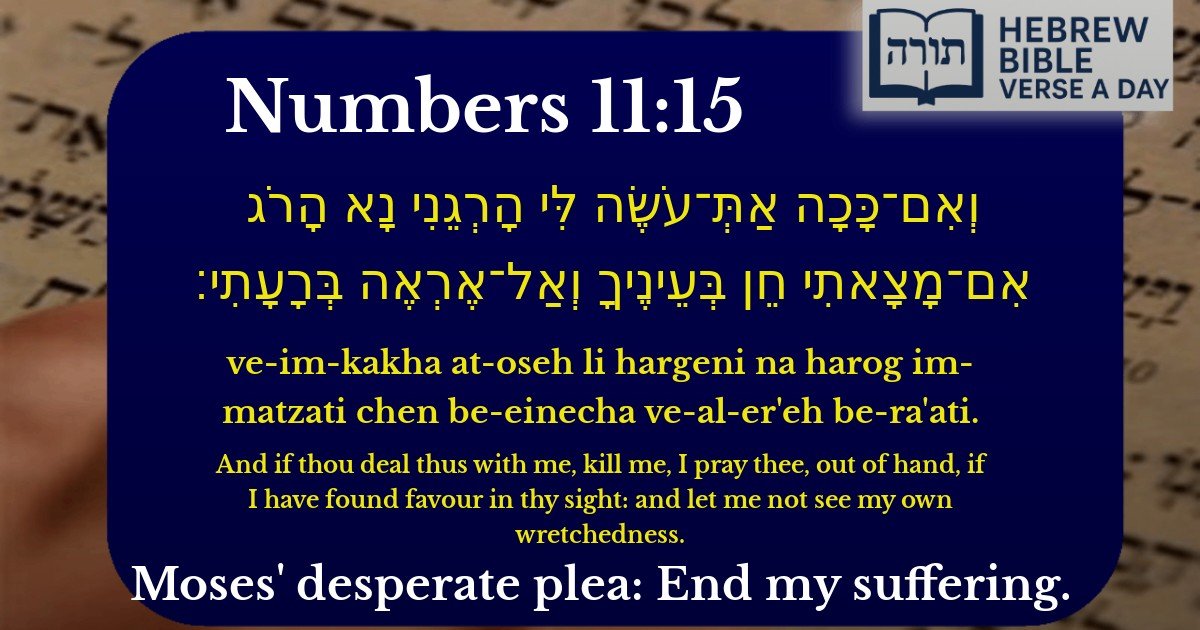
וְאִם־כָּכָה אַתְּ־עֹשֶׂה לִּי הָרְגֵנִי נָא הָרֹג אִם־מָצָאתִי חֵן בְּעֵינֶיךָ וְאַל־אֶרְאֶה בְּרָעָתִי׃
English Translation
And if thou deal thus with me, kill me, I pray thee, out of hand, if I have found favour in thy sight: and let me not see my own wretchedness.
Transliteration
Ve-im-kakha at-oseh li hargeni na harog im-matzati chen be-einecha ve-al-er'eh be-ra'ati.
Hebrew Leining Text
וְאִם־כָּ֣כָה ׀ אַתְּ־עֹ֣שֶׂה לִּ֗י הׇרְגֵ֤נִי נָא֙ הָרֹ֔ג אִם־מָצָ֥אתִי חֵ֖ן בְּעֵינֶ֑יךָ וְאַל־אֶרְאֶ֖ה בְּרָעָתִֽי׃ {פ}
🎵 Listen to leining
Parasha Commentary
📚 Talmud Citations
This verse is not quoted in the Talmud.
Context of the Verse
This verse (Numbers 11:15) is part of Moshe Rabbeinu's plea to Hashem during the incident of the mit'onenim (the complainers) in the wilderness. The people were dissatisfied with the manna and demanded meat, leading Moshe to express his distress over the burden of leading the nation.
Moshe's Emotional State
Rashi explains that Moshe reached a point of utter despair, feeling overwhelmed by the constant complaints of Bnei Yisrael. His plea, "kill me, I pray thee," reflects his deep anguish and sense of inability to continue bearing the responsibility alone. The phrase "אַל־אֶרְאֶה בְּרָעָתִי" ("let me not see my own wretchedness") indicates his fear of failing in his sacred mission.
Theological Implications
Midrashic Interpretation
The Midrash Tanchuma (Bamidbar 16) connects this plea to Moshe's earlier experiences, noting that his despair stemmed from seeing the people revert to ingratitude after witnessing miracles. The phrase "if I have found favour in thy sight" echoes Moshe's previous dialogues with Hashem (e.g., Exodus 33:13), emphasizing his intimate relationship with the Divine.
Halachic Perspective
The Talmud (Berachos 32b) derives from this verse that even in moments of despair, one should frame requests respectfully ("if I have found favour"). This teaches the importance of maintaining proper decorum in prayer, even during distress.