
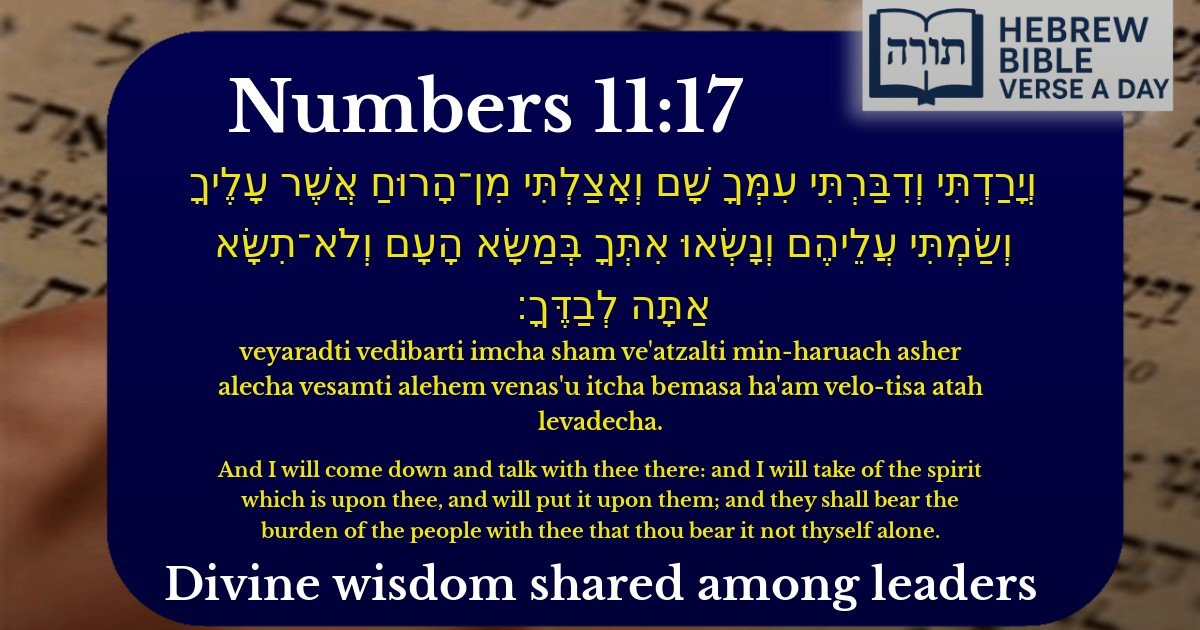

Numbers 11:17 - Divine wisdom shared among leaders

Numbers 11:17 - במדבר 11:17

Hebrew Text

וְיָרַדְתִּי וְדִבַּרְתִּי עִמְּךָ שָׁם וְאָצַלְתִּי מִן־הָרוּחַ אֲשֶׁר עָלֶיךָ וְשַׂמְתִּי עֲלֵיהֶם וְנָשְׂאוּ אִתְּךָ בְּמַשָּׂא הָעָם וְלֹא־תִשָּׂא אַתָּה לְבַדֶּךָ׃

English Translation

And I will come down and talk with thee there: and I will take of the spirit which is upon thee, and will put it upon them; and they shall bear the burden of the people with thee that thou bear it not thyself alone.

Transliteration

Veyaradti vedibarti imcha sham ve'atzalti min-haruach asher alecha vesamti alehem venas'u itcha bemasa ha'am velo-tisa atah levadecha.

Hebrew Leining Text

וְיָרַדְתִּ֗י וְדִבַּרְתִּ֣י עִמְּךָ֮ שָׁם֒ וְאָצַלְתִּ֗י מִן־הָר֛וּחַ אֲשֶׁ֥ר עָלֶ֖יךָ וְשַׂמְתִּ֣י עֲלֵיהֶ֑ם וְנָשְׂא֤וּ אִתְּךָ֙ בְּמַשָּׂ֣א הָעָ֔ם וְלֹא־תִשָּׂ֥א אַתָּ֖ה לְבַדֶּֽךָ׃

🎵 Listen to leining

Parasha Commentary

Context of the Verse

This verse (Bamidbar 11:17) appears in the Torah when Moshe Rabbeinu expresses his distress over the burden of leading Bnei Yisrael. Hashem responds by instructing him to gather seventy elders, upon whom He will bestow a portion of Moshe's spirit to assist in leadership.

Rashi's Explanation

Rashi explains that Hashem tells Moshe, "I will take from the spirit that is upon you"—meaning that the divine wisdom granted to the elders will not diminish Moshe's own ruach hakodesh (holy spirit). This is likened to a candle that can light many others without losing its own flame. The elders would share the burden of leadership, but Moshe's own spiritual stature would remain undiminished.

Rambam's Perspective

Rambam (Hilchos Yesodei HaTorah 7:6) discusses this concept in the context of prophecy and leadership. He emphasizes that while the elders received a portion of Moshe's spirit, their level of prophecy was inferior to Moshe's. Moshe's prophecy was direct and unparalleled ("panim el panim"), whereas the elders' prophetic experiences were through visions or dreams.

Talmudic and Midrashic Insights

  • The Talmud (Sanhedrin 17a) notes that the appointment of the seventy elders established the precedent for the Sanhedrin, the supreme judicial body of Israel. Their shared leadership ensured that Moshe would not bear the burden alone.
  • Midrash Tanchuma (Bamidbar 15) elaborates that the elders were chosen based on their merit and humility, mirroring Moshe's own qualities. This teaches that true leadership in Klal Yisrael must be rooted in Torah and middos tovos (good character).

Theological Implications

This verse highlights the principle of shlucho shel adam k'moso—an agent is like the sender. The elders acted as extensions of Moshe's authority, yet their power was derived from Hashem's will. It also underscores the importance of shared responsibility in communal leadership, a value deeply embedded in Jewish tradition.

Practical Lessons

  • Leadership Delegation: Even the greatest leaders, like Moshe, require support. Delegating responsibility is not a sign of weakness but of wisdom.
  • Spiritual Transmission: Torah knowledge and ruach hakodesh can be shared without diminishing the source, reflecting the eternal nature of Torah wisdom.
  • Humility in Authority: The elders' appointment teaches that leadership must be exercised with humility and for the sake of Heaven.

📚 Talmud Citations

This verse is quoted in the Talmud.

📖 Sanhedrin 17a
The verse is referenced in the discussion about the appointment of judges and the sharing of leadership responsibilities, illustrating how Moses' spirit was shared with the elders.

Frequently Asked Questions

Q: What does Numbers 11:17 mean when it says Hashem will take 'of the spirit' from Moshe?
A: Rashi explains that this means Hashem would share some of Moshe's divine wisdom and leadership qualities with the 70 elders. It wasn't that Moshe would lose any spirit, but rather that his existing spiritual greatness would be duplicated for others.
Q: Why did Moshe need help leading the Jewish people?
A: The Midrash (Bamidbar Rabbah 15:19) teaches that while Moshe was certainly capable, Hashem wanted to show that leadership is meant to be shared. This teaches us the importance of teamwork in communal responsibilities and prevents any one person from becoming overwhelmed.
Q: How does the concept of shared leadership in Numbers 11:17 apply today?
A: The Rambam (Hilchos Sanhedrin 2:6) derives from this verse that important community decisions should be made collectively. Just as Moshe didn't lead alone, Jewish communities today are guided by rabbis and lay leaders working together to share responsibilities.
Q: What is the 'burden of the people' mentioned in this verse?
A: According to Sforno, this refers to both the physical needs of the nation (like food and water) and the spiritual responsibility of teaching Torah and judging disputes. The elders would help Moshe with both aspects of leadership.
Q: Why did Hashem say He would 'come down' to speak with Moshe in this verse?
A: Ibn Ezra explains that this emphasizes the special nature of the occasion. Normally Moshe ascended to Hashem (as at Sinai), but here Hashem showed extra closeness by descending to facilitate this important transition of shared leadership.