

Join Our Newsletter To Be Informed When New Videos Are Posted
Hebrew Text
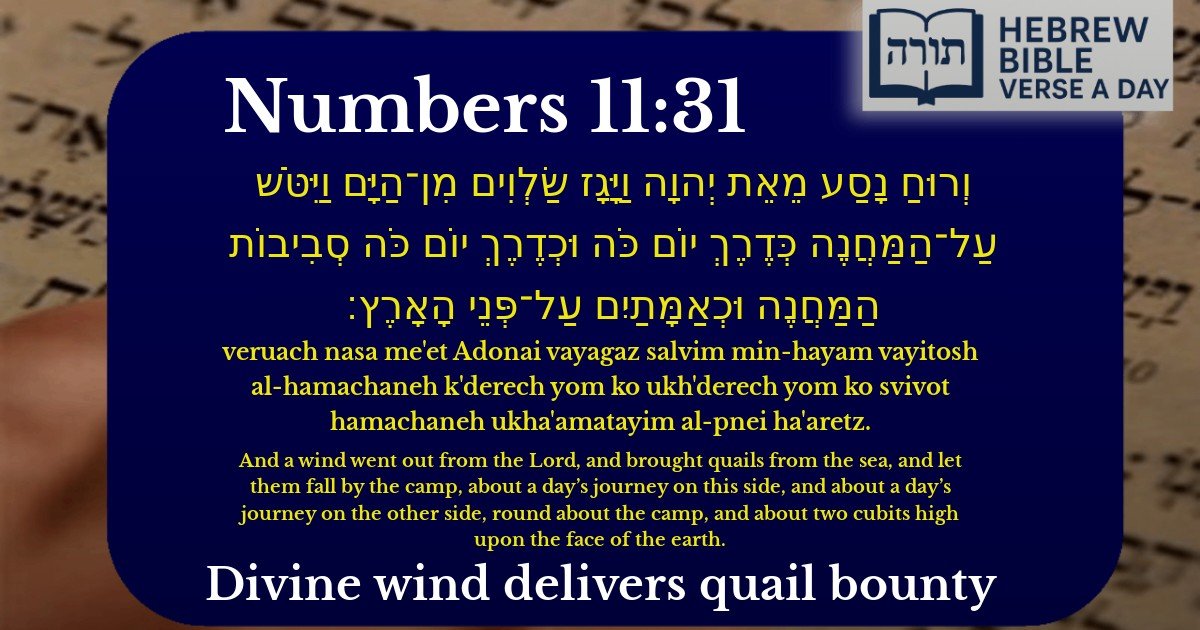
וְרוּחַ נָסַע מֵאֵת יְהוָה וַיָּגָז שַׂלְוִים מִן־הַיָּם וַיִּטֹּשׁ עַל־הַמַּחֲנֶה כְּדֶרֶךְ יוֹם כֹּה וּכְדֶרֶךְ יוֹם כֹּה סְבִיבוֹת הַמַּחֲנֶה וּכְאַמָּתַיִם עַל־פְּנֵי הָאָרֶץ׃
English Translation
And a wind went out from the Lord, and brought quails from the sea, and let them fall by the camp, about a day’s journey on this side, and about a day’s journey on the other side, round about the camp, and about two cubits high upon the face of the earth.
Transliteration
Veruach nasa me'et Adonai vayagaz salvim min-hayam vayitosh al-hamachaneh k'derech yom ko ukh'derech yom ko svivot hamachaneh ukha'amatayim al-pnei ha'aretz.
Hebrew Leining Text
וְר֜וּחַ נָסַ֣ע ׀ מֵאֵ֣ת יְהֹוָ֗ה וַיָּ֣גׇז שַׂלְוִים֮ מִן־הַיָּם֒ וַיִּטֹּ֨שׁ עַל־הַֽמַּחֲנֶ֜ה כְּדֶ֧רֶךְ י֣וֹם כֹּ֗ה וּכְדֶ֤רֶךְ יוֹם֙ כֹּ֔ה סְבִיב֖וֹת הַֽמַּחֲנֶ֑ה וּכְאַמָּתַ֖יִם עַל־פְּנֵ֥י הָאָֽרֶץ׃
🎵 Listen to leining
Parasha Commentary
📚 Talmud Citations
This verse is quoted in the Talmud.
📖 Yoma 75b
The verse is referenced in a discussion about the miraculous provision of quails to the Israelites in the wilderness, illustrating God's benevolence and the nature of miracles.
📖 Ta'anit 11a
Mentioned in the context of discussing divine providence and how God provides for His people, using the quails as an example of miraculous sustenance.
Context in the Torah
This verse (Bamidbar 11:31) describes the miraculous event where Hashem sent quails (salvim) to the Israelites in response to their complaints about the lack of meat in the desert. This occurred after they grew weary of the manna and demanded flesh to eat (Bamidbar 11:4-6). The quails were provided in an extraordinary manner—through a divine wind (ruach) that carried them from the sea and deposited them around the camp.
Rashi's Explanation
Rashi (Bamidbar 11:31) explains that the phrase "וַיָּגָז שַׂלְוִים" ("and brought quails") means that Hashem "cut off" or "gathered" the quails from their natural habitat (the sea) and forced them to come to the camp. The term "וַיִּטֹּשׁ" ("and let them fall") indicates that the quails were exhausted from their flight and fell near the camp, making them easy to gather.
The Quantity and Arrangement of the Quails
The verse describes the quails as covering the camp "כְּדֶרֶךְ יוֹם כֹּה וּכְדֶרֶךְ יוֹם כֹּה" ("about a day’s journey on this side and about a day’s journey on the other side"). According to the Midrash (Tanchuma, Beha'alotcha 16), this means the quails were spread out in a radius equivalent to a day’s walk (approximately 10-12 mil, or 20-24 kilometers) in every direction around the camp. The height of the quails—"וּכְאַמָּתַיִם" ("about two cubits")—suggests they were piled up to roughly three feet high, emphasizing the overwhelming abundance.
Divine Judgment in the Miracle
While this event was a response to the people’s demand for meat, it also carried a measure of divine judgment. The Ramban (Bamidbar 11:31) notes that the quails were not merely a kindness but also a test—those who gathered excessively would suffer consequences (as later described in Bamidbar 11:33-34, where a plague struck those who indulged greedily). The Talmud (Yoma 75a) similarly teaches that the quails were a temporary indulgence, not a sustainable provision like the manna, highlighting the spiritual deficiency in their demand.
Symbolism of the Wind (Ruach)
The ruach (wind) that carried the quails is described as coming "מֵאֵת יְהוָה" ("from the Lord"), indicating direct divine intervention. The Sforno (Bamidbar 11:31) explains that this wind was not natural but a specially directed force to fulfill Hashem’s will. The use of wind as an instrument of divine action is also seen in other biblical events (e.g., the splitting of the Red Sea, Shemot 14:21), reinforcing the idea that nature is subservient to Hashem’s commands.