

Join Our Newsletter To Be Informed When New Videos Are Posted
Hebrew Text
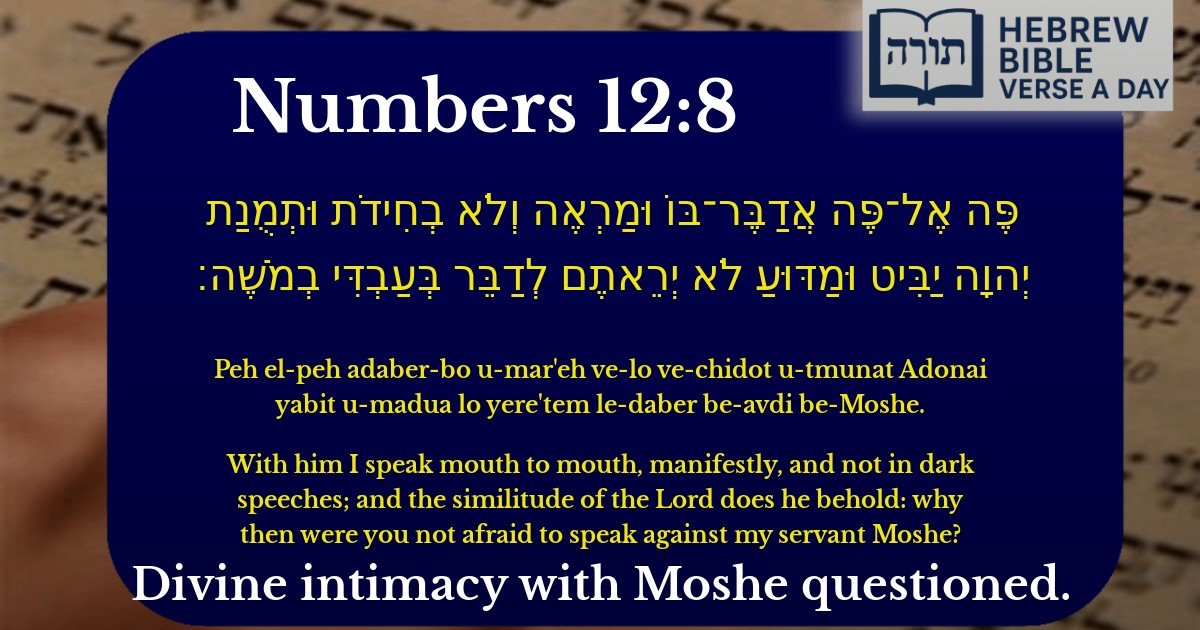
פֶּה אֶל־פֶּה אֲדַבֶּר־בּוֹ וּמַרְאֶה וְלֹא בְחִידֹת וּתְמֻנַת יְהוָה יַבִּיט וּמַדּוּעַ לֹא יְרֵאתֶם לְדַבֵּר בְּעַבְדִּי בְמֹשֶׁה׃
English Translation
With him I speak mouth to mouth, manifestly, and not in dark speeches; and the similitude of the Lord does he behold: why then were you not afraid to speak against my servant Moshe?
Transliteration
Peh el-peh adaber-bo u-mar'eh ve-lo ve-chidot u-tmunat Adonai yabit u-madua lo yere'tem le-daber be-avdi be-Moshe.
Hebrew Leining Text
פֶּ֣ה אֶל־פֶּ֞ה אֲדַבֶּר־בּ֗וֹ וּמַרְאֶה֙ וְלֹ֣א בְחִידֹ֔ת וּתְמֻנַ֥ת יְהֹוָ֖ה יַבִּ֑יט וּמַדּ֙וּעַ֙ לֹ֣א יְרֵאתֶ֔ם לְדַבֵּ֖ר בְּעַבְדִּ֥י בְמֹשֶֽׁה׃
🎵 Listen to leining
Parasha Commentary
📚 Talmud Citations
This verse is quoted in the Talmud.
📖 Yevamot 49b
The verse is cited to discuss the unique level of prophecy attained by Moses, emphasizing that he spoke with God directly and not through dreams or riddles.
Peshat (Plain Meaning)
The verse (Bamidbar 12:8) describes the unique prophetic level of Moshe Rabbeinu, emphasizing that Hashem communicated with him directly ("mouth to mouth") in clear, unambiguous terms—unlike other prophets who received visions through dreams or allegories. The phrase "the similitude of the Lord does he behold" underscores Moshe's unparalleled closeness to the Divine Presence.
Rashi's Commentary
Rashi explains that "mouth to mouth" means Hashem spoke to Moshe clearly and without intermediaries, unlike other prophets who received messages through angels or symbolic visions. The term "temunat Hashem" (the similitude of the Lord) does not imply physical form (chas v'shalom), but rather that Moshe perceived Divine communication with absolute clarity, as if seeing a clear image (Rashi on Bamidbar 12:8).
Rambam's Perspective (Hilchos Yesodei HaTorah 7:6)
Rambam elaborates that Moshe's prophecy was fundamentally different from all other prophets:
Midrashic Insight (Bamidbar Rabbah 15:10)
The Midrash contrasts Moshe with other prophets using the metaphor of a king who speaks to some servants through a veil, but to his most trusted advisor "face to face." This reflects Moshe's unique status as the only prophet who could demand a response from Hashem (as seen during the incident of the Golden Calf).
Halachic Implication (Sefer HaChinuch Mitzvah 420)
The verse concludes with a rebuke to Aharon and Miriam for questioning Moshe's authority. The Sefer HaChinuch derives from here the prohibition against challenging the authenticity of Moshe's prophecy—a foundational principle of Torah mi'Sinai.