

Join Our Newsletter To Be Informed When New Videos Are Posted
Hebrew Text
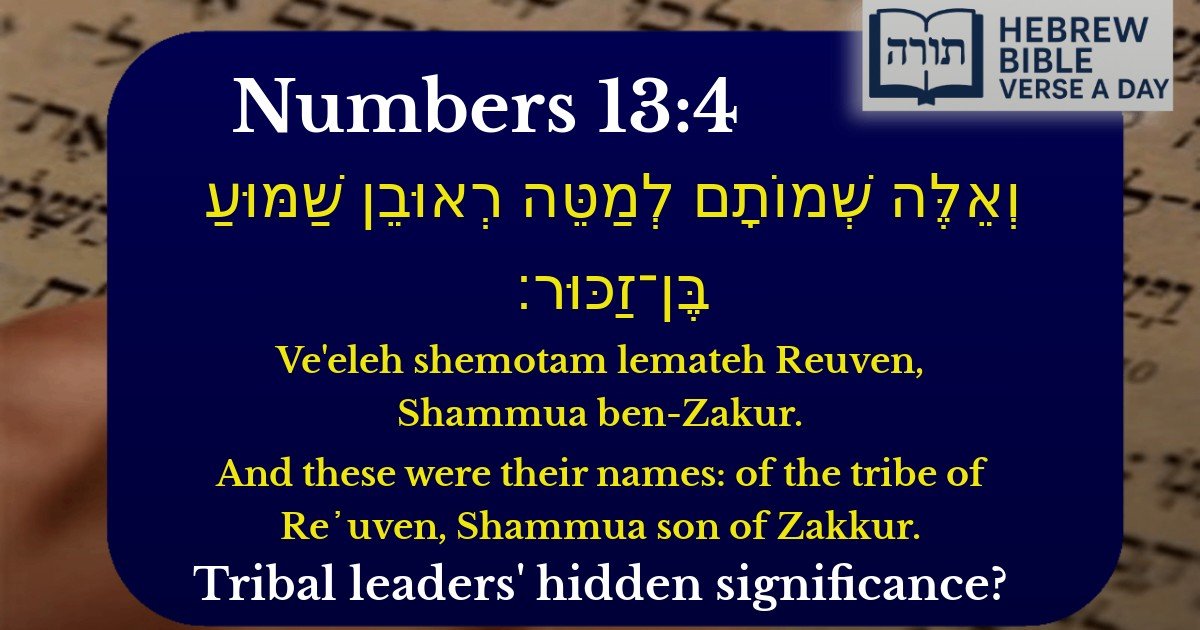
וְאֵלֶּה שְׁמוֹתָם לְמַטֵּה רְאוּבֵן שַׁמּוּעַ בֶּן־זַכּוּר׃
English Translation
And these were their names: of the tribe of Re᾽uven, Shammua son of Zakkur.
Transliteration
Ve'eleh shemotam lemateh Reuven, Shammua ben-Zakur.
Hebrew Leining Text
וְאֵ֖לֶּה שְׁמוֹתָ֑ם לְמַטֵּ֣ה רְאוּבֵ֔ן שַׁמּ֖וּעַ בֶּן־זַכּֽוּר׃
🎵 Listen to leining
Parasha Commentary
📚 Talmud Citations
This verse is not quoted in the Talmud.
Context in the Torah
The verse (Numbers 13:4) lists the names of the spies sent by Moshe to scout the Land of Israel, beginning with Shammua ben Zakkur from the tribe of Reuven. This occurs in Parashat Shelach, where the tragic episode of the spies unfolds, leading to the nation's punishment of wandering in the wilderness for forty years.
Rashi's Commentary
Rashi (Rabbi Shlomo Yitzchaki) notes that the names of the spies are recorded with their lineage ("ben Zakkur") to emphasize their stature—they were all distinguished leaders of their tribes (Rashi on Numbers 13:3). However, despite their noble status, their actions led to disaster. Rashi elsewhere (on Numbers 13:16) highlights how Moshe added a letter of Hashem's name (ה) to Hoshea's name, transforming it to Yehoshua (Joshua), as a prayer for his success—a contrast to the other spies who lacked such merit.
Midrashic Insights
Rambam's Perspective
The Rambam (Maimonides) in Moreh Nevuchim (Guide for the Perplexed 3:50) discusses how leaders must embody wisdom and courage. The spies, despite their titles, succumbed to fear and distorted the truth—a lesson in the pitfalls of leadership when not anchored in emunah (faith) and clarity of purpose.
Halachic Implications
The Talmud (Sotah 34b) derives from this episode that one must not speak ill of the Land of Israel, as doing so carries severe consequences. The spies' sin serves as a eternal warning against lashon hara (evil speech), especially regarding Eretz Yisrael.