

Join Our Newsletter To Be Informed When New Videos Are Posted
Hebrew Text
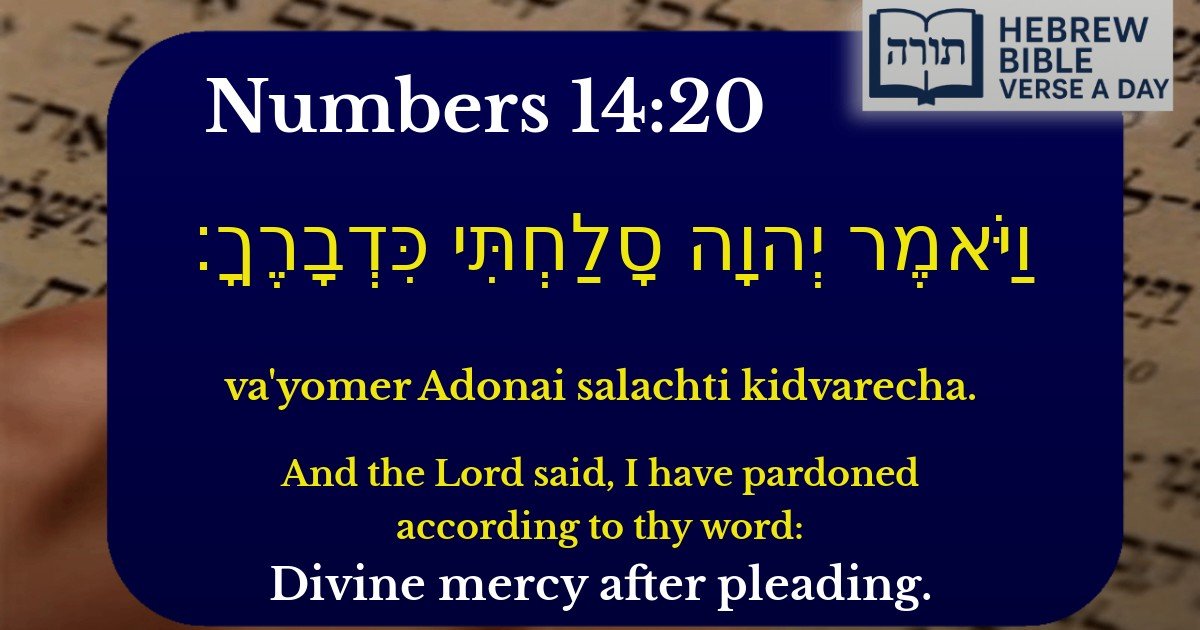
וַיֹּאמֶר יְהוָה סָלַחְתִּי כִּדְבָרֶךָ׃
English Translation
And the Lord said, I have pardoned according to thy word:
Transliteration
Va'yomer Adonai salachti kidvarecha.
Hebrew Leining Text
וַיֹּ֣אמֶר יְהֹוָ֔ה סָלַ֖חְתִּי כִּדְבָרֶֽךָ׃
🎵 Listen to leining
Parasha Commentary
📚 Talmud Citations
This verse is quoted in the Talmud.
📖 Berakhot 32a
The verse is cited in a discussion about the power of prayer and Moses' intercession for Israel after the sin of the golden calf.
📖 Sanhedrin 111a
The verse is referenced in a discussion about divine forgiveness and the merit of the righteous in securing pardon for the people.
Context of the Verse
The verse (Numbers 14:20) appears in the aftermath of the sin of the spies, when the Israelites rejected the Land of Israel and expressed a lack of faith in Hashem's promise. Moshe Rabbeinu intercedes on their behalf, pleading for divine mercy. Hashem responds with this declaration of forgiveness: "סָלַחְתִּי כִּדְבָרֶךָ" ("I have pardoned according to thy word").
Rashi's Explanation
Rashi (Rabbi Shlomo Yitzchaki) comments that Hashem's forgiveness is conditional—He pardons the nation "כִּדְבָרֶךָ" ("according to your word"), meaning in the merit of Moshe's prayer. However, Rashi notes that while the decree of immediate annihilation was lifted, the punishment of wandering in the wilderness for forty years remained (based on Numbers 14:34). This teaches that even when Hashem forgives, consequences may still follow to instill proper reverence.
Rambam on Divine Forgiveness
The Rambam (Maimonides) in Hilchot Teshuvah (2:1) explains that true divine forgiveness requires sincere repentance. Here, Hashem's pardon is granted due to Moshe's advocacy, but the people's lack of complete teshuvah (repentance) resulted in lingering consequences. This aligns with the principle that divine mercy operates alongside justice.
Midrashic Insights
Kabbalistic Perspective
The Zohar (III, 120a) interprets "סָלַחְתִּי" as an elevation of the people's souls despite their physical punishment. The term "סליחה" (forgiveness) is linked to the sefirah of Tiferet, harmonizing strict justice with compassion through Moshe's intervention.