

Join Our Newsletter To Be Informed When New Videos Are Posted
Hebrew Text
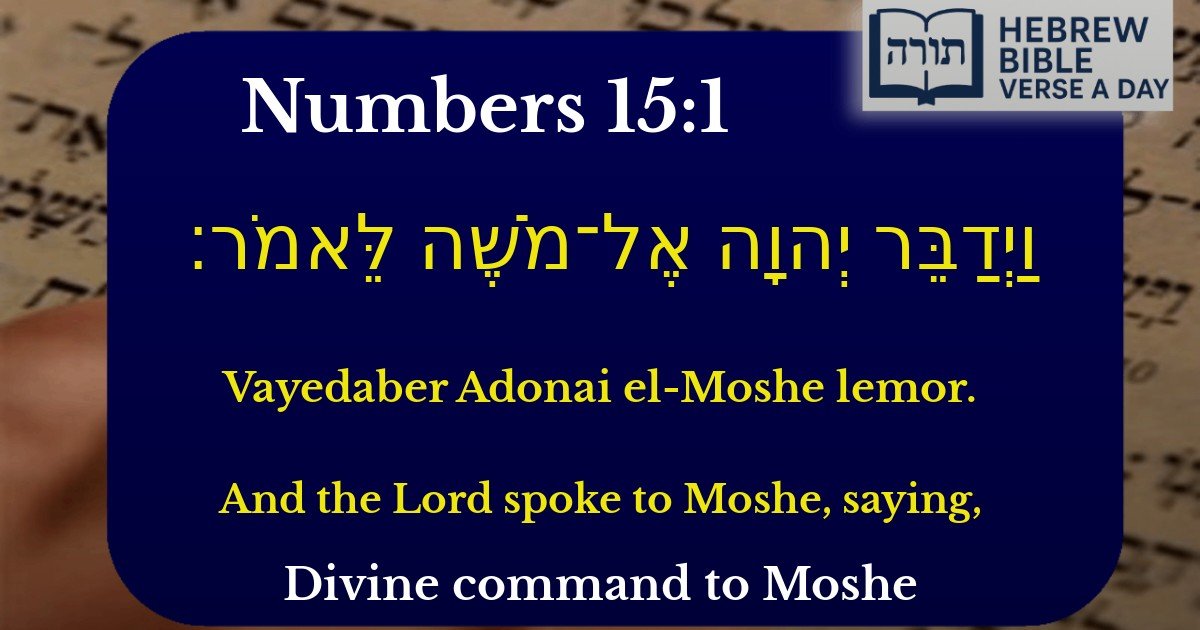
וַיְדַבֵּר יְהוָה אֶל־מֹשֶׁה לֵּאמֹר׃
English Translation
And the Lord spoke to Moshe, saying,
Transliteration
Vayedaber Adonai el-Moshe lemor.
Hebrew Leining Text
וַיְדַבֵּ֥ר יְהֹוָ֖ה אֶל־מֹשֶׁ֥ה לֵּאמֹֽר׃
🎵 Listen to leining
Parasha Commentary
📚 Talmud Citations
This verse is not quoted in the Talmud.
The Divine Communication to Moshe
The verse "וַיְדַבֵּר יְהוָה אֶל־מֹשֶׁה לֵּאמֹר" ("And the Lord spoke to Moshe, saying") appears frequently in the Torah, marking the transmission of divine commandments. Rashi (Shemot 6:2) notes that this phrasing emphasizes the direct and clear communication between Hashem and Moshe, distinguishing it from other forms of prophecy, which may be conveyed through visions or allegories.
The Significance of "לֵּאמֹר" (Saying)
The word "לֵּאמֹר" indicates that Moshe was to relay the message to Bnei Yisrael. Ramban (Bereishit 1:1) explains that this term underscores Moshe's role as the intermediary, faithfully transmitting Hashem's words without alteration. The Talmud (Yoma 4b) further teaches that every divine communication to Moshe included the instruction to teach it to the people.
The Unique Prophecy of Moshe
Theological Implications
This verse reinforces the foundation of Torah MiSinai—the belief that the entire Torah was transmitted directly from Hashem to Moshe. The Sforno (Shemot 19:7) explains that the repetitive use of this phrase throughout the Torah serves to validate the divine origin of every mitzvah, ensuring that no commandment is perceived as Moshe's own words.