

Join Our Newsletter To Be Informed When New Videos Are Posted
Hebrew Text
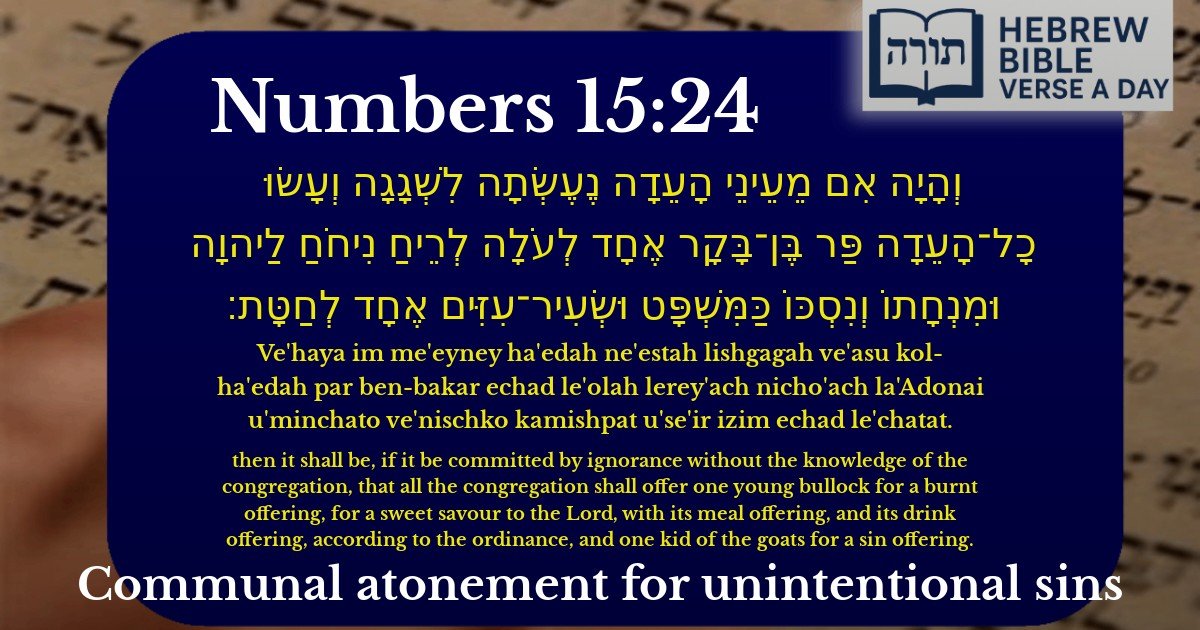
וְהָיָה אִם מֵעֵינֵי הָעֵדָה נֶעֶשְׂתָה לִשְׁגָגָה וְעָשׂוּ כָל־הָעֵדָה פַּר בֶּן־בָּקָר אֶחָד לְעֹלָה לְרֵיחַ נִיחֹחַ לַיהוָה וּמִנְחָתוֹ וְנִסְכּוֹ כַּמִּשְׁפָּט וּשְׂעִיר־עִזִּים אֶחָד לְחַטָּת׃
English Translation
then it shall be, if it be committed by ignorance without the knowledge of the congregation, that all the congregation shall offer one young bullock for a burnt offering, for a sweet savour to the Lord, with its meal offering, and its drink offering, according to the ordinance, and one kid of the goats for a sin offering.
Transliteration
Ve'haya im me'eyney ha'edah ne'estah lishgagah ve'asu kol-ha'edah par ben-bakar echad le'olah lerey'ach nicho'ach la'Adonai u'minchato ve'nischko kamishpat u'se'ir izim echad le'chatat.
Hebrew Leining Text
וְהָיָ֗ה אִ֣ם מֵעֵינֵ֣י הָעֵדָה֮ נֶעֶשְׂתָ֣ה לִשְׁגָגָה֒ וְעָשׂ֣וּ כׇל־הָעֵדָ֡ה פַּ֣ר בֶּן־בָּקָר֩ אֶחָ֨ד לְעֹלָ֜ה לְרֵ֤יחַ נִיחֹ֙חַ֙ לַֽיהֹוָ֔ה וּמִנְחָת֥וֹ וְנִסְכּ֖וֹ כַּמִּשְׁפָּ֑ט וּשְׂעִיר־עִזִּ֥ים אֶחָ֖ד לְחַטָּֽת׃
🎵 Listen to leining
Parasha Commentary
📚 Talmud Citations
This verse is quoted in the Talmud.
📖 Horayot 5b
The verse is discussed in the context of communal sacrifices for unintentional sins, particularly focusing on the procedures and requirements for such offerings.
📖 Shevuot 13a
Referenced in a discussion about the atonement process for the community when a sin is committed unintentionally, comparing individual and communal responsibilities.
Context of the Verse
This verse (Numbers 15:24) discusses the communal sacrifice brought when the entire congregation of Israel unintentionally transgresses a mitzvah due to a mistaken ruling by the Sanhedrin (the High Court). The Torah prescribes two offerings: a young bull as an olah (burnt offering) and a male goat as a chatat (sin offering).
Rashi's Explanation
Rashi (Rabbi Shlomo Yitzchaki) comments that this case applies when the Sanhedrin erroneously permits an action that is actually forbidden, leading the people to sin unintentionally. The bull is offered as an olah to atone for the neglect of positive commandments, while the goat serves as a chatat to atone for the violation of negative commandments.
Rambam's Perspective
In Hilchot Shegagot (Laws of Unintentional Sins), the Rambam (Maimonides) explains that this sacrifice is unique because it addresses a collective error stemming from a mistaken halachic ruling. Unlike individual sins, the entire community is held accountable when led astray by their leaders, emphasizing the gravity of proper Torah leadership.
Talmudic Discussion
The Talmud (Horayot 5a) elaborates that the bull corresponds to the olah brought by the anointed Kohen (High Priest) when he errs, while the goat parallels the chatat of the Nasi (leader). This teaches that communal atonement mirrors the atonement required of leaders who misguide the people.
Midrashic Insight
The Midrash (Sifrei Bamidbar) notes that the phrase "without the knowledge of the congregation" implies that the people acted in good faith, relying on their leaders. This underscores the principle that unintentional sins still require atonement, but the offering reflects Hashem's mercy for those who err without malice.
Symbolism of the Offerings
Halachic Implications
The verse establishes a critical principle in Jewish law: even unintentional sins require repentance and atonement, especially when they stem from communal leadership errors. This highlights the responsibility of Torah scholars to render accurate rulings and the collective duty of the Jewish people to seek proper guidance.