

Join Our Newsletter To Be Informed When New Videos Are Posted
Hebrew Text
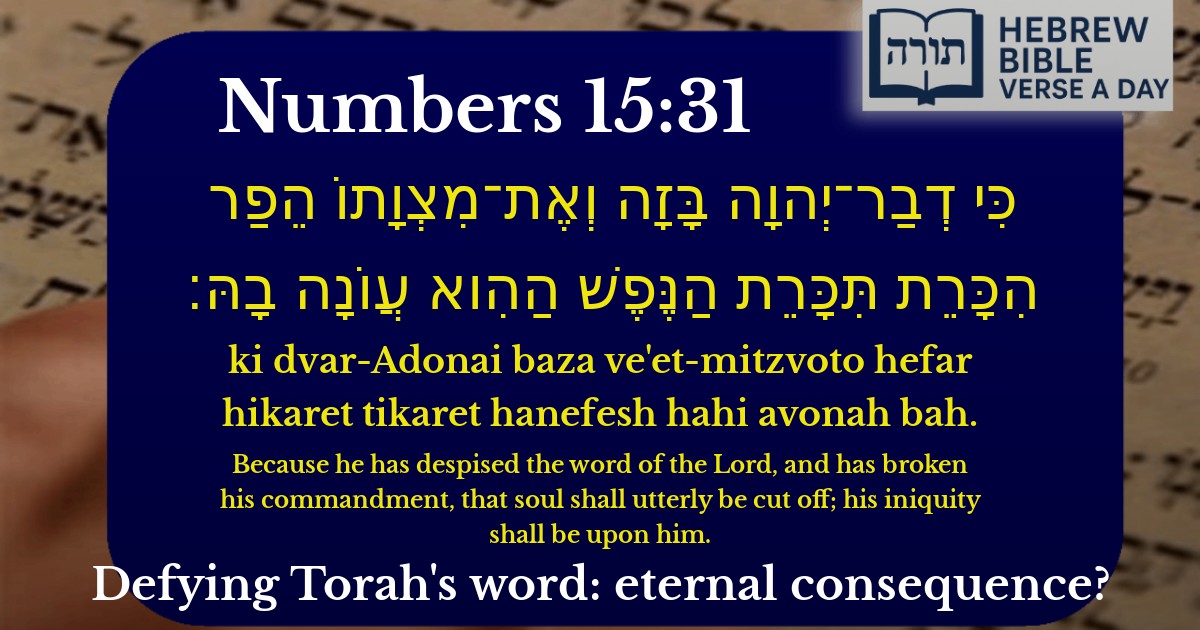
כִּי דְבַר־יְהוָה בָּזָה וְאֶת־מִצְוָתוֹ הֵפַר הִכָּרֵת תִּכָּרֵת הַנֶּפֶשׁ הַהִוא עֲוֺנָה בָהּ׃
English Translation
Because he has despised the word of the Lord, and has broken his commandment, that soul shall utterly be cut off; his iniquity shall be upon him.
Transliteration
Ki dvar-Adonai baza ve'et-mitzvoto hefar hikaret tikaret hanefesh hahi avonah bah.
Hebrew Leining Text
כִּ֤י דְבַר־יְהֹוָה֙ בָּזָ֔ה וְאֶת־מִצְוָת֖וֹ הֵפַ֑ר הִכָּרֵ֧ת ׀ תִּכָּרֵ֛ת הַנֶּ֥פֶשׁ הַהִ֖וא עֲוֺנָ֥הֿ בָֽהּ׃ {פ}
🎵 Listen to leining
Parasha Commentary
📚 Talmud Citations
This verse is quoted in the Talmud.
📖 Sanhedrin 99a
The verse is cited in a discussion about the severity of despising the word of God and the consequences of breaking His commandments.
📖 Kiddushin 40a
The verse is referenced in a broader discussion about the importance of fulfilling commandments and the consequences of neglecting them.
Understanding the Severity of the Transgression
The verse (Numbers 15:31) describes a severe punishment—karet (being "cut off")—for one who despises the word of Hashem and deliberately violates His commandments. Rashi explains that this refers to someone who acts mezid (intentionally) in defiance of Torah law, demonstrating contempt for Divine authority. The term בָּזָה ("despised") implies a willful rejection, not merely negligence.
The Nature of Karet
According to Rambam (Hilchot Teshuva 8:1), karet is a Divine punishment that may involve premature death or the soul being severed from its spiritual source. The Talmud (Sanhedrin 64b) discusses that certain severe sins, such as idolatry or desecrating Shabbat intentionally, incur karet. The phrase הִכָּרֵת תִּכָּרֵת ("shall utterly be cut off") emphasizes the irrevocable nature of this punishment when repentance is absent.
The Role of Repentance
The Sages (Yoma 85b) teach that even for sins punishable by karet, sincere teshuva (repentance) can avert the decree. However, the verse specifies עֲוֺנָה בָהּ ("his iniquity shall be upon him"), implying that if the sinner does not repent, the guilt remains. Ramban notes that this underscores personal accountability—each soul bears the consequences of its choices.
Midrashic Insight
The Midrash (Sifrei Bamidbar 112) links this verse to the episode of the mekoshesh etzim (the wood gatherer on Shabbat, Numbers 15:32-36), illustrating that deliberate defiance of Torah law warrants karet. This serves as a warning against treating mitzvot with disdain, as it reflects a rejection of Hashem's sovereignty.
Halachic Implications