

Join Our Newsletter To Be Informed When New Videos Are Posted
Hebrew Text
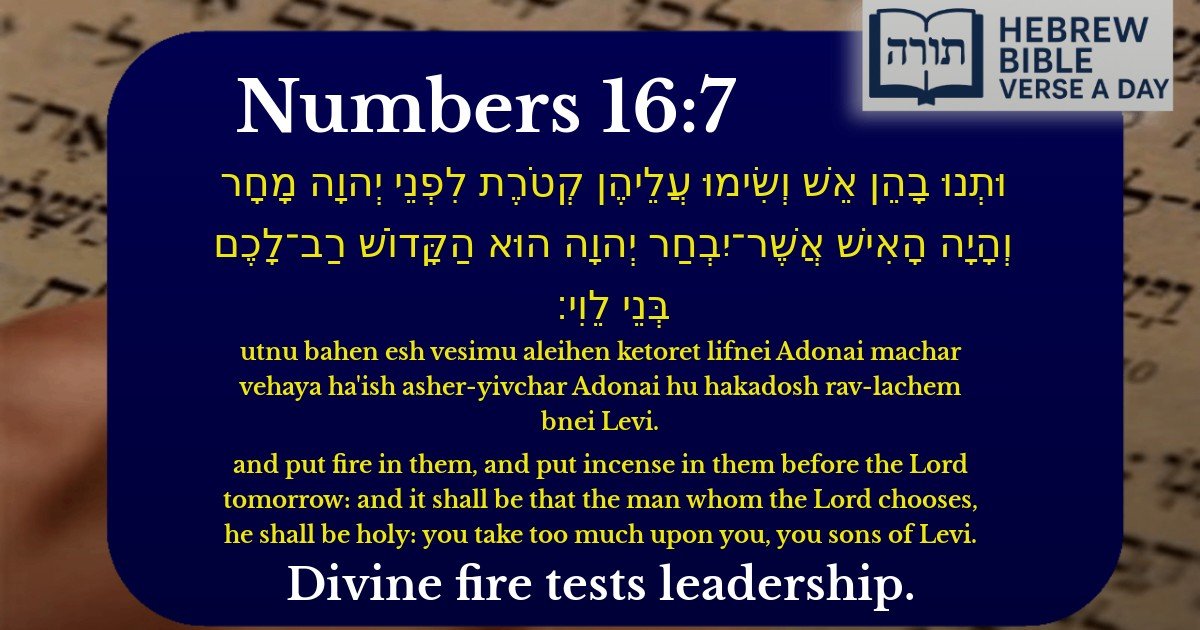
וּתְנוּ בָהֵן אֵשׁ וְשִׂימוּ עֲלֵיהֶן קְטֹרֶת לִפְנֵי יְהוָה מָחָר וְהָיָה הָאִישׁ אֲשֶׁר־יִבְחַר יְהוָה הוּא הַקָּדוֹשׁ רַב־לָכֶם בְּנֵי לֵוִי׃
English Translation
and put fire in them, and put incense in them before the Lord tomorrow: and it shall be that the man whom the Lord chooses, he shall be holy: you take too much upon you, you sons of Levi.
Transliteration
Utnu bahen esh vesimu aleihen ketoret lifnei Adonai machar vehaya ha'ish asher-yivchar Adonai hu hakadosh rav-lachem bnei Levi.
Hebrew Leining Text
וּתְנ֣וּ בָהֵ֣ן ׀ אֵ֡שׁ וְשִׂ֩ימוּ֩ עֲלֵיהֶ֨ן ׀ קְטֹ֜רֶת לִפְנֵ֤י יְהֹוָה֙ מָחָ֔ר וְהָיָ֗ה הָאִ֛ישׁ אֲשֶׁר־יִבְחַ֥ר יְהֹוָ֖ה ה֣וּא הַקָּד֑וֹשׁ רַב־לָכֶ֖ם בְּנֵ֥י לֵוִֽי׃
🎵 Listen to leining
Parasha Commentary
📚 Talmud Citations
This verse is quoted in the Talmud.
📖 Sanhedrin 110a
The verse is referenced in the context of discussing the rebellion of Korach and his followers, emphasizing the divine selection of Aaron and the Levites for priestly service.
Context of the Verse
This verse (Bamidbar 16:7) is part of the narrative of Korach's rebellion against Moshe and Aharon's leadership. Korach, a Levite, along with Datan, Aviram, and 250 prominent men, challenged Aharon's exclusive right to the Kehunah (priesthood). Moshe responds by proposing a test to determine whom Hashem has chosen as the rightful Kohen.
Explanation of the Test
Moshe instructs the rebels to take fire pans (מַחְתּוֹת), place fire and incense (קְטֹרֶת) in them, and present them before Hashem. The one whom Hashem chooses will be revealed through this test. Rashi (Bamidbar 16:6) explains that incense was chosen because it was a sacred service performed exclusively by the Kohanim in the Mishkan. This would demonstrate whether Korach and his followers had any legitimate claim to the priesthood.
The Meaning of "He Shall Be Holy"
The phrase "הוּא הַקָּדוֹשׁ" ("he shall be holy") refers to the one validated by Hashem as the true Kohen. Ramban (Bamidbar 16:5) elaborates that this holiness is not self-proclaimed but divinely ordained. The rebellion stemmed from a misunderstanding of spiritual hierarchy—only Hashem designates holiness, not human ambition.
Rebuke to the Sons of Levi
Moshe's words "רַב־לָכֶם בְּנֵי לֵוִי" ("you take too much upon you, sons of Levi") are a chastisement. The Midrash (Bamidbar Rabbah 18:6) explains that the Levites already had elevated roles in the Mishkan (carrying the Aron, singing, etc.), yet they sought even greater status. This overreach demonstrated ingratitude and a lack of appreciation for their divinely assigned roles.
Lessons from the Incident