Frequently Asked Questions
Q: What does 'a land flowing with milk and honey' mean in Numbers 16:14?
A: In Numbers 16:14, the phrase 'a land flowing with milk and honey' refers to the Land of Israel, which is described in the Torah as a fertile and abundant land. Rashi explains that 'milk' symbolizes the richness of livestock, and 'honey' refers to the sweetness of fruits, particularly date honey. This phrase highlights the blessings and prosperity of the land promised to the Jewish people.
Q: Why were Korach and his followers complaining in Numbers 16:14?
A: Korach and his followers were complaining because they were dissatisfied with the leadership of Moshe (Moses) and Aharon (Aaron). In Numbers 16:14, they accuse Moshe of not bringing them to the promised land of milk and honey, despite the miracles they had witnessed. The Talmud (Sanhedrin 110a) teaches that their rebellion was rooted in arrogance and a desire for power, rather than genuine concern for the people.
Q: What is the significance of the phrase 'wilt thou put out the eyes of these men' in Numbers 16:14?
A: The phrase 'wilt thou put out the eyes of these men' is a metaphorical expression used by Korach's followers to accuse Moshe of misleading or blinding the people. Rashi explains that they were claiming Moshe was deceiving them, as if he had blinded them to the truth. This reflects their lack of faith and their refusal to recognize Moshe's divine appointment as their leader.
Q: How does Numbers 16:14 relate to the concept of gratitude in Judaism?
A: Numbers 16:14 demonstrates the danger of ingratitude, as Korach and his followers failed to appreciate the miracles and guidance they had received from Hashem through Moshe. The Midrash (Bamidbar Rabbah 18:3) emphasizes the importance of recognizing and being thankful for the blessings we have, rather than focusing on what we lack. This lesson remains relevant today in cultivating a mindset of gratitude.
Q: What can we learn from the rebellion of Korach in Numbers 16:14?
A: The rebellion of Korach teaches us the importance of humility and respecting divinely appointed leadership. The Rambam (Maimonides) in Hilchos De'os (Laws of Character Traits) warns against the dangers of arrogance and strife, which were at the root of Korach's rebellion. This verse reminds us to seek unity and trust in Hashem's chosen leaders, rather than fostering division.

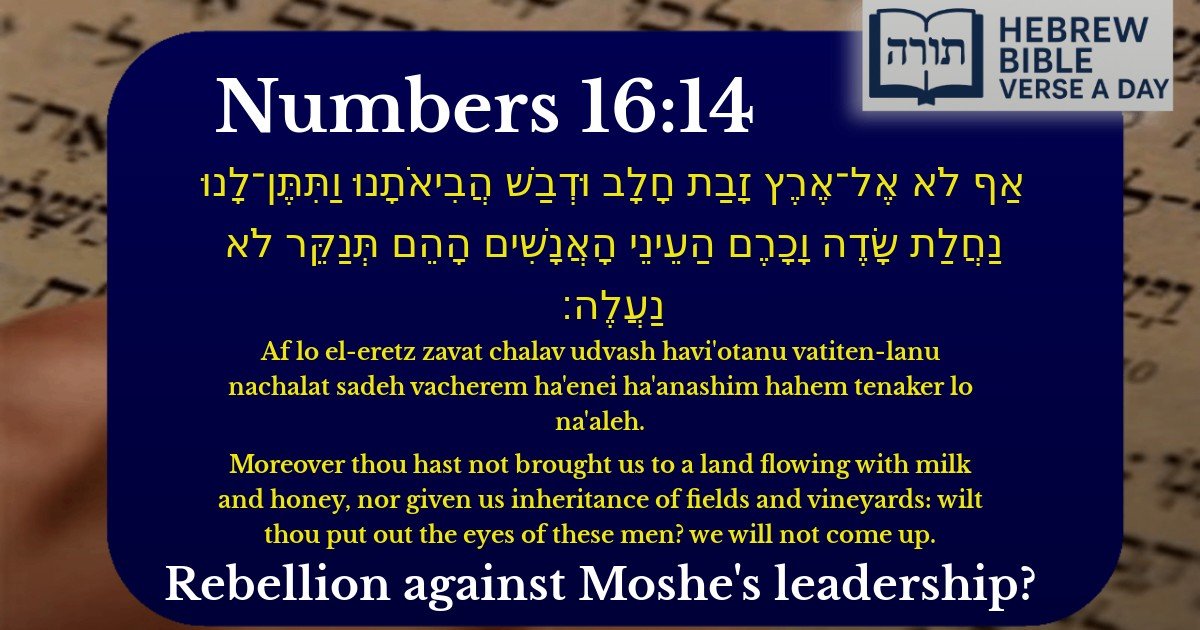

Context of the Verse
This verse appears in Bamidbar (Numbers) 16:14, spoken by the rebels Datan and Aviram in response to Moshe's call for them to appear before Hashem. Their words reflect defiance and ingratitude, rejecting Moshe's leadership and questioning the fulfillment of Hashem's promise to bring them to a land flowing with milk and honey.
Literal Interpretation (Peshat)
Rashi explains that Datan and Aviram are accusing Moshe of failing to deliver on the promise of Eretz Yisrael, sarcastically stating that he has not brought them to a land of abundance. Their claim that Moshe seeks to "put out the eyes of these men" is a metaphor for deception—accusing Moshe of blinding the people to the truth.
Midrashic Insights (Derash)
Theological Implications
The Malbim emphasizes that their words reveal a deeper rebellion against divine authority. By mocking the promise of "milk and honey," they reject not only Moshe but also Hashem's covenant. Their refusal to "come up" (לֹא נַעֲלֶה) symbolizes their unwillingness to ascend spiritually.
Lessons from the Verse