
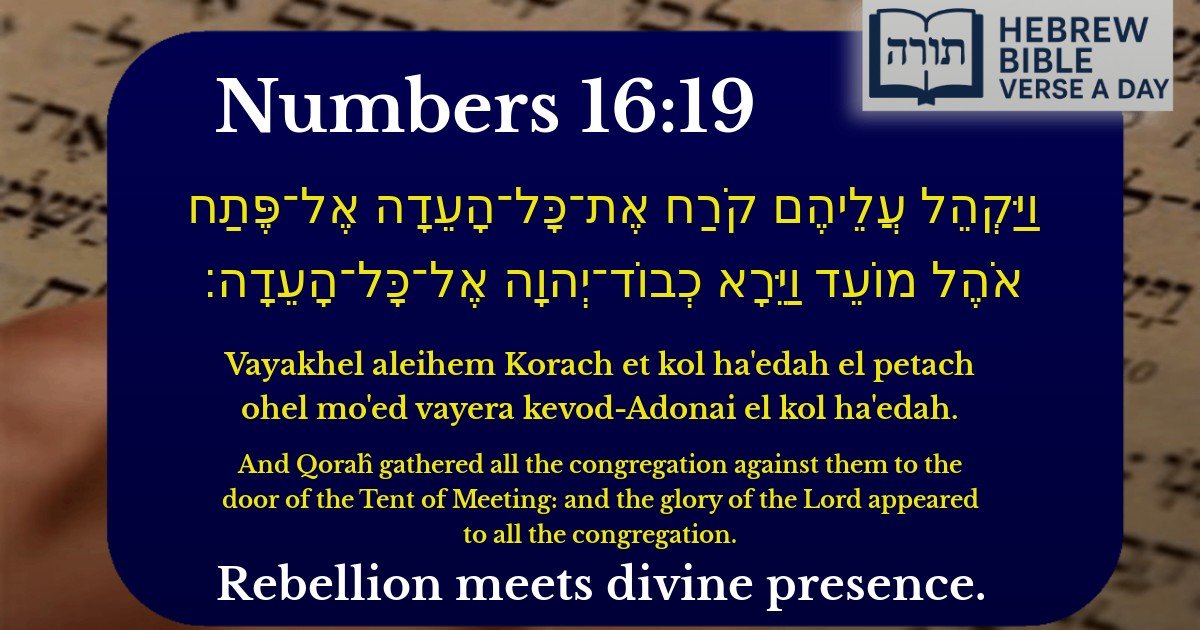

Numbers 16:19 - Rebellion meets divine presence.

Numbers 16:19 - במדבר 16:19

Hebrew Text

וַיַּקְהֵל עֲלֵיהֶם קֹרַח אֶת־כָּל־הָעֵדָה אֶל־פֶּתַח אֹהֶל מוֹעֵד וַיֵּרָא כְבוֹד־יְהוָה אֶל־כָּל־הָעֵדָה׃

English Translation

And Qoraĥ gathered all the congregation against them to the door of the Tent of Meeting: and the glory of the Lord appeared to all the congregation.

Transliteration

Vayakhel aleihem Korach et kol ha'edah el petach ohel mo'ed vayera kevod-Adonai el kol ha'edah.

Hebrew Leining Text

וַיַּקְהֵ֨ל עֲלֵיהֶ֥ם קֹ֙רַח֙ אֶת־כׇּל־הָ֣עֵדָ֔ה אֶל־פֶּ֖תַח אֹ֣הֶל מוֹעֵ֑ד וַיֵּרָ֥א כְבוֹד־יְהֹוָ֖ה אֶל־כׇּל־הָעֵדָֽה׃ {ס}        

🎵 Listen to leining

Parasha Commentary

The Gathering of Korach and His Assembly

The verse describes how Korach gathered the entire congregation (עֵדָה) against Moshe and Aharon at the entrance of the Tent of Meeting (אֹהֶל מוֹעֵד). Rashi (Bamidbar 16:19) explains that Korach deliberately chose this location to challenge Moshe's authority, implying that the Mishkan—the sacred dwelling place of the Divine Presence—should not be under Moshe's exclusive control. The Midrash (Bamidbar Rabbah 18:3) further elaborates that Korach sought to undermine Moshe's leadership by questioning the legitimacy of Aharon's priesthood, arguing that the entire nation was holy and thus equally deserving of serving in the Mishkan.

The Appearance of the Divine Glory

The verse concludes with the appearance of כְבוֹד־יְהוָה (the glory of Hashem) before the entire assembly. Ramban (Bamidbar 16:19) notes that this manifestation was a direct response to Korach's rebellion, demonstrating Hashem's affirmation of Moshe and Aharon's divinely appointed roles. The Talmud (Sanhedrin 110a) teaches that this event served as a warning against divisiveness (מחלוקת), emphasizing that disputes not for the sake of Heaven—like Korach's—lead to destruction.

Lessons from Korach's Rebellion

  • Leadership and Humility: The Or HaChaim (Bamidbar 16:1) contrasts Korach's arrogance with Moshe's humility, teaching that true leadership requires submission to divine will rather than personal ambition.
  • The Danger of Disunity: The Maharal (Gur Aryeh, Bamidbar 16:1) explains that Korach's sin lay in fracturing the unity of Klal Yisrael, as the Mishkan symbolizes collective service to Hashem.
  • Divine Justice: The appearance of the Divine Glory underscores that Hashem directly intervenes to uphold truth and justice, as seen later in the earth swallowing Korach and his followers (Bamidbar 16:32).

📚 Talmud Citations

This verse is quoted in the Talmud.

📖 Sanhedrin 110a
The verse is referenced in the discussion about the rebellion of Korah and its consequences, illustrating the severity of challenging divine authority.
📖 Bava Batra 74a
Mentioned in the context of discussing the appearance of God's glory and its manifestations in biblical narratives.

Frequently Asked Questions

Q: What is the meaning of Numbers 16:19 in the story of Korach?
A: Numbers 16:19 describes how Korach gathered the entire congregation against Moshe and Aharon at the entrance of the Tent of Meeting, and then the glory of Hashem appeared to everyone. According to Rashi, this shows that even though Korach's rebellion was wrong, Hashem allowed His presence to be revealed to give them a chance to repent before punishment.
Q: Why did Hashem's glory appear when Korach rebelled?
A: The Midrash explains that Hashem's glory appeared (Numbers 16:19) as both a warning and an opportunity for Korach and his followers to recognize their mistake and repent. The Rambam teaches that G-d always gives people a chance to correct their ways before executing judgment.
Q: What lesson can we learn from Numbers 16:19 today?
A: From Numbers 16:19, we learn that even when people oppose proper authority (like Korach opposed Moshe), Hashem remains patient and gives opportunities for repentance. The Talmud (Sanhedrin 110a) derives from this that disputes not for Heaven's sake (like Korach's) are destructive, and we should pursue peace instead.
Q: Where exactly did Korach gather the people in Numbers 16:19?
A: Numbers 16:19 states that Korach gathered the people at the entrance of the Tent of Meeting (Ohel Moed). Rashi explains this was a strategic location - by the place of the Altar and the Mishkan, to make it seem like his rebellion was for holy purposes when it was really for personal gain.
Q: How does Orthodox Judaism view Korach's rebellion based on this verse?
A: Orthodox Judaism sees Korach's rebellion (Numbers 16:19) as the classic example of improper machloket (dispute). The Mishnah in Avot (5:17) contrasts arguments for Heaven's sake (like Hillel and Shammai) with Korach's selfish dispute. The sudden appearance of Hashem's glory showed the seriousness of challenging Torah authority.