

Join Our Newsletter To Be Informed When New Videos Are Posted
Hebrew Text
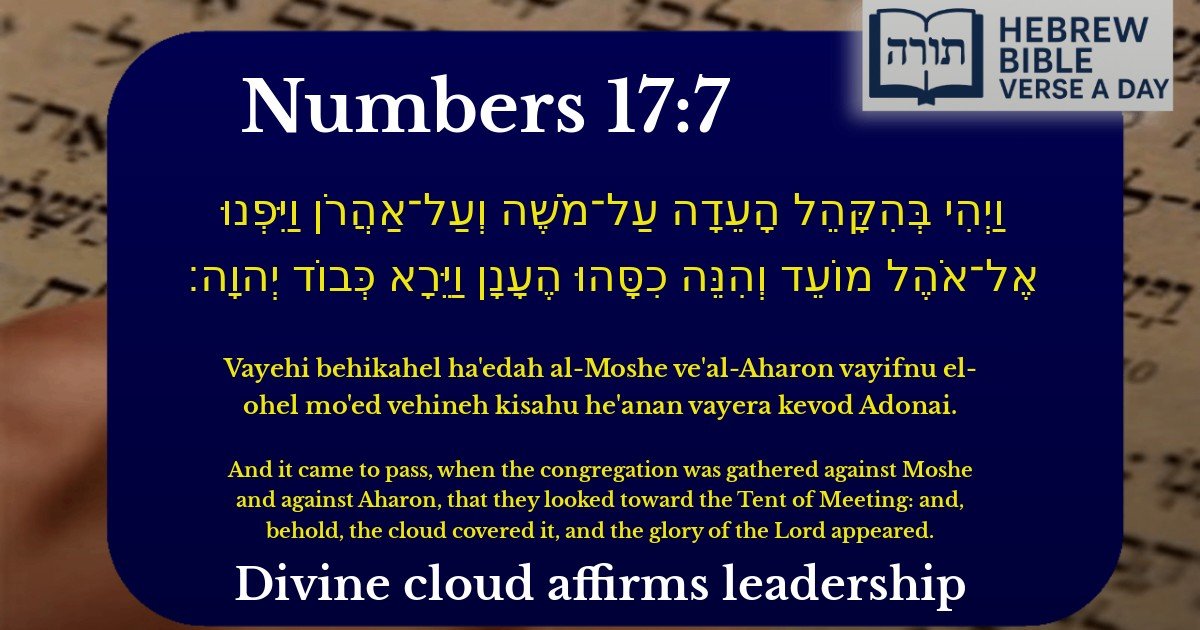
וַיְהִי בְּהִקָּהֵל הָעֵדָה עַל־מֹשֶׁה וְעַל־אַהֲרֹן וַיִּפְנוּ אֶל־אֹהֶל מוֹעֵד וְהִנֵּה כִסָּהוּ הֶעָנָן וַיֵּרָא כְּבוֹד יְהוָה׃
English Translation
And it came to pass, when the congregation was gathered against Moshe and against Aharon, that they looked toward the Tent of Meeting: and, behold, the cloud covered it, and the glory of the Lord appeared.
Transliteration
Vayehi behikahel ha'edah al-Moshe ve'al-Aharon vayifnu el-ohel mo'ed vehineh kisahu he'anan vayera kevod Adonai.
Hebrew Leining Text
וַיְהִ֗י בְּהִקָּהֵ֤ל הָֽעֵדָה֙ עַל־מֹשֶׁ֣ה וְעַֽל־אַהֲרֹ֔ן וַיִּפְנוּ֙ אֶל־אֹ֣הֶל מוֹעֵ֔ד וְהִנֵּ֥ה כִסָּ֖הוּ הֶעָנָ֑ן וַיֵּרָ֖א כְּב֥וֹד יְהֹוָֽה׃
🎵 Listen to leining
Parasha Commentary
📚 Talmud Citations
This verse is quoted in the Talmud.
📖 Sanhedrin 110a
The verse is referenced in the context of discussing the rebellion of Korach and his congregation, illustrating the divine response to their challenge against Moshe and Aharon.
Context of the Verse
This verse (Bamidbar 17:7) follows the rebellion of Korach and his assembly against Moshe and Aharon. After Hashem's judgment against Korach and his followers, the people accused Moshe and Aharon of causing the deaths of "the people of Hashem." This verse describes the moment when the congregation gathered in opposition to Moshe and Aharon, and the Divine Presence responded by appearing in a cloud over the Mishkan.
Rashi's Explanation
Rashi explains that the phrase "וַיְהִי בְּהִקָּהֵל הָעֵדָה" ("when the congregation was gathered") refers to the assembly of Bnei Yisrael who were still discontent after witnessing the punishment of Korach's rebellion. They gathered to challenge Moshe and Aharon's leadership. The appearance of the cloud and the glory of Hashem was a direct response to their defiance, demonstrating Divine approval of Moshe and Aharon's authority.
The Significance of the Cloud
The Midrash (Bamidbar Rabbah 18:20) teaches that the cloud covering the Mishkan was not merely a physical phenomenon but a manifestation of the Shechinah (Divine Presence). This served as a visible sign that Hashem was displeased with the people's complaints and reaffirmed Moshe and Aharon's divinely appointed roles. The Ramban adds that the cloud was a protective barrier, preventing the people from approaching the Mishkan in their state of rebellion.
Divine Intervention as a Warning
The Talmud (Sanhedrin 110a) discusses this episode as an example of how disputes against rightful leadership are considered disputes against the Divine Presence itself. The sudden appearance of Hashem's glory was both a rebuke and a warning—showing that further rebellion would invite severe consequences.
Lessons in Leadership and Humility