

Join Our Newsletter To Be Informed When New Videos Are Posted
Hebrew Text
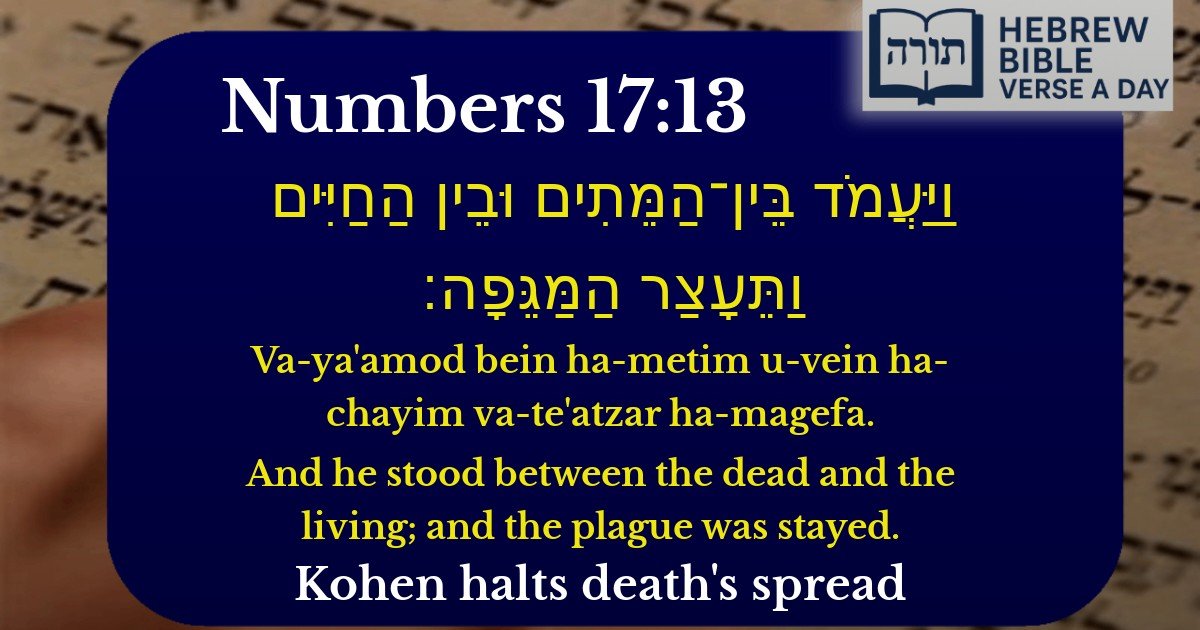
וַיַּעֲמֹד בֵּין־הַמֵּתִים וּבֵין הַחַיִּים וַתֵּעָצַר הַמַּגֵּפָה׃
English Translation
And he stood between the dead and the living; and the plague was stayed.
Transliteration
Va-ya'amod bein ha-metim u-vein ha-chayim va-te'atzar ha-magefa.
Hebrew Leining Text
וַיַּעֲמֹ֥ד בֵּֽין־הַמֵּתִ֖ים וּבֵ֣ין הַֽחַיִּ֑ים וַתֵּעָצַ֖ר הַמַּגֵּפָֽה׃
🎵 Listen to leining
Parasha Commentary
📚 Talmud Citations
This verse is quoted in the Talmud.
📖 Yoma 85b
The verse is referenced in the discussion about the power of repentance and how it can avert divine punishment, similar to how Aaron stood between the dead and the living to stop the plague.
📖 Rosh Hashanah 17b
The verse is cited in the context of discussing God's mercy and the cessation of plagues as a demonstration of divine compassion.
Context of the Verse
This verse (Numbers 17:13) describes the aftermath of Korach's rebellion, when a plague broke out among the Israelites as divine punishment. Aharon the Kohen Gadol (High Priest) intervenes by standing between the dead and the living, halting the plague with ketoret (incense) as commanded by Moshe.
Rashi's Explanation
Rashi (Numbers 17:13) explains that Aharon "stood between the dead and the living" by physically positioning himself where the plague was active—between those already stricken and those still unharmed. The ketoret served as a protective barrier, as the verse states, "the plague was stayed." Rashi emphasizes that Aharon acted with great courage, risking his life to fulfill the mitzvah.
Rambam on the Power of Ketoret
In Hilchot Klei HaMikdash (2:5), Rambam teaches that the ketoret had the unique power to atone and halt plagues. This aligns with the Talmud's teaching (Yoma 44a) that the ketoret was instrumental in stopping divine wrath, as seen in this episode.
Midrashic Insights
Halachic Significance
The Shulchan Aruch (Orach Chaim 132:2) cites this verse as a source for the custom to recite "V'hu Rachum" (a prayer invoking the merit of ketoret) during times of distress, reinforcing the enduring power of Aharon's act as a model for seeking divine mercy.