Frequently Asked Questions
Q: What is the significance of the rods in Numbers 17:24?
A: The rods in this verse represent the leadership of the tribes of Israel. Each tribal leader had a rod with his name inscribed on it. The miracle of Aaron's rod budding (mentioned earlier in the chapter) confirmed his divinely chosen status as Kohen Gadol (High Priest), settling the dispute about leadership (Rashi on Numbers 17:20-24).
Q: Why did Moshe bring out the rods to all the Israelites?
A: Moshe brought out the rods to demonstrate publicly that only Aaron's rod had miraculously blossomed, proving that the selection of the priesthood was from Hashem. This was meant to end the complaints and disputes about leadership (Ramban on Numbers 17:24).
Q: What lesson can we learn from Numbers 17:24?
A: This verse teaches us about accepting divinely appointed leadership. The miracle of Aaron's rod showed that leadership roles, especially in spiritual matters, are determined by Hashem's will, not human desire (Talmud, Yoma 53a).
Q: How does this verse relate to the concept of miracles in Judaism?
A: This event shows that Hashem sometimes uses supernatural signs (like a dry rod blossoming) to validate truth and resolve disputes. However, such open miracles are rare and typically occur at critical moments in Jewish history (Rambam, Yesodei HaTorah 8:1).
Q: What happened to Aaron's rod after this miracle?
A: According to tradition, Aaron's rod was kept in the Holy Ark as a lasting testimony to this miracle (Talmud, Bava Batra 14a). It served as a reminder of the authenticity of the priestly service in the Mishkan (Tabernacle).


Context of the Verse
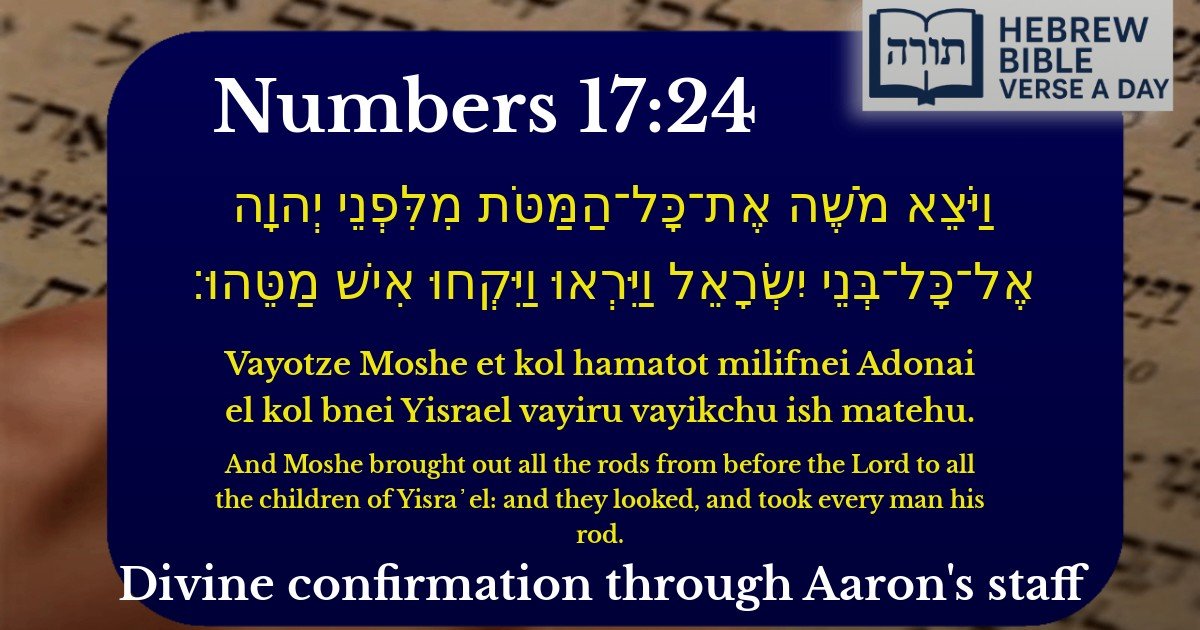
The verse (Bamidbar 17:24) describes the conclusion of the episode involving Korach's rebellion, where Hashem performed a miracle to affirm Aharon's selection as Kohen Gadol. Each tribe's leader had submitted a staff (מַטֶּה), and only Aharon's staff blossomed with almonds, demonstrating divine approval of his priesthood.
Rashi's Explanation
Rashi explains that Moshe displayed all the staffs before Bnei Yisrael to emphasize that only Aharon's had miraculously sprouted. This public demonstration was necessary to quell any lingering doubts or disputes about Aharon's divine appointment.
Symbolism of the Almonds
The Midrash (Bamidbar Rabbah 18:23) notes that almonds (שְׁקֵדִים) symbolize haste (שָׁקַד), as they blossom quickly. This alludes to Hashem's swift judgment in affirming Aharon's position and punishing the rebels. The almond's rapid growth also signifies that divine selection is not subject to human debate.
Rambam on Leadership
In Hilchos Klei HaMikdash (4:13), Rambam derives from this episode that leadership roles—particularly the priesthood—are determined by divine will, not human contention. The miracle of the staffs serves as a permanent lesson against challenging divinely ordained roles.
Practical Lessons