

Join Our Newsletter To Be Informed When New Videos Are Posted
Hebrew Text
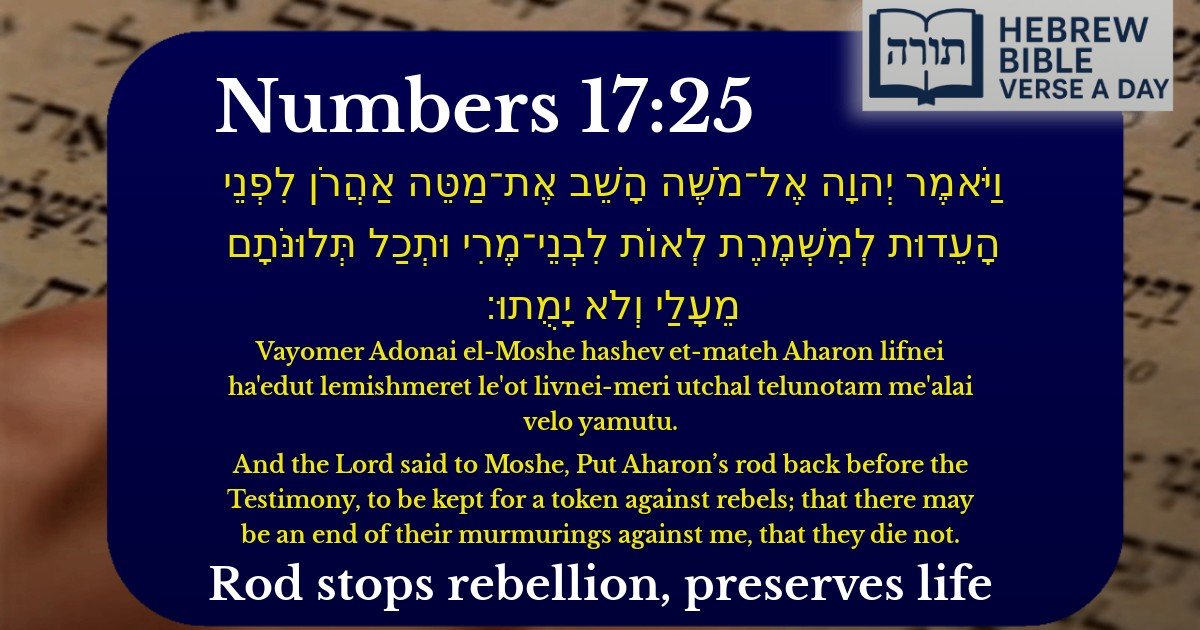
וַיֹּאמֶר יְהוָה אֶל־מֹשֶׁה הָשֵׁב אֶת־מַטֵּה אַהֲרֹן לִפְנֵי הָעֵדוּת לְמִשְׁמֶרֶת לְאוֹת לִבְנֵי־מֶרִי וּתְכַל תְּלוּנֹּתָם מֵעָלַי וְלֹא יָמֻתוּ׃
English Translation
And the Lord said to Moshe, Put Aharon’s rod back before the Testimony, to be kept for a token against rebels; that there may be an end of their murmurings against me, that they die not.
Transliteration
Vayomer Adonai el-Moshe hashev et-mateh Aharon lifnei ha'edut lemishmeret le'ot livnei-meri utchal telunotam me'alai velo yamutu.
Hebrew Leining Text
וַיֹּ֨אמֶר יְהֹוָ֜ה אֶל־מֹשֶׁ֗ה הָשֵׁ֞ב אֶת־מַטֵּ֤ה אַהֲרֹן֙ לִפְנֵ֣י הָעֵד֔וּת לְמִשְׁמֶ֥רֶת לְא֖וֹת לִבְנֵי־מֶ֑רִי וּתְכַ֧ל תְּלוּנֹּתָ֛ם מֵעָלַ֖י וְלֹ֥א יָמֻֽתוּ׃
🎵 Listen to leining
Parasha Commentary
📚 Talmud Citations
This verse is quoted in the Talmud.
📖 Sanhedrin 17a
The verse is referenced in the context of discussing the rebellion of Korach and the significance of Aharon's rod as a divine sign.
📖 Horayot 12a
The verse is mentioned in relation to the authority of the priesthood and the divine selection of Aharon.
Context of the Verse
The verse (Bamidbar 17:25) follows the episode of Korach's rebellion, where Aharon's staff miraculously blossomed with almonds, confirming his divine selection as Kohen Gadol. Hashem instructs Moshe to preserve Aharon's staff before the Ark as a sign for future generations.
Meaning of "Before the Testimony"
Rashi explains that "before the Testimony" (לִפְנֵי הָעֵדוּת) refers to placement near the Ark, which contained the Luchos (Tablets of Testimony). The Ramban adds that this positioning served as a perpetual reminder of Aharon's legitimacy and the severe consequences of challenging divinely appointed leadership.
The Rod as a "Sign for Rebels"
The Midrash Tanchuma (Korach 12) elaborates that the almond blossom - which appears suddenly - symbolizes how quickly divine justice can manifest against those who rebel. The Sforno notes that the preserved staff would:
"That Their Complaints May Cease"
Rabbeinu Bachya observes that the verse uses the term "תְלוּנֹּתָם" (their complaints) rather than referring to open rebellion. This teaches that even verbal complaints against Torah leadership constitute a serious transgression. The miraculous staff was meant to inspire awe that would prevent such behavior.
Eternal Significance
The Talmud (Yoma 52b) records that the staff remained among the Temple vessels until the destruction of the First Temple. The Maharal (Gevuros Hashem 14) explains its enduring presence demonstrated that the priesthood wasn't subject to democratic approval but was an eternal divine institution.