

Join Our Newsletter To Be Informed When New Videos Are Posted
Hebrew Text
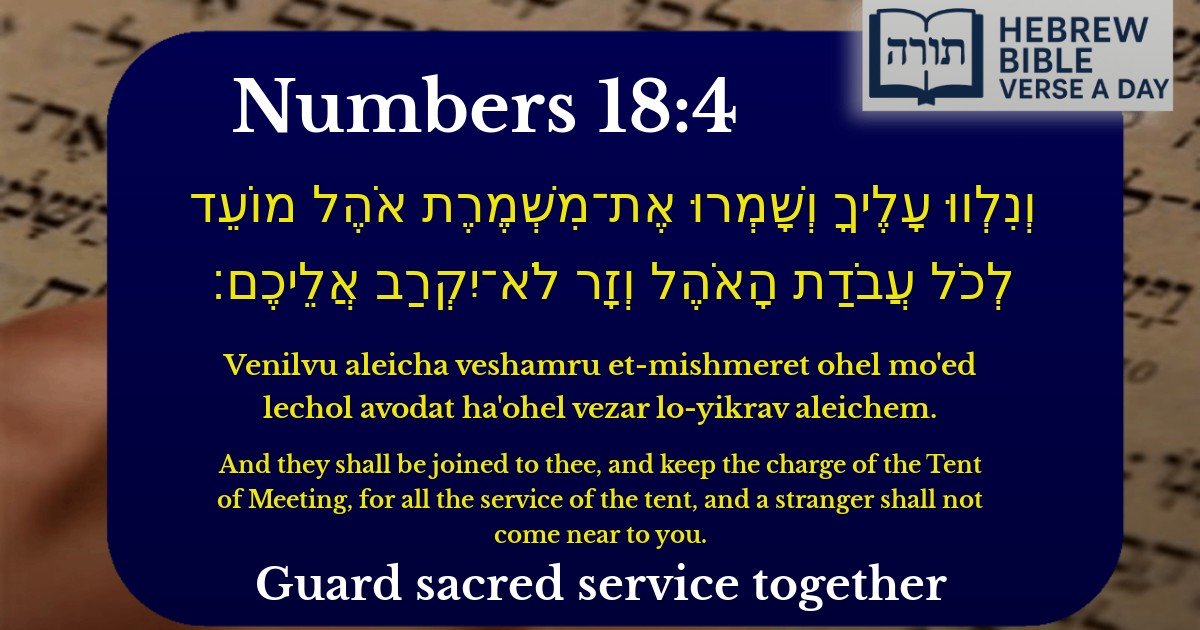
וְנִלְווּ עָלֶיךָ וְשָׁמְרוּ אֶת־מִשְׁמֶרֶת אֹהֶל מוֹעֵד לְכֹל עֲבֹדַת הָאֹהֶל וְזָר לֹא־יִקְרַב אֲלֵיכֶם׃
English Translation
And they shall be joined to thee, and keep the charge of the Tent of Meeting, for all the service of the tent, and a stranger shall not come near to you.
Transliteration
Venilvu aleicha veshamru et-mishmeret ohel mo'ed lechol avodat ha'ohel vezar lo-yikrav aleichem.
Hebrew Leining Text
וְנִלְו֣וּ עָלֶ֔יךָ וְשָֽׁמְר֗וּ אֶת־מִשְׁמֶ֙רֶת֙ אֹ֣הֶל מוֹעֵ֔ד לְכֹ֖ל עֲבֹדַ֣ת הָאֹ֑הֶל וְזָ֖ר לֹא־יִקְרַ֥ב אֲלֵיכֶֽם׃
🎵 Listen to leining
Parasha Commentary
📚 Talmud Citations
This verse is quoted in the Talmud.
📖 Yoma 24a
The verse is referenced in a discussion about the roles and restrictions of the Levites and Kohanim in the Temple service, emphasizing that only designated individuals may perform certain sacred duties.
📖 Zevachim 17b
The verse is cited in the context of discussing who is permitted to perform sacrificial services, reinforcing the prohibition against non-priests (zarim) participating in these rituals.
Context and Source
The verse (Bamidbar 18:4) is part of Hashem's instructions to Aharon regarding the roles of the Kohanim and Levi'im in the Mishkan (Tabernacle). It establishes the exclusive responsibilities of the Levi'im in assisting the Kohanim and guarding the sanctity of the Mishkan.
Rashi's Explanation
Rashi explains that "וְנִלְווּ עָלֶיךָ" ("they shall be joined to thee") refers to the Levi'im attaching themselves to the Kohanim to serve under their direction. The phrase "וְשָׁמְרוּ אֶת־מִשְׁמֶרֶת אֹהֶל מוֹעֵד" ("and keep the charge of the Tent of Meeting") means the Levi'im were tasked with guarding the Mishkan to prevent unauthorized entry, a role derived from their earlier zeal in avenging the sin of the golden calf (Rashi cites Bamidbar 18:1-4 and Shemot 32:26-29).
Rambam's Perspective
In Hilchot Klei HaMikdash (3:2), Rambam elaborates that the Levi'im served as guards (shomrim) to ensure no zar (non-Kohen or unauthorized person) approached sacred areas or vessels improperly. This guarding was both physical (preventing entry) and symbolic (maintaining the Mishkan's sanctity).
Talmudic and Midrashic Insights
The Prohibition of "זָר לֹא־יִקְרַב"
The warning that "a stranger shall not come near" (זָר לֹא־יִקְרַב) is interpreted by the Sifrei (Bamidbar 18:4) as applying to both non-Kohanim and Kohanim who are ritually impure or otherwise disqualified. The Ketzot HaChoshen (Yoreh De'ah 157:1) notes that this establishes a broader principle: sacred roles require both proper lineage and adherence to halachic standards.
Practical Implications
This verse lays the foundation for the division of labor in Jewish worship: Kohanim perform the avodah (sacrificial service), Levi'im assist with guarding and maintenance, and Yisrael participate through offerings and communal support (see Rambam, Hilchot Shemitah v'Yovel 13:12). The hierarchy ensures order and reverence in divine service.