Frequently Asked Questions
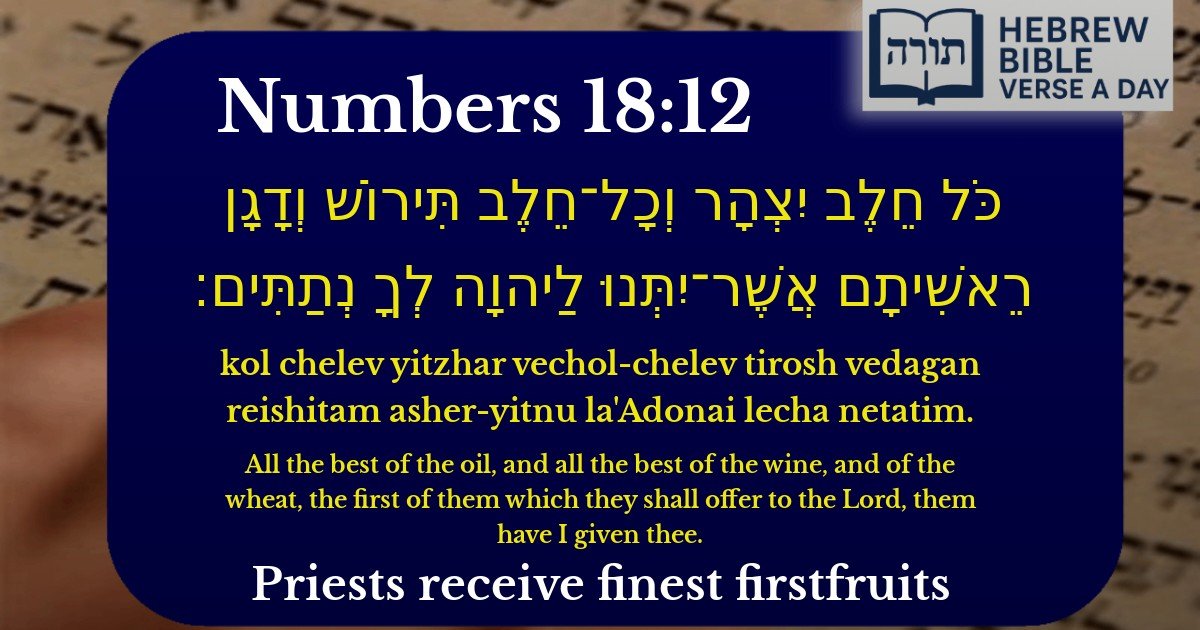
Q: What does Numbers 18:12 mean?
A: Numbers 18:12 teaches that the first and best portions of oil, wine, and grain (חֵלֶב יִצְהָר, חֵלֶב תִּירוֹשׁ, דָּגָן רֵאשִׁיתָם) must be given to the Kohanim (priests) as a gift from Hashem. Rashi explains that 'the best' refers to the choicest quality, showing we must honor Hashem by giving our finest possessions to those who serve in the Mishkan (Tabernacle) or Beit HaMikdash (Temple).
Q: Why is giving the first and best produce important?
A: The Rambam (Hilchot Bikkurim 2:1) teaches that giving the first and best demonstrates gratitude to Hashem and acknowledges that all blessings come from Him. The Talmud (Bava Metzia 42a) also states that setting aside the first portion brings blessing to the rest of one's possessions.
Q: How does this verse apply today without the Temple?
A: While we cannot bring these offerings today, the principle remains. The Shulchan Aruch (Yoreh De'ah 331) rules that we should still give the first and best of our possessions to tzedakah (charity) or Torah scholars, continuing the tradition of honoring Hashem with our finest resources.
Q: What is the significance of oil, wine, and grain in this verse?
A: The Midrash (Sifrei Bamidbar) explains that oil, wine, and grain represent the three staple crops of Israel. By giving these, we show that our sustenance comes from Hashem. The Talmud (Menachot 85b) also notes that these were key offerings in the Temple service, symbolizing dedication in all aspects of life.
Q: Who received these offerings according to this verse?
A: The verse states 'to you I have given them,' referring to the Kohanim (priests). As Rashi explains, since the Kohanim served in the Mishkan and could not farm or work regular jobs, these gifts sustained them and allowed them to focus on their holy service for the Jewish people.


Source and Context
The verse (Bamidbar 18:12) is part of Hashem's instructions to Aharon regarding the gifts (terumot and ma'aserot) that the Kohanim are to receive from Bnei Yisrael. These offerings represent the choicest portions of agricultural produce, set aside for the service of Hashem and the sustenance of the Kohanim.
Explanation of the Verse
The verse specifies three key agricultural products:
Spiritual and Halachic Significance
The verse underscores the principle of reshit (first and best) being consecrated to Hashem. The Kohanim, as Hashem's representatives, receive these gifts to elevate the nation’s material bounty to holiness. The Ramban (on Bamidbar 18:8) teaches that this arrangement ensures the Kohanim can devote themselves fully to Divine service without worldly distractions.
Practical Application
Halachically, this verse forms the basis for the laws of terumah and ma'aser (Mishnah Terumot 2:4-5). The Kohanim may only partake of these gifts in a state of ritual purity, reinforcing the sanctity of their role (Rambam, Hilchot Terumot 6:1).