
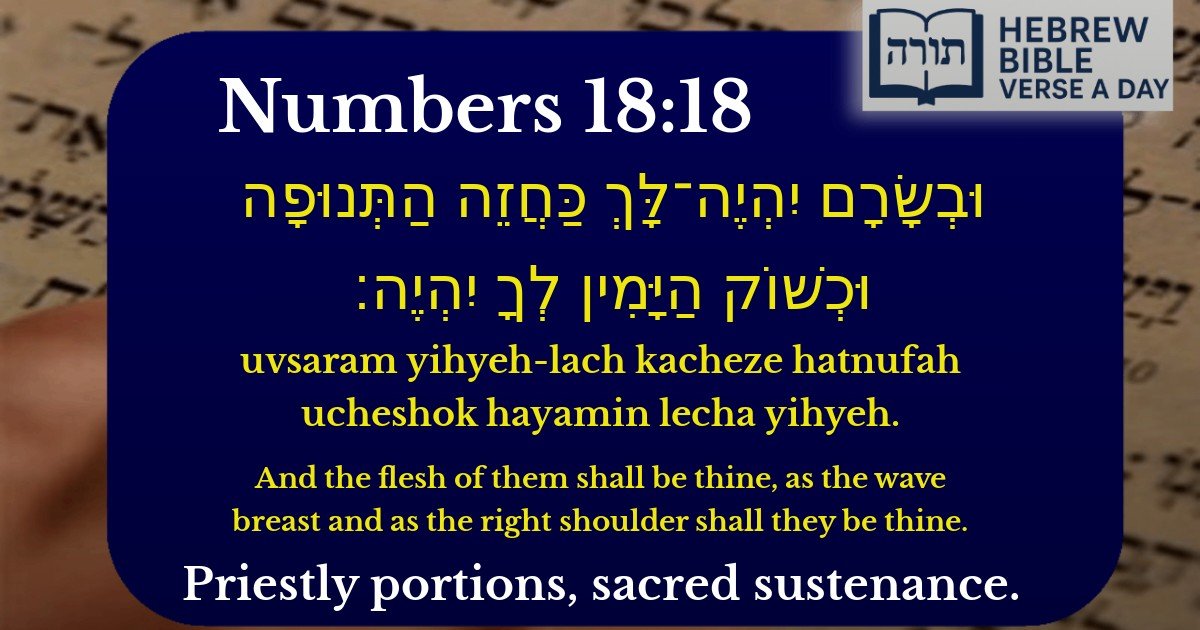

Numbers 18:18 - Priestly portions, sacred sustenance.

Numbers 18:18 - במדבר 18:18

Hebrew Text

וּבְשָׂרָם יִהְיֶה־לָּךְ כַּחֲזֵה הַתְּנוּפָה וּכְשׁוֹק הַיָּמִין לְךָ יִהְיֶה׃

English Translation

And the flesh of them shall be thine, as the wave breast and as the right shoulder shall they be thine.

Transliteration

Uvsaram yihyeh-lach kacheze hatnufah ucheshok hayamin lecha yihyeh.

Hebrew Leining Text

וּבְשָׂרָ֖ם יִהְיֶה־לָּ֑ךְ כַּחֲזֵ֧ה הַתְּנוּפָ֛ה וּכְשׁ֥וֹק הַיָּמִ֖ין לְךָ֥ יִהְיֶֽה׃

🎵 Listen to leining

Parasha Commentary

Context in the Torah

This verse appears in Bamidbar (Numbers) 18:18, within the broader discussion of the gifts given to the Kohanim (priests) from the offerings brought in the Mishkan (Tabernacle) and later the Beit HaMikdash (Temple). The verse specifies the portions of certain sacrifices that are designated as the rightful share of the Kohanim.

Explanation of the Verse

The verse states: "וּבְשָׂרָם יִהְיֶה־לָּךְ כַּחֲזֵה הַתְּנוּפָה וּכְשׁוֹק הַיָּמִין לְךָ יִהְיֶה" ("And the flesh of them shall be thine, as the wave breast and as the right shoulder shall they be thine"). This refers to the portions of certain sacrifices (specifically, the zevach shelamim, or peace offerings) that are allocated to the Kohanim.

  • Chazeh HaTenufah (Wave Breast): The breast of the sacrifice was waved (tenufah) by the owner before being given to the Kohen. Rashi (on Vayikra 7:30) explains that the waving was a symbolic gesture of dedication to Hashem before the Kohen received his portion.
  • Shok HaYamin (Right Shoulder): The right hind leg of the sacrifice was also given to the Kohen. The Rambam (Hilchos Maaseh HaKorbanos 10:12) notes that this was a fixed portion designated for the Kohanim from certain offerings.

Symbolism and Halachic Significance

The Chazeh (breast) and Shok (shoulder) represent two aspects of divine service:

  • The breast, located near the heart, symbolizes wisdom and emotion in serving Hashem (see Midrash Tanchuma, Tzav 14).
  • The right shoulder, associated with strength, represents the physical effort and diligence required in avodas Hashem (service of G-d).

These portions were given to the Kohanim as a reminder that their role required both heartfelt devotion and active labor in the Mishkan/Beit HaMikdash.

Practical Halachah

According to the Shulchan Aruch (Yoreh De'ah 61), these laws remain relevant in principle, though in practice they apply only when the Beit HaMikdash is standing. The Kohanim today still retain certain rights and sanctity, but the actual distribution of these portions is deferred until the restoration of the Temple service.

📚 Talmud Citations

This verse is quoted in the Talmud.

📖 Chullin 132b
The verse is discussed in the context of the laws regarding the portions of sacrifices that are given to the priests, specifically comparing the flesh of certain offerings to the wave breast and right shoulder.
📖 Menachot 62a
The verse is referenced in a discussion about the various types of offerings and the specific parts that are designated for the priests.

Frequently Asked Questions

Q: What does Numbers 18:18 mean when it says 'the flesh of them shall be thine'?
A: This verse refers to the portions of certain sacrifices that were given to the Kohanim (priests) as their share. Just as the 'wave breast' (חֲזֵה הַתְּנוּפָה) and 'right shoulder' (שׁוֹק הַיָּמִין) were given to them from other offerings, here too they receive a portion of the meat as a gift for their service in the Mishkan (Tabernacle). Rashi explains that this was part of their compensation for their holy work.
Q: Why were the wave breast and right shoulder specifically given to the Kohanim?
A: The wave breast (חֲזֵה הַתְּנוּפָה) and right shoulder (שׁוֹק הַיָּמִין) were symbolic portions representing closeness to the heart (breast) and strength (shoulder). The Talmud (Chulin 134b) explains that these were choice portions set aside for the Kohanim to honor their role in facilitating the people's connection to Hashem through the sacrifices.
Q: Does Numbers 18:18 still apply today without the Temple?
A: While we no longer have the Beit HaMikdash (Temple) or sacrifices today, the principle of supporting those who dedicate their lives to Torah and spiritual service remains. The Rambam (Hilchot Bikkurim 9:1) discusses how certain gifts to Kohanim still apply where possible, and communities traditionally support Torah scholars, continuing this ideal in a different form.
Q: What lesson can we learn from this verse about giving?
A: This verse teaches the importance of recognizing and compensating those who serve the community spiritually. The Midrash (Sifrei Bamidbar) connects this to the broader Jewish value of giving proper respect and material support to teachers and leaders who help maintain our connection to Torah and mitzvot.