

Join Our Newsletter To Be Informed When New Videos Are Posted
Hebrew Text
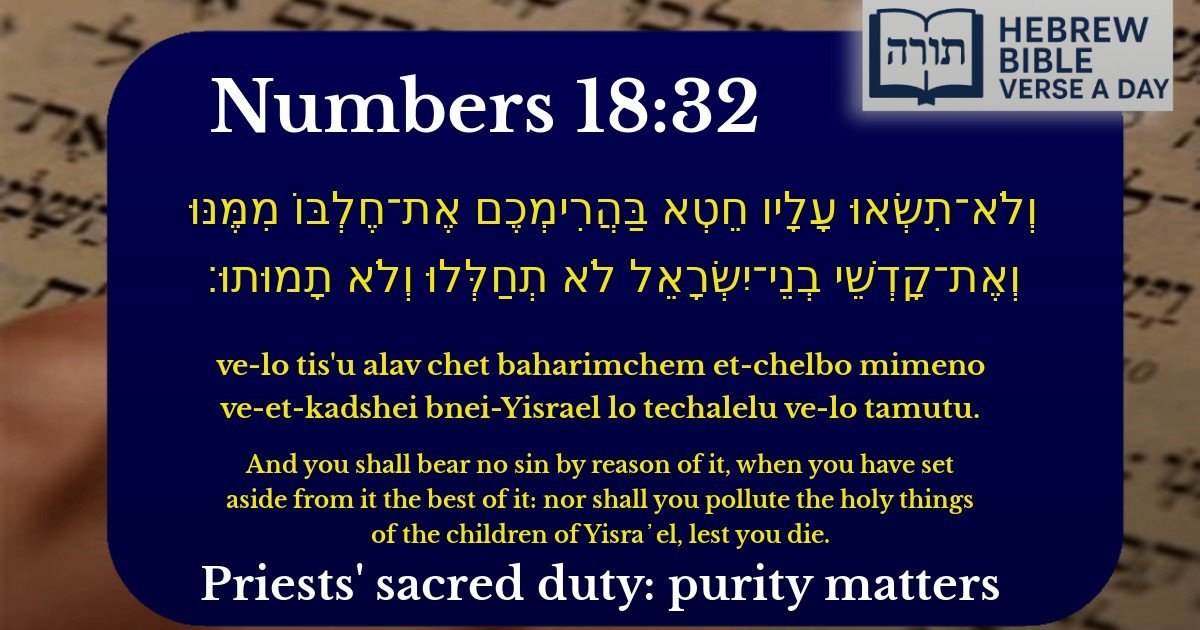
וְלֹא־תִשְׂאוּ עָלָיו חֵטְא בַּהֲרִימְכֶם אֶת־חֶלְבּוֹ מִמֶּנּוּ וְאֶת־קָדְשֵׁי בְנֵי־יִשְׂרָאֵל לֹא תְחַלְּלוּ וְלֹא תָמוּתוּ׃
English Translation
And you shall bear no sin by reason of it, when you have set aside from it the best of it: nor shall you pollute the holy things of the children of Yisra᾽el, lest you die.
Transliteration
Ve-lo tis'u alav chet baharimchem et-chelbo mimeno ve-et-kadshei bnei-Yisrael lo techalelu ve-lo tamutu.
Hebrew Leining Text
וְלֹֽא־תִשְׂא֤וּ עָלָיו֙ חֵ֔טְא בַּהֲרִֽימְכֶ֥ם אֶת־חֶלְבּ֖וֹ מִמֶּ֑נּוּ וְאֶת־קׇדְשֵׁ֧י בְנֵי־יִשְׂרָאֵ֛ל לֹ֥א תְחַלְּל֖וּ וְלֹ֥א תָמֽוּתוּ׃ {פ}
🎵 Listen to leining
Parasha Commentary
📚 Talmud Citations
This verse is quoted in the Talmud.
📖 Menachot 27b
The verse is discussed in the context of the laws regarding the proper separation of terumah (heave offering) and the consequences of improper handling of sacred offerings.
📖 Zevachim 97b
The verse is referenced in a discussion about the sanctity of sacrifices and the prohibition against desecrating holy items, emphasizing the severe consequences of such actions.
Context of the Verse
This verse appears in Vayikra (Leviticus) 22:15, within the broader discussion of the sanctity of terumah (heave offerings) and kodashim (holy sacrifices). The Torah here warns the Kohanim (priests) about properly separating the choicest portions of offerings and not desecrating sacred items.
Explanation of the Prohibition
The phrase "וְלֹא־תִשְׂאוּ עָלָיו חֵטְא" ("And you shall bear no sin by reason of it") refers to the proper separation of the cheilev (fat portions) and other designated parts of sacrifices. Rashi explains that if the Kohanim fail to properly remove these portions before consuming the remainder, they incur guilt (Toras Kohanim). The Rambam (Hilchos Maaseh HaKorbanos 10:12) elaborates that this applies specifically to terumah and kodashim kalim (lesser holy offerings).
Desecration of Sacred Items
The warning "וְאֶת־קָדְשֵׁי בְנֵי־יִשְׂרָאֵל לֹא תְחַלְּלוּ" ("nor shall you pollute the holy things of the children of Israel") is interpreted by the Sifra as prohibiting any misuse or improper benefit from sanctified items. The Kli Yakar adds that this includes even unintentional disrespect, such as delaying the consumption of terumah beyond its permitted time.
Severity of the Transgression
The concluding phrase "וְלֹא תָמוּתוּ" ("lest you die") underscores the gravity of these laws. The Gemara (Zevachim 97b) states that improper handling of sacrifices can lead to kareis (spiritual excision). The Or HaChaim explains that this serves as a reminder that the Kohanim must maintain the highest level of sanctity in their service.
Practical Halachic Implications