

Join Our Newsletter To Be Informed When New Videos Are Posted
Hebrew Text
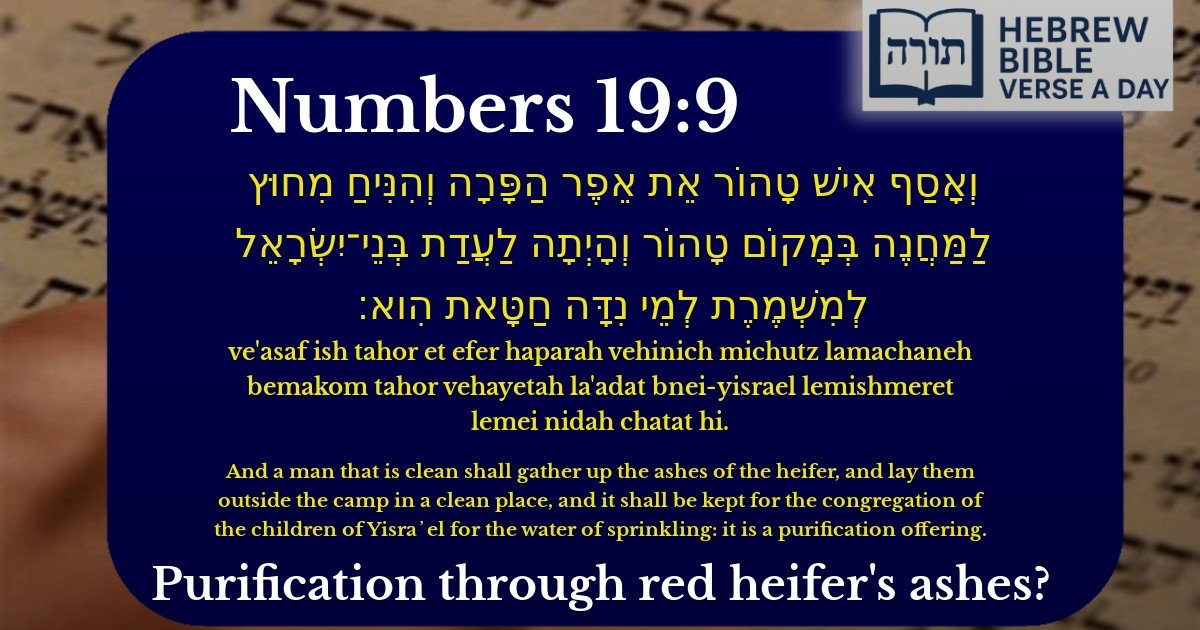
וְאָסַף אִישׁ טָהוֹר אֵת אֵפֶר הַפָּרָה וְהִנִּיחַ מִחוּץ לַמַּחֲנֶה בְּמָקוֹם טָהוֹר וְהָיְתָה לַעֲדַת בְּנֵי־יִשְׂרָאֵל לְמִשְׁמֶרֶת לְמֵי נִדָּה חַטָּאת הִוא׃
English Translation
And a man that is clean shall gather up the ashes of the heifer, and lay them outside the camp in a clean place, and it shall be kept for the congregation of the children of Yisra᾽el for the water of sprinkling: it is a purification offering.
Transliteration
Ve'asaf ish tahor et efer haparah vehinich michutz lamachaneh bemakom tahor vehayetah la'adat bnei-yisrael lemishmeret lemei nidah chatat hi.
Hebrew Leining Text
וְאָסַ֣ף ׀ אִ֣ישׁ טָה֗וֹר אֵ֚ת אֵ֣פֶר הַפָּרָ֔ה וְהִנִּ֛יחַ מִח֥וּץ לַֽמַּחֲנֶ֖ה בְּמָק֣וֹם טָה֑וֹר וְ֠הָיְתָ֠ה לַעֲדַ֨ת בְּנֵֽי־יִשְׂרָאֵ֧ל לְמִשְׁמֶ֛רֶת לְמֵ֥י נִדָּ֖ה חַטָּ֥את הִֽוא׃
🎵 Listen to leining
Parasha Commentary
📚 Talmud Citations
This verse is quoted in the Talmud.
📖 Yoma 42b
The verse is discussed in the context of the laws concerning the red heifer and its ashes, particularly focusing on the purity required for those handling the ashes.
📖 Parah 3:5
This Mishnah references the verse in discussing the procedures for gathering and storing the ashes of the red heifer, emphasizing the requirement for a clean place outside the camp.
📖 Moed Katan 14a
The verse is cited in a discussion about the impurity associated with the red heifer and the necessity of maintaining purity in handling its ashes.
Overview of the Verse
This verse (Bamidbar 19:9) describes the process of gathering and preserving the ashes of the parah adumah (red heifer), which are used to purify individuals who have become ritually impure through contact with the dead. The Torah emphasizes the meticulous care required in handling these ashes, as they are essential for preparing the mei niddah (waters of purification).
Key Elements of the Verse
Symbolism and Deeper Meaning
The parah adumah is considered one of the most enigmatic mitzvos in the Torah. The Midrash (Bamidbar Rabbah 19:3) notes that even King Solomon, the wisest of men, could not fully grasp its meaning. The paradox of the parah adumah—purifying the impure while making the pure impure—teaches humility and the limits of human understanding in divine commandments.
Practical Halachic Implications
The Mishnah (Parah 3:7-11) details the exact procedures for gathering and storing the ashes, emphasizing the need for utmost care to prevent contamination. The Gemara (Chagigah 25a) further discusses the laws of who may handle the ashes and under what conditions. The Rambam (Hilchos Parah Adumah 4:4) codifies these laws, stressing that the ashes must be guarded carefully to remain valid for future use.