

Join Our Newsletter To Be Informed When New Videos Are Posted
Hebrew Text
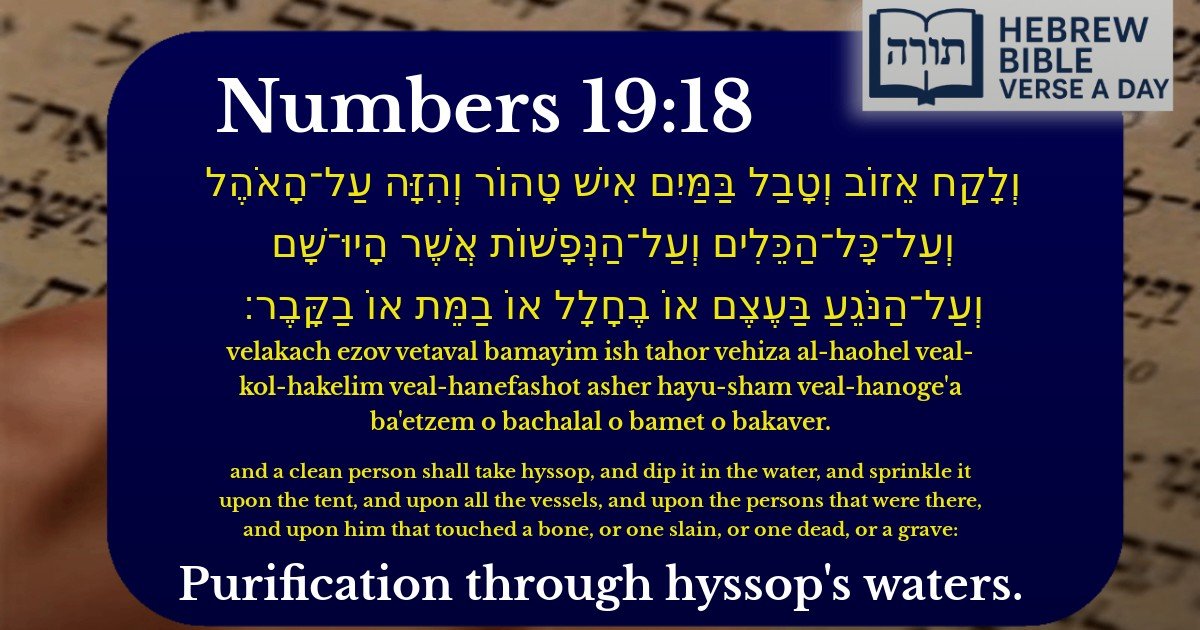
וְלָקַח אֵזוֹב וְטָבַל בַּמַּיִם אִישׁ טָהוֹר וְהִזָּה עַל־הָאֹהֶל וְעַל־כָּל־הַכֵּלִים וְעַל־הַנְּפָשׁוֹת אֲשֶׁר הָיוּ־שָׁם וְעַל־הַנֹּגֵעַ בַּעֶצֶם אוֹ בֶחָלָל אוֹ בַמֵּת אוֹ בַקָּבֶר׃
English Translation
and a clean person shall take hyssop, and dip it in the water, and sprinkle it upon the tent, and upon all the vessels, and upon the persons that were there, and upon him that touched a bone, or one slain, or one dead, or a grave:
Transliteration
Velakach ezov vetaval bamayim ish tahor vehiza al-haohel veal-kol-hakelim veal-hanefashot asher hayu-sham veal-hanoge'a ba'etzem o bachalal o bamet o bakaver.
Hebrew Leining Text
וְלָקַ֨ח אֵז֜וֹב וְטָבַ֣ל בַּמַּ֘יִם֮ אִ֣ישׁ טָהוֹר֒ וְהִזָּ֤ה עַל־הָאֹ֙הֶל֙ וְעַל־כׇּל־הַכֵּלִ֔ים וְעַל־הַנְּפָשׁ֖וֹת אֲשֶׁ֣ר הָֽיוּ־שָׁ֑ם וְעַל־הַנֹּגֵ֗עַ בַּעֶ֙צֶם֙ א֣וֹ בֶֽחָלָ֔ל א֥וֹ בַמֵּ֖ת א֥וֹ בַקָּֽבֶר׃
🎵 Listen to leining
Parasha Commentary
📚 Talmud Citations
This verse is quoted in the Talmud.
📖 Yoma 42b
The verse is referenced in the discussion about the purification process involving hyssop and water, particularly in the context of the red heifer ritual.
📖 Niddah 9a
The verse is cited in a discussion about the laws of ritual impurity and the methods of purification, specifically regarding the sprinkling of water with hyssop.
Context of the Verse
This verse (Bamidbar 19:18) is part of the Torah's discussion of the parah adumah (red heifer) ritual, which purifies individuals and objects that have become tamei (ritually impure) through contact with a corpse. The process involves sprinkling water mixed with the ashes of the red heifer using hyssop.
Symbolism of the Hyssop
Rashi (Bamidbar 19:18) explains that the hyssop (ezov) is used because it is a humble plant, symbolizing humility—a necessary trait for repentance and purification. The Midrash (Bamidbar Rabbah 19:3) further connects this to King David's plea in Tehillim 51:9, "Purge me with hyssop, and I shall be clean," emphasizing that true purification begins with humility.
The Role of the "Clean Person"
The Torah specifies that the sprinkling must be done by an ish tahor (a ritually clean person). Rambam (Hilchos Parah Adumah 12:1) notes that this underscores the principle that one who purifies others must first be pure themselves. The Talmud (Yoma 42b) adds that this teaches the importance of proper spiritual preparation before engaging in sacred acts.
Objects of Purification
Types of Contact Requiring Purification
The verse lists four sources of impurity:
Spiritual Lessons
The Sefer HaChinuch (Mitzvah 397) teaches that the parah adumah ritual reminds us of the gravity of death and the need for spiritual renewal. The use of water symbolizes purification and renewal, as water is a universal source of life (Talmud, Taanit 7a).