

Join Our Newsletter To Be Informed When New Videos Are Posted
Hebrew Text
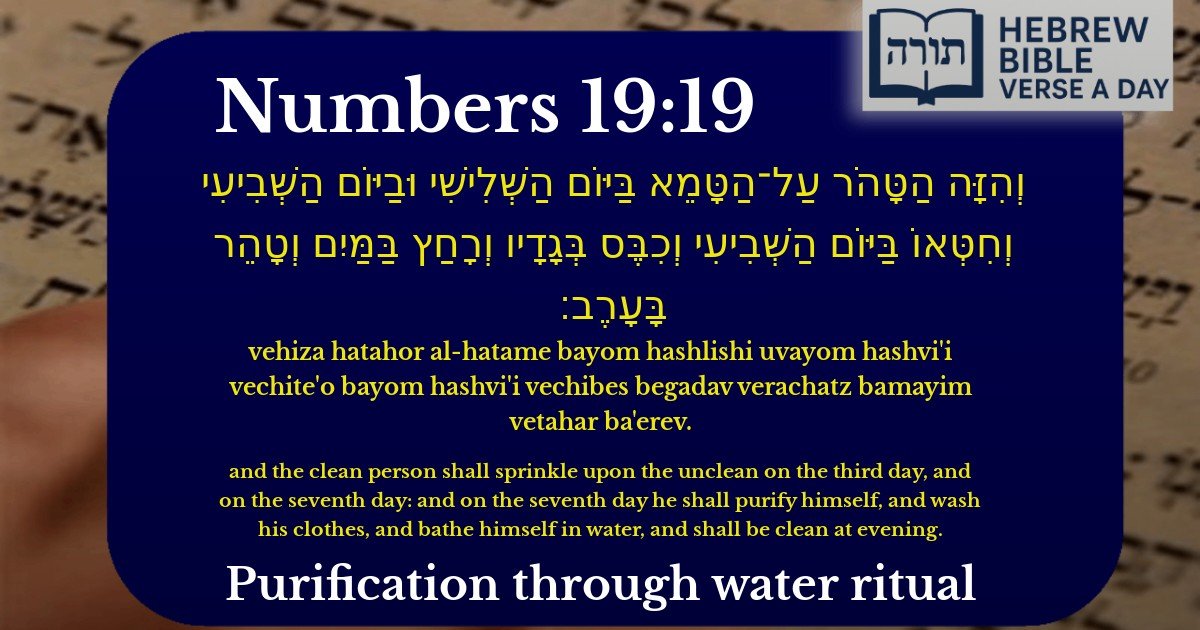
וְהִזָּה הַטָּהֹר עַל־הַטָּמֵא בַּיּוֹם הַשְּׁלִישִׁי וּבַיּוֹם הַשְּׁבִיעִי וְחִטְּאוֹ בַּיּוֹם הַשְּׁבִיעִי וְכִבֶּס בְּגָדָיו וְרָחַץ בַּמַּיִם וְטָהֵר בָּעָרֶב׃
English Translation
and the clean person shall sprinkle upon the unclean on the third day, and on the seventh day: and on the seventh day he shall purify himself, and wash his clothes, and bathe himself in water, and shall be clean at evening.
Transliteration
Vehiza hatahor al-hatame bayom hashlishi uvayom hashvi'i vechite'o bayom hashvi'i vechibes begadav verachatz bamayim vetahar ba'erev.
Hebrew Leining Text
וְהִזָּ֤ה הַטָּהֹר֙ עַל־הַטָּמֵ֔א בַּיּ֥וֹם הַשְּׁלִישִׁ֖י וּבַיּ֣וֹם הַשְּׁבִיעִ֑י וְחִטְּאוֹ֙ בַּיּ֣וֹם הַשְּׁבִיעִ֔י וְכִבֶּ֧ס בְּגָדָ֛יו וְרָחַ֥ץ בַּמַּ֖יִם וְטָהֵ֥ר בָּעָֽרֶב׃
🎵 Listen to leining
Parasha Commentary
📚 Talmud Citations
This verse is quoted in the Talmud.
📖 Yoma 8a
The verse is referenced in the discussion about the purification process on the third and seventh days, particularly in the context of ritual impurity and the requirements for becoming clean.
📖 Niddah 70b
The verse is cited in the context of discussing the laws of purification, especially the timing and methods of purification for those who are ritually unclean.
Context of the Verse
This verse (Bamidbar 19:19) is part of the Torah's discussion of the parah adumah (red heifer) ritual, which purifies individuals who have become tamei (ritually impure) through contact with a corpse. The process involves sprinkling specially prepared waters on the third and seventh days, followed by immersion and laundering clothes.
Rashi's Explanation
Rashi (Bamidbar 19:19) explains that the "clean person" refers to one who is ritually pure and authorized to perform the sprinkling. The sprinkling must be done specifically on the third and seventh days—not earlier or later—to be valid. Rashi emphasizes that the purification is not complete until evening (ba'erev), even after all other steps are taken.
Rambam's Halachic Perspective
In Hilchos Parah Adumah (11:1-2), Rambam codifies this process, stating that sprinkling on the wrong day invalidates the purification. He also notes that immersion in a mikveh and laundering clothes are essential components, not mere formalities.
Symbolism of the Third and Seventh Days
The Evening Completion
The Talmud (Chagigah 11a) derives from "v'taher ba'erev" that purification is only finalized at nightfall, teaching that certain mitzvos require both action and time to take effect. This reflects the idea that spiritual growth often follows gradual processes.